




Durbar 2026: Boito’s monumental Godawan, Bonda Matriarchy Wall and Hansa Boita celebrate Odisha’s living crafts
The undulating Aravalis, the crisp winter breeze, and conversations around conservation and culture. This was the backdrop to the first Durbar experience of 2026 at the Abheygarh Palace in Khetri, Rajasthan, that opened its doors to guests for the first time. The Durbar, a confluence of culture, shines a spotlight on the conservation of the Great Indian Bustard (whose numbers have steadily risen from 100 to 173 in 2025) brought together by Godawan Estuary Premium Water.
Praveen Someshwar, CEO and MD, Diageo India, explains the ethos of Durbar: “It resonates because it attracts an audience that comes to engage with culture and craft in a meaningful way. It also reflects a growing appetite for experiences that are more considered and culturally immersive.”
In its first 2026 edition (January 9 – 10), Boito, a slow-fashion brand from Odisha celebrating craftsmanship and storytelling from the State’s most celebrated and remote corners, presented a trinity of cultural storytelling. Richa Maheshwari, founder, Boito, came to this mission rather serendipitously. Hailing from Odisha, this software engineer calls Bengaluru home. With a job in SAP (Systems, Applications, and Products) for 16 years, COVID-19 offered a much-needed pause and reset. “I took a sabbatical and travelled to Bhubaneshwar, my hometown and felt a tug to do something rooted in the State and with its crafts. I then found our designer, Anshu Arora and went with her to meet tribes across the State,” Richa explains.
Boito worked with myriad craft clusters across Odisha to create three intricate installations at Durbar, celebrating the State, and its indigenous skills honed over centuries.
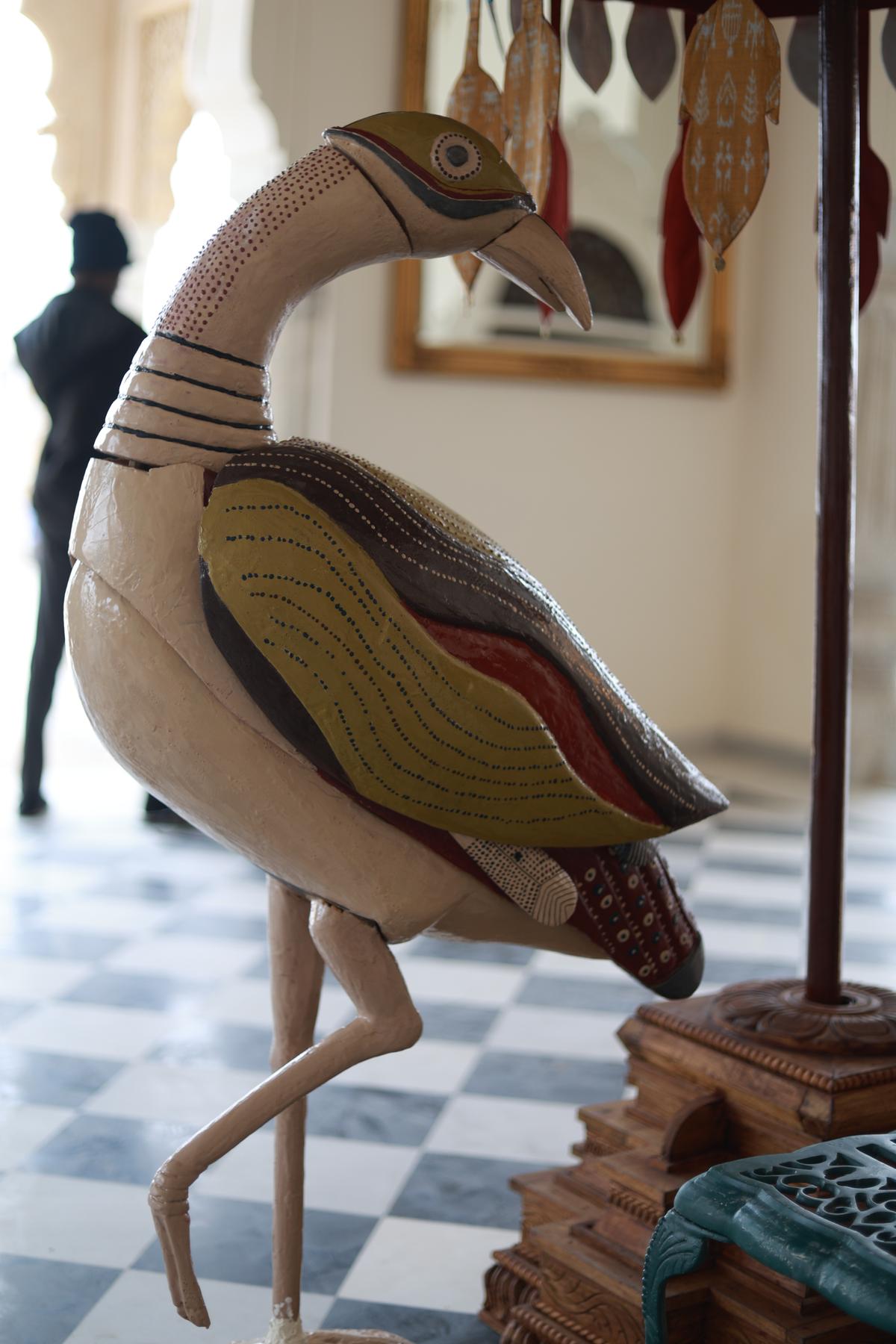
The Godawan bird
| Photo Credit:
SPECIAL ARRANGEMENT
The Godawan
The Great Indian Bustard, Rajasthan’s State bird, was reimagined by Botio in wood carving traditions from Nayagarh and lac work rooted in Balasore. Paladhua wood (Indian coral tree) is used to create lightweight wood masks for theatre ( jathre), an ebbing tradition, so “using the same woodcraft skills to craft the Godawan became a story of craft revival for us,” says Richa. The five foot tall, bird was carved in parts, then transported to Balasore, known for its jau kandhei’– lacquer work usually done on terracotta dolls. Over 50 women transferred resin-based rich natural pigments to various parts of the bird, which then stood on its spindly legs supported by an iron base.
The third craft at the installation is the towering ‘chatti’ (parasol) that is a celebration of Pipli, a town carved out by a king to create intricate shades for the Jagannath Rath Yatra. Its form is inspired by Odisha’s temple architecture, with appliqué work popular in the region. The nine foot by five foot towering shade protecting the Godawan is symbolic of “both culture and Nature that need protecting,” elucidates Richa.
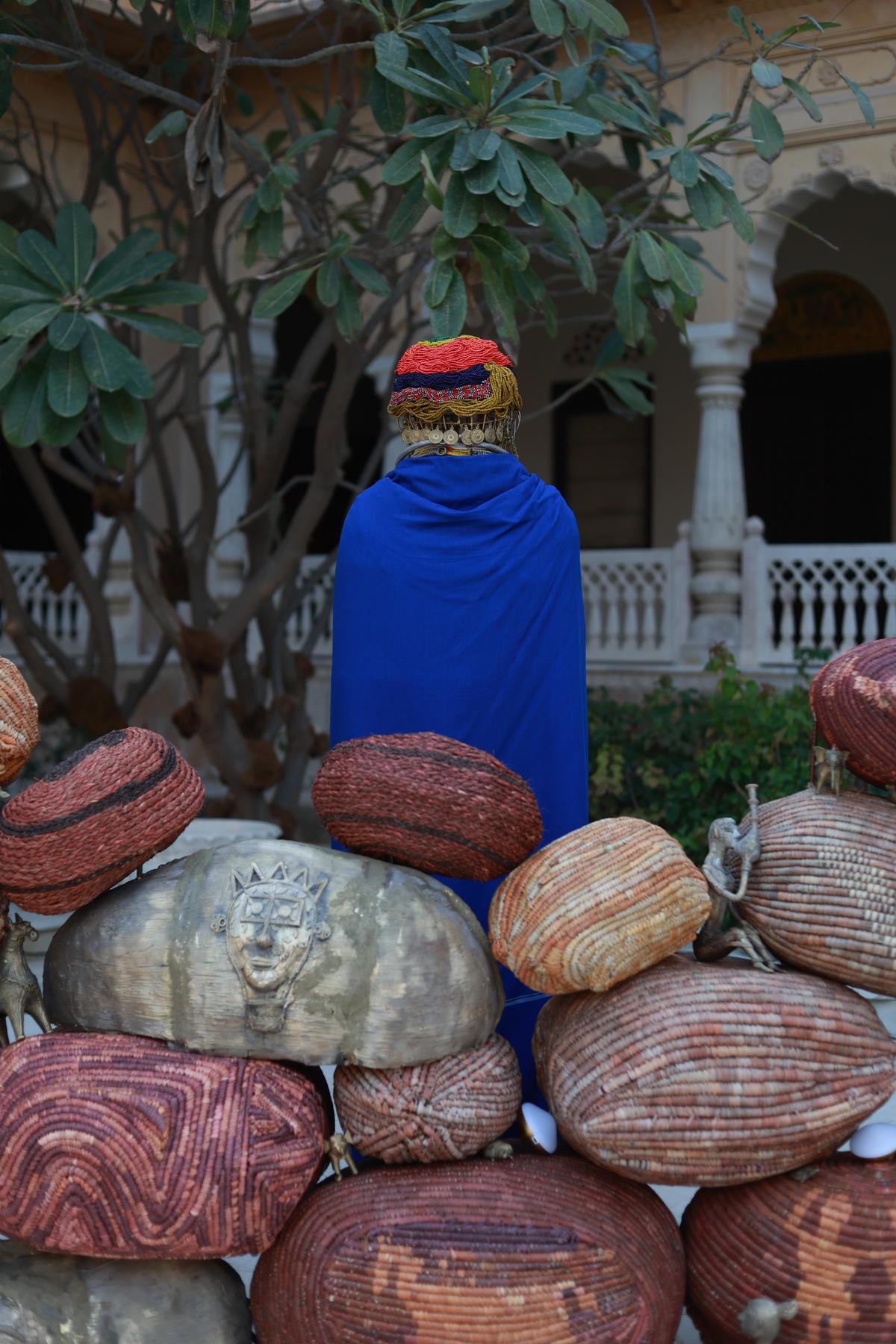
An homage to the wall made of stones by the Ringa tribal women.
| Photo Credit:
SPECIAL ARRANGEMENT
Spirit of matriarchy
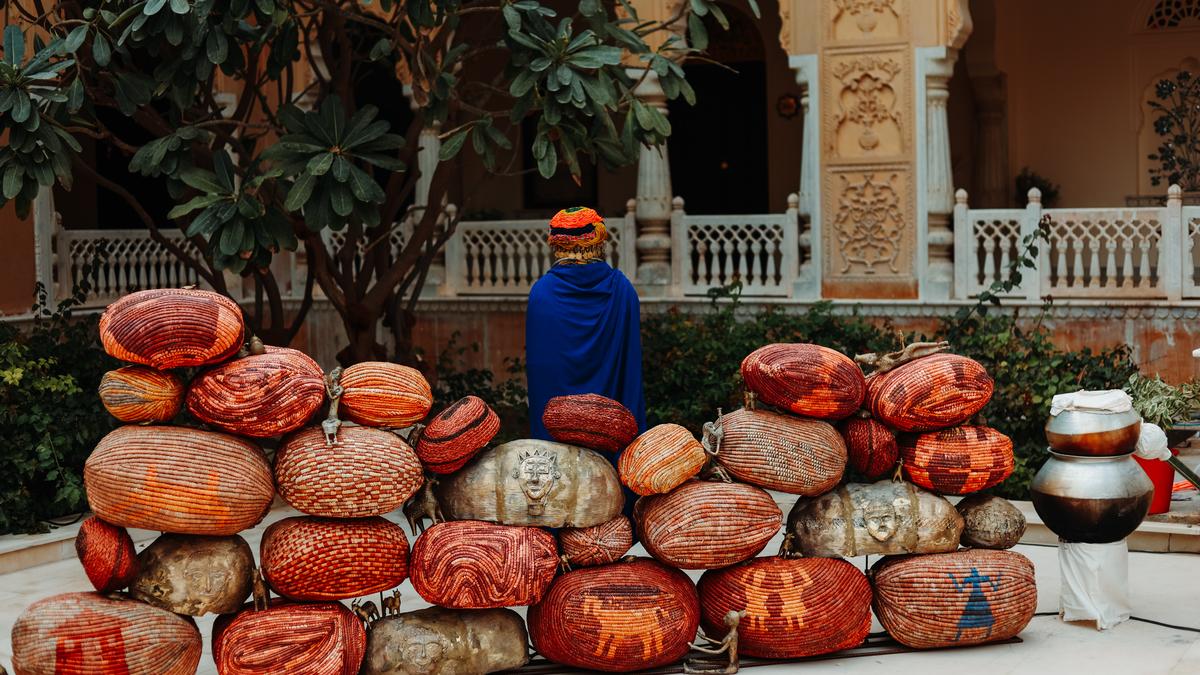
The Bonda tribe is matriarchal and celebrates its women — the risk takers, the go-getters and the keepers of memory. Just 6,675 members remain today of a community that migrated from Africa over 60,000 years ago to the Malkangiri region in Odisha. “Across Koraput and Malkangiri, you see laterite walls of rough boulders built by the matriarchs, not as boundaries but as a way to encompass the community’s identity and rituals with quiet strength,” states Richa.
For the Durbar, this wall was recreated as a paean to the matriarch, as memory keeper. The twelve feet wide and 4.5 feet high wall was fashioned from 30 boulders — six dhokra and the rest from sabai grass. Foot-tall figurines in dhokra were delicately placed in between, depicting the keepers of the tribe, enjoying a book or indulging in leisure. At the far end of the wall is a traditional double-boiler bearing testimony to ritual — creating sagur, a ceremonial spirit of the tribe.
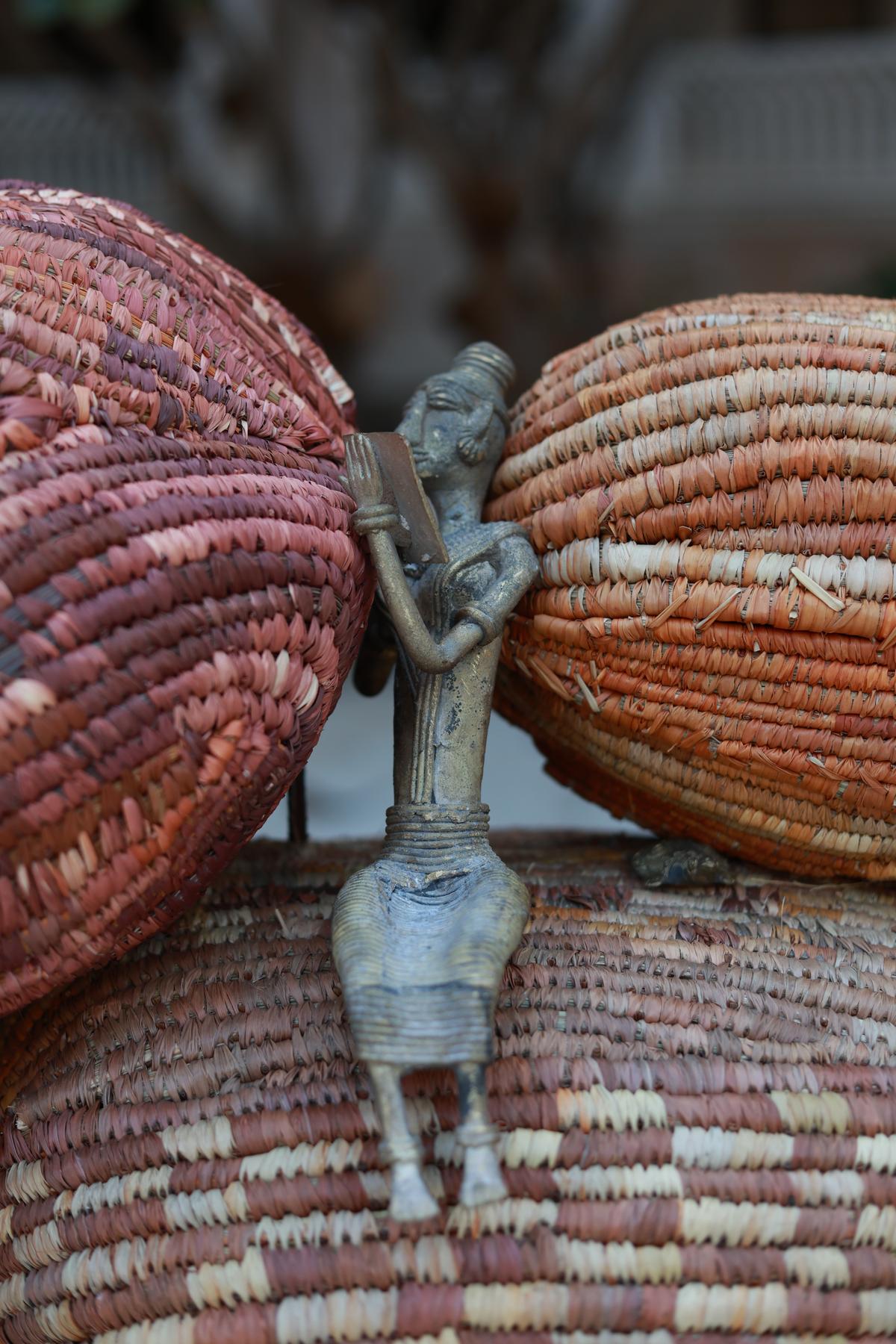
Bonda woman figurine
| Photo Credit:
SPECIAL ARRANGEMENT
A Bonda woman figurine stands resplendent in colourful beaded headgear and necklaces, with a trademark ringa (a rectangular piece of cloth worn as a skirt, that was earlier crafted from yarn sourced from the kerang bark). “Now, Bonda women use handspun cotton around their waist, while their torso is covered with long, thick strings of beads. They cover their backs with a blue cape when in company,” says Richa, explaining the tribal attire.
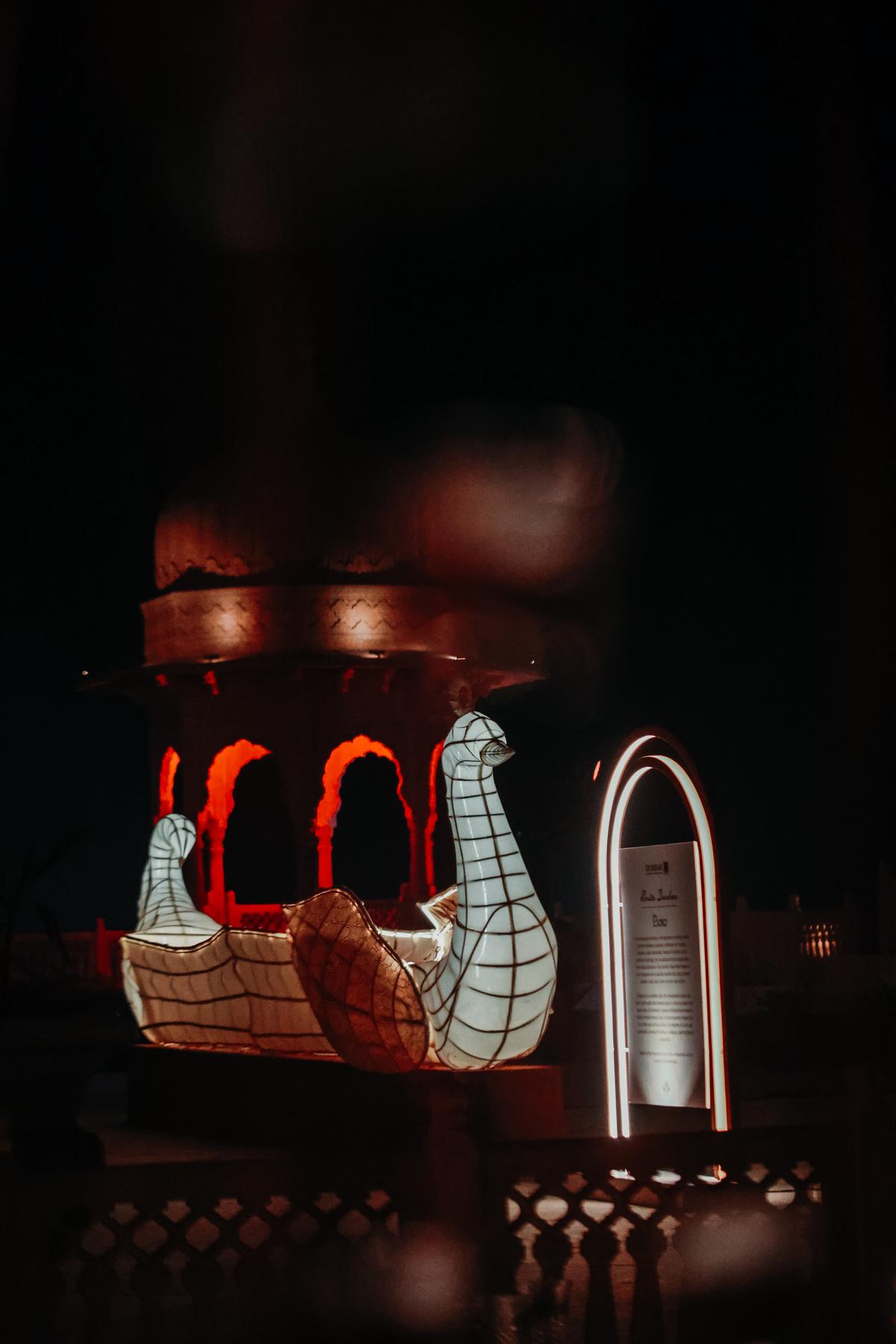
The Hansa Boita ( swan boat) is a 21-foot vessel made from cane and wrapped in muslin, adorned with various Odia art forms.
| Photo Credit:
SPECIAL ARRANGEMENT
Hansa Boito
Boito, draws inspiration from Odisha’s storied maritime past. The term is an homage to the Boita Bandana festival, where every Kartik Purnima, people set tiny boats in memory of ancient voyages by the Sadhabas — a community of affluent mariners, who embody prosperity. Their vessels were said to glide like swans, and the Hansa Boita (swan boat) draws its structure from stories of the sea. “This 21-foot boat made from cane and wrapped in muslin is adorned with various Odia artforms,” explains Richa. The boat was previously showcased at Bikaner House, New Delhi in 2024.
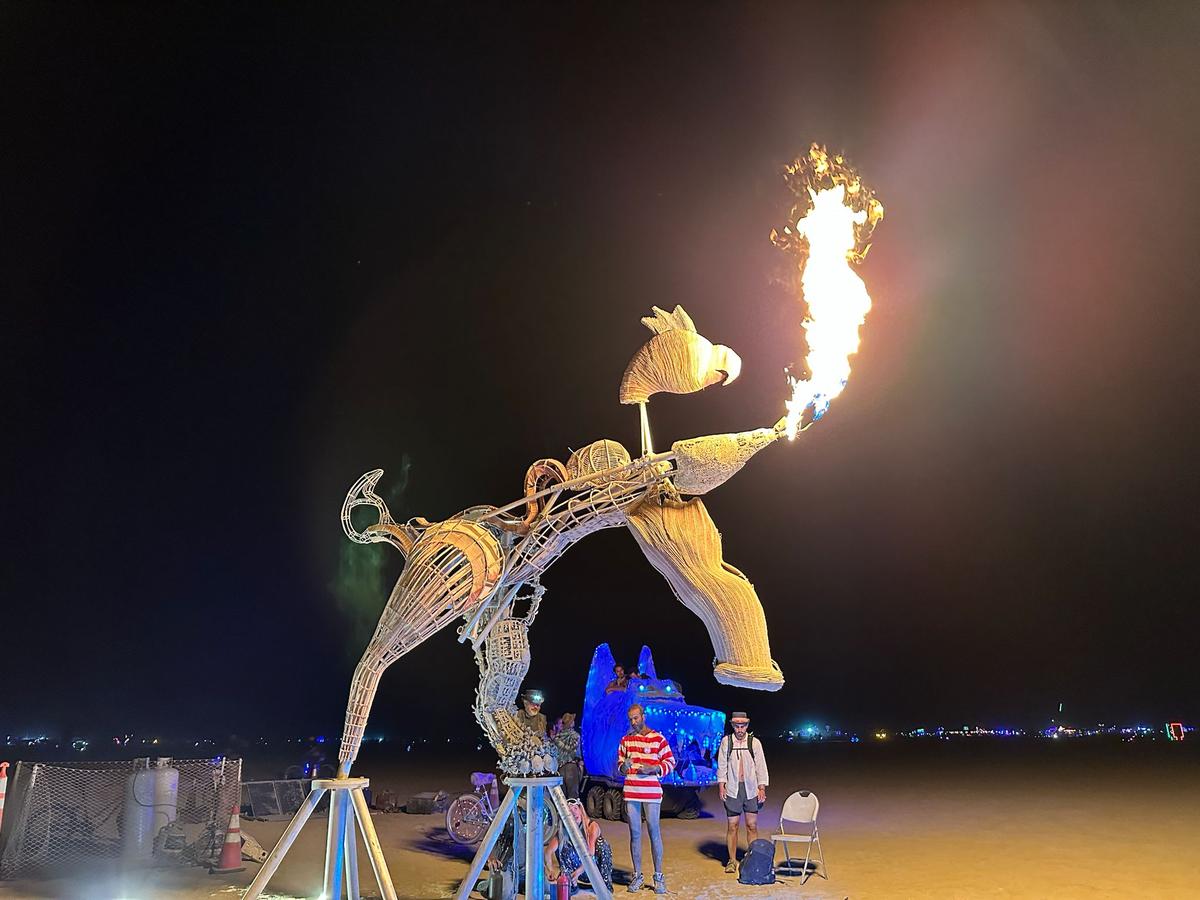
Navagunjara in Burning Man in 2025
Odisha craft at Burning Man
The Durbar is not Richa’s first outing with fashioning sculptures born of story and indigenous skillsets. The ‘Navagunjara’ — a chimeric creature with nine parts from various fauna (presented by roboticist and installation artist, Jnaneshwar Das and Richa Maheshwari as artists) went to Burning Man Nevada Festival in 2025. Sculptures are usually burned at the end of the festival, but the 17 foot Navagunjara made it back to India intact. It will find its resting place at exhibitions and maybe a museum in India,” says Richa.
The creature was first described by poet Sarala Das in the 15th-Century retelling of the Mahabharata in Odisha with a rooster head, peacock neck, elephant arm, legs of a tiger and a deer, a lion torso, the hump of a bull, the tail of a serpent and a lotus-wielding human forearm. These were expressed through Odia artforms — sabai grass weaving, pattachitra painted cane, Pipli appliqué work, handloom kapdaganda shawl patterns, Ringa textiles and dhokra — all coalesced to make this fierce and fantastic being.
“At Boito, we want to work on a transparency charter, so ultimately we can pinpoint each cluster and contribution. The intent is clear — we create opportunities for commerce, only to allow a pipeline of steady work to sustain these crafts, thereby allowing the artforms to live on,” concludes Richa.
Published – March 02, 2026 04:59 pm IST