




A champion is being built by the coaches and not born: Misbun Sidek
At his peak, Misbun Sidek trained relentlessly, logging long hours on court and competing with fierce intensity, rising to a career-high ranking of World No.2 during badminton’s highly competitive 1980s era that had legends such as Yang Yang (China), Morten Frost (Denmark) and Liem Swie King (Indonesia). Now at 65 years of age, the former All England Open finalist and a two-time World championships bronze medallist, is far from content to rest on past glory. Instead of easing into retirement in Malaysia, he continues to shape the next generation of shuttlers through hands-on coaching.
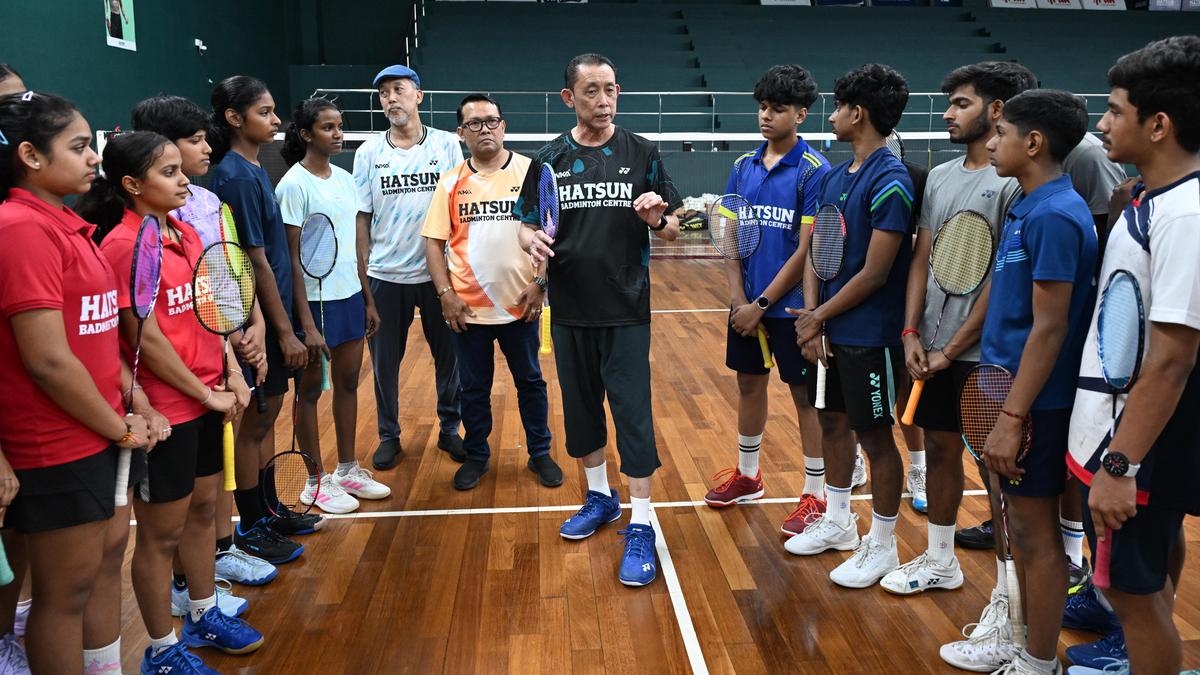
Recently, The Hindu met Misbun at the Hatsun Badminton Academy in Thiruthangal (near Sivakasi), where he has taken on the role of High Performance Coach. Under the arrangement, he will visit the academy three times a year to conduct intensive training programmes for both junior and senior players.
“His sessions are intense and he is a hard taskmaster. He insists on very high fitness standards for juniors and pushes them relentlessly. We are hopeful that his inputs will help our players raise their level to international standards,” said B. Rajinikanth, head coach of the academy. Having already mentored three players — Lee Chong Wei, Roslin Hashim (2001) and Rashid Sidek (1997) who reached World No.1 in singles, Misbun’s ambition remains undiminished—he wants to produce another World No.1. “I want to find another world number one,” the Malaysian quipped.
Misbun’s goal is to ensure his wards win more finals than they lose. “I ended my career as World No. 2. Then, I made up my mind that when I become a coach, my wards will not lose. That’s why I train my players. When they go to the final, I make sure they win,” he said. Excerpts:
All along, you have been coaching in Malaysia. Why the shift to another country?
Well, when I was being offered the job by Hatsun, I was, actually, reluctant because I’ve never went out [of Malaysia] before. But then the head coach Mr. Rajinikanth was really determined to have me here. Then, I told my younger brother Jalani Sidek, who is the president of our club (Nusa Mahsuri Club), why don’t we give it a try’ and that’s how it started.
Is your objective short- or long-term?
I told them, ‘if you want to have very good players, you must have a long-term project. You cannot have short term. In the short term, I can only do analysis and do a few other things. But if you want to have good players in the future, you must have a very good program so that the players will grow and improve from there. My idea is long-term and I told them that. Now I can see why I’m here. I can see very, very good players. Talent is all here.
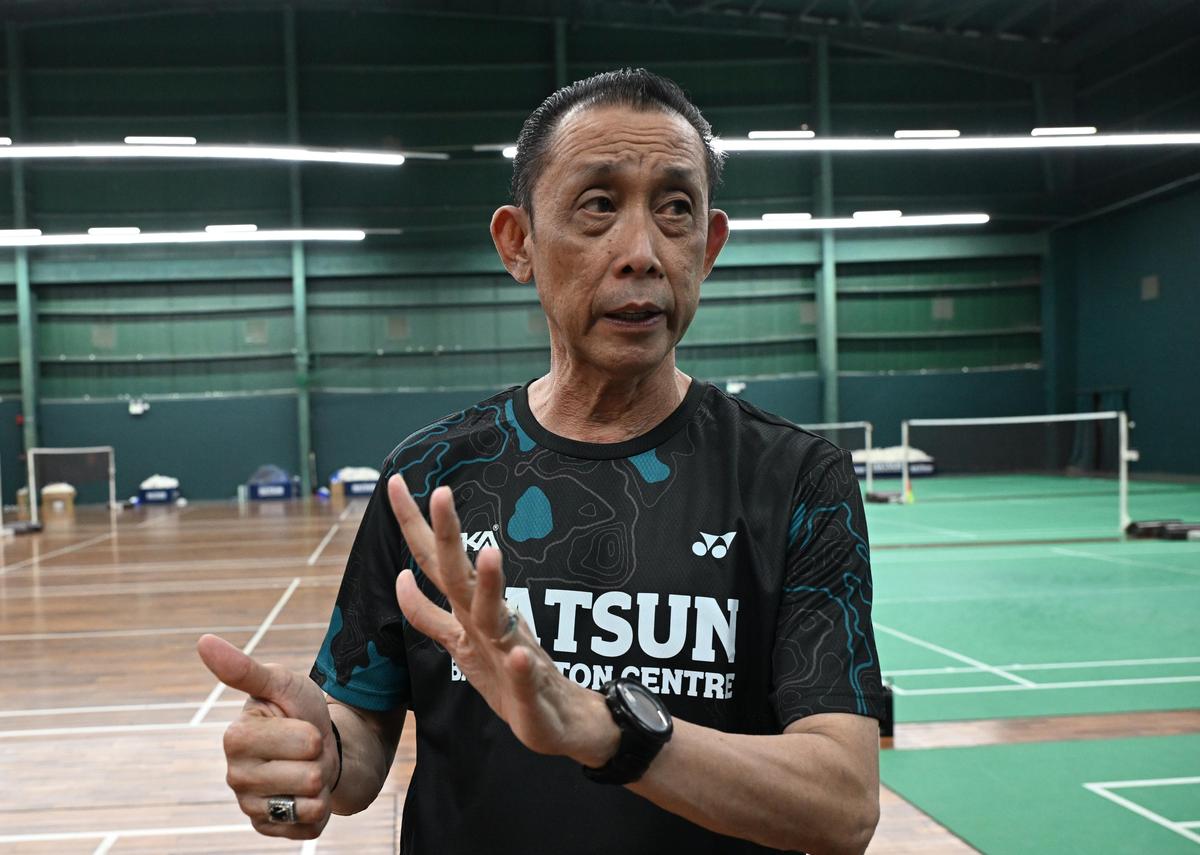
Misbun Sidek.
| Photo Credit:
B. JOTHI RAMALINGAM
How do you want to develop the players?
So, development of players is the most important thing. It is important to win the players’ heart. You should know that a champion is being built by the coaches and not born. All players are skilled, but if you don’t build them, the skill will remain skill. They need to work hard onsust their skills. Champions work on their skills by being disciplined and working on their technical and mental sides. My objective is that if I can work with the player and they understand my mind, then it’s quite easy. Because training and tournament are two different things. In training, they are using my brain on my modules. In tournament, they have to implement it. That’s the key.
How do you see Indian badminton at the International level?
They are already there at the top level. To me, they are still good. Only that they must put in a lot more effort into their training and into their programs so that they could sustain the intensity and remain world-beaters.
The Badminton World Federation (BWF) is planning to effect a lot of changes in the rules including the 3×15 system. What is your take?
Players will need time to adapt. The game has changed. In the previous system (21×3) we witnessed good rallies and good technical skills. But now the focus will be more on tactical fitness. As a coach, I will accept it. And I will incorporate it in my training modules and bring changes accordingly so that the players are more alert. For this kind of game, you need a lot of explosive power.
You have been a successful coach having produced quite a few World class players including three world No.1 players, Lee Chong Wei (2008), Rashid Sidek and Roslin Hashim. But now, Malaysia doesn’t have any player in the top 20 in men’s singles?
If you ask me, it’s because of the programme and the system one plans and implements. If you build a player with a very good system, they can go far. But then I don’t want to talk about Badminton Association of Malaysia (BAM), because they have a coach. They are quite sensitive. I know what is going wrong with the structure of BAM coaching system.
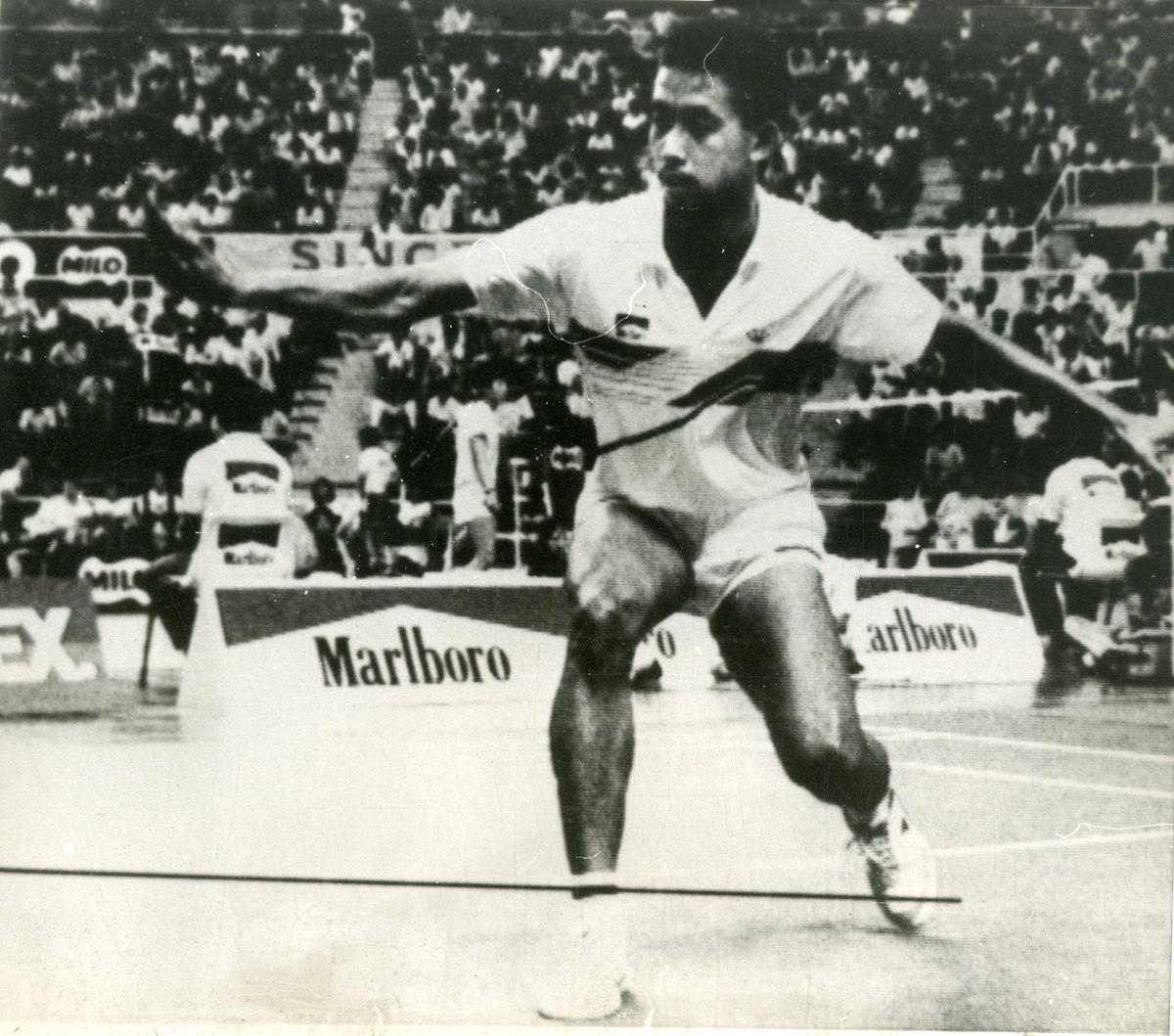
Misbun Sidek during a Thomas Cup match in Kuala Lumpur on May 25, 1988.
| Photo Credit:
FILE PHOTO: UNI
In March (3 to 8), we have the All England Open and in April (24 to May 3) in Horsens (Denmark), we have the Thomas Cup where Malaysia has been a champion five times (1949, 1952, 1955, 1967 & 1992). What are your expectations for Malaysia and India?
India and Malaysia, actually, are good contenders. Like India, Malaysia has quite a few good singles players and one or two doubles players. If they have the luck, they can perform well. Malaysia is struggling because we have not that many good singles players at the moment. Look at China, it has three good singles players and doubles players, too.
Lee Chong Wei was one of your famous trainees. Under your coaching, he became the All England champion four times and was an Olympic silver medallist. Tell us about your relationship with him.
Even now, I am in touch with him. He considers me as his father. And then anything, sometimes he will come to me to get some advice even after he was diagnosed with cancer. He’s the kind of person who always worked hard during training, took heavy workloads. It was easy to handle him because he trusted me, and that was important. That’s why he remained the longest-ever World No.1 it [a total of 348 weeks including consecutive streak of 199 weeks from 21 August 2008 to 14 June 2012].
You had four brothers, all played badminton at the highest level. The Sidek siblings dominated Malaysian badminton and held sway at the International level too.
That’s because of my late father Haji Sidek. He was a badminton player at the district-level. But he had a vision for his sons. He realised that if his sons had to do well, they have to start early. Even when I was seven or eight years of age, my father always kept thinking of the All England Open and Thomas Cup. And it happened. We won the Thomas Cup [1992] (four of the Sidek brothers — Razif Sidek, Jalani Sidek, Rashid Sidek, Rahman Sidek — played in the event) while the men’s doubles pair of Razif Sidek and Jalani Sidek became the first Olympic medallist (bronze) from Malaysia.
Rashid Sidek, at 22, became the All England champion in 1991. He went on to win many more Grand Prix titles. Of all my brothers, my favourite is Jalani because he always listens to me. I brought him here to Thiruthangal because he’s a very good analyst.
At 65 years, what keeps you going. Your energy levels in training are being talked about here. And we hear you are known to be a very hard taskmaster?
I want to find another World No. 1. I have produced three World No.1s — my brother, Rashid Sidek, Roslin Hashim and Lee Chong Wei. Maybe I’ll find the fourth one in India, maybe. I don’t know. That’s the reason for the fire burning inside me.
According to you, what remains your most memorable triumph?
It was the victory at the 1979 Australian Open when I clinched the doubles title with Jalani Sidek. It was my first major International title. Then, my major singles World Tour title came when I triumphed in the 1981 German Open, where I beat Syed Modi in the final. The next memorable one was when I reached the final of the 1982 World Cup, losing to Indonesia’s Icuk Sugiarto.
You have played against a lot of Indian players, including Prakash Padukone and Syed Modi, among others…
Prakash is a skilled player. He doesn’t smash and he does it when he gets a clear opportunity. He’s more of a rally player. Syed Modi was a similar kind of player. During my time, Indian players didn’t have effective smashes. Now, they have huge smashes. When I first played Prakash at home, he was the reigning All England champion. He came to Malaysia for a friendly match and that was the first time I beat him. In fact, we went to many Indian cities including Modinagar competing in the International Circuit.