




Beyond the Frame: The rise of ‘decoding’ culture in Tamil cinema
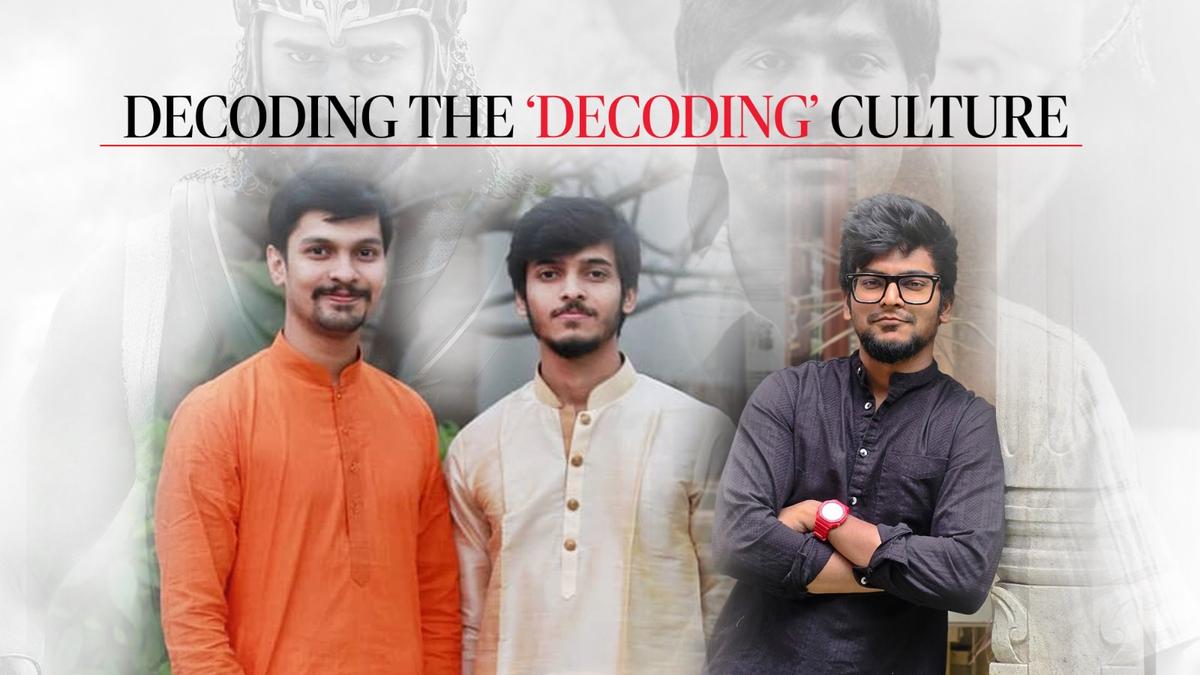
Kodaikanal-based Madhan begins the conversation by opening up on how he became an engineering graduate by degree and a cinephile by instinct. He speaks of cinema the way some people speak of faith. “I’ve always been a cinephile. Not in the sense of following only a particular cinema or industry…I genuinely love cinema as a whole,” he says.
From childhood, Madhan was drawn not to the glamour of the screen but to the layers behind it. For him, cinema is equivalent to what books are to many. “And that’s how the whole decoding films started.”
He notes that, for a good film, the opening shot itself reveals what kind of experience the director is preparing you for. “That’s when I realise that, ‘Okay, this movie is going to have a lot of detail,” says Madhan, who is popularly known by his handle ‘Man with ADHD’ on social media.

The turning point arrived with his video on Vada Chennai. “In 12–13 hours, it crossed a million views.” In it, he reinterpreted the “funk scene,” where Dhanush is detained by police for his hairstyle, a moment many assumed was random. He linked it to the tense atmosphere following the assassination of Rajiv Gandhi, suggesting that if witnesses described a suspect with a distinctive haircut, police across neighbourhoods like Royapuram would begin profiling young men who matched that look. This fresh perspective went viral, and even Vetri Maaran later referenced it at an event, bringing him recognition from media houses, meme pages, and members of the director’s own team.
Overnight, media portals, meme pages, and even Vetri Maaran’s team began following his work. For the first time, his observations got recognition.
From thereon, with every video, he built a growing community of people who are curious to look at cinema with a deeper lens. “Hollywood has massive decoding communities for Game of Thrones, Marvel, and DC. I wanted to create a similar space for Tamil cinema,” he says.

He believes that it’s of utmost importance to be careful about the craft, that decoding shouldn’t disrupt the joy of cinema; it’s for those who naturally look deeper. He avoids new releases to protect the audience’s experience and prefers decoding older films that can be rediscovered by uncovering layers, questions, moral reflections, and meaning.
If Madhan represents the curious viewer, brothers Srinath and Srikanth Ranganathan bridge the world between audience and filmmaker through their YouTube channel, Expert Fx. Their work goes beyond the usual fan theories and surface-level chatter that dominate film conversations online. Instead, they prefer calling it ‘film appreciation’, an approach rooted in craft, intention, and respect for the filmmaker’s process.
“Cinema is a craft,” says Srikanth. “When a filmmaker uses that craft to translate what’s in their mind onto the screen, it deserves to be approached more scientifically and technically than mere decoding or random theories.” He adds that their background in visual communication shaped the way they watch movies. They analyse cinema not as fans, but as filmmakers studying framing and lighting to understand how the creative choices were made. For them, nothing enters the frame without purpose.
Srinath believes that their belief in layered storytelling comes from their own short-film experience. “It’s never just a plain story,” they say. “You have to visually express why a character behaves a certain way.” To them, storytelling is an ancient practice as old as temple sculptures, always built on meaning and symbolism that carries knowledge from one generation to the next.
A breakthrough moment for the brothers came when cinematographer Manoj Paramahamsa collaborated with them after noticing their work online. What began as a simple Instagram exchange turned into an in-depth filmmaking masterclass, recorded inside their modest home studio. Manoj spent three and a half hours breaking down scenes with them, not for publicity, but because he believed in the importance of nurturing young creators who respect cinema as an art form.

For Srinath and Srikanth, that moment felt like validation that thoughtful, craftsmanship-driven content belongs in the mainstream. And in a digital world obsessed with quick takes, YouTube channels like Expert Fx remind audiences that cinema is a language by itself.
The duo also cites S. S. Rajamouli’s Baahubali: The Beginning as a masterclass in narrative impact, pointing to the explosive cliffhanger, “Why did Kattappa kill Baahubali?” The question transcended the film itself, sparking nationwide debates, memes, and endless fan theories across languages. Audiences dissected the motives of Kattappa and the fate of Amarendra Baahubali, keeping the film culturally alive for years. This sustained curiosity drove massive rewatches and unprecedented anticipation for Baahubali 2: The Conclusion, proving that a powerful cliffhanger can extend a film’s life far beyond its runtime and transform it into a long-lasting phenomenon.
Meanwhile, speaking about the rise of decoding culture, filmmaker Ranjit Jeyakodi says, “The rise of movie decoding and fan theory culture in South Indian cinema has been even more explosive, fueled by our massive star worship, dedicated fan clubs, and the boom of social media.”
Ranjit, best known for helming films such as Ispade Rajavum Idhaya Raniyum and Michael, also mentions that when audiences read meanings into the film — even ones that weren’t placed consciously — it shows they’re deeply invested. “That’s beautiful. But sometimes these misinterpretations dominate over the film’s real intent, and that can overshadow what the filmmaker worked hard to convey.” Still, he believes a film truly begins its life only after release.
He acknowledges that the fan theories, especially in South Indian cinema’s star-driven culture, can turn into hype, and when reality doesn’t match speculation, backlash often follows. “Come with curiosity, not expectations. Expectations kill. Curiosity surprises.”
Yet he calls this trend a double-edged sword. On one side, it encourages filmmakers to build richer, layered narratives that reward repeat viewing. On the other hand, it risks pushing creators to deliberately over-engineer mystery, turning films into puzzles rather than emotional journeys.
Ranjit hopes core emotions never get lost in the noise. “Not every story needed to be a riddle. Sometimes a filmmaker just wants to say something heartfelt and simple.”
In the end, cinema lives beyond the screen. It survives through conversations, interpretations, debate, and rediscovery.
Published – February 24, 2026 03:50 pm IST