


Berlinale 2026 | Iranian filmmaker-activist Mahnaz Mohammadi: ‘I’m not making political films’
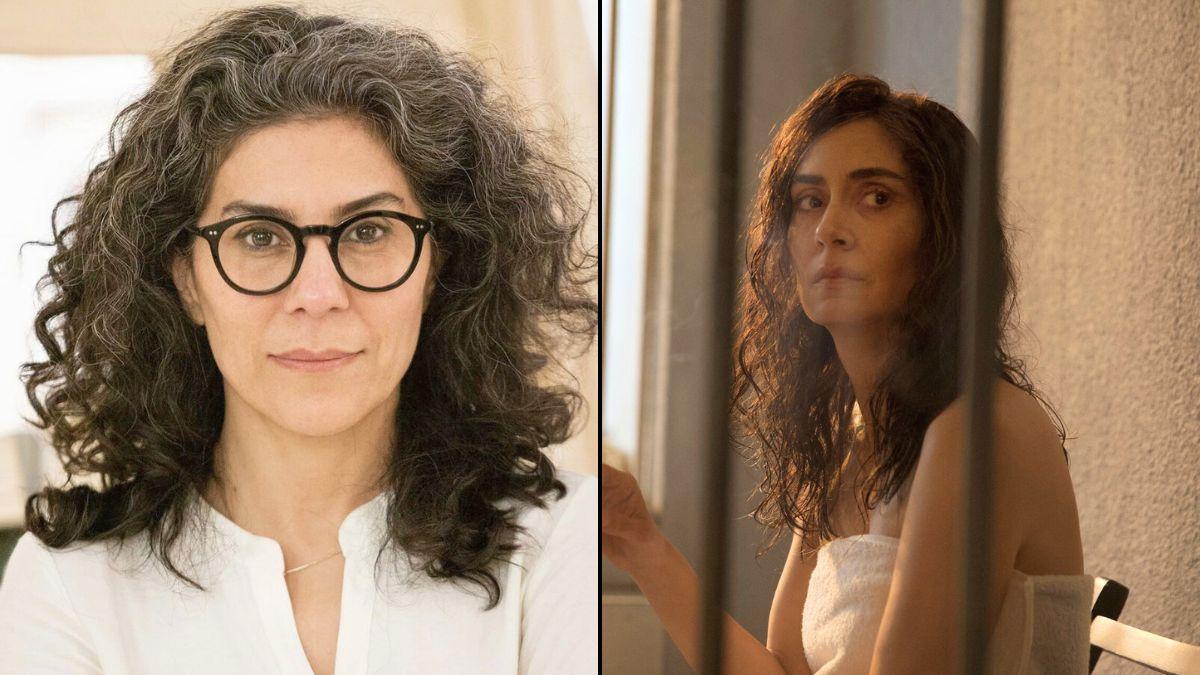
Iranian filmmaker-activist Mahnaz Mohammadi, 51, lets me record her on camera, at the 76th Berlin International Film Festival, where her sophomore feature Roya premiered in the Panorama segment. She says she loves Indians. An Indian friend had gifted her a clock, whose time she didn’t change. Now, that frozen time acts like a good memory. Life is a series of fragments that flits between memory and forgetting, the conscious and unconscious. And that too, is the structure of her new film.

The Women Without Shadows (2003) director is known for her documentary films. Mohammadi, after her Toronto-premiered debut feature Son-Mother (2019), has been banned by Iran from making films. Her active involvement in Campaign for Equality (aka One Million Signatures Campaign), 2006, to demand changes to discriminatory laws against Iranian women, put her in the line of fire, with the Iranian authorities persecuting and arresting her multiples times, in 2007, 2009, 2011, and in 2014 for five years in Tehran’s Evin Prison. Also an actor, she is a cultural voice that confronts censorship, gender inequality, and freedom of expression in Iran. Her deeply humanistic films focuses not on politics for its own sake but on lived experiences under repression, giving voice to those silenced by the system, by the Iranian regime.
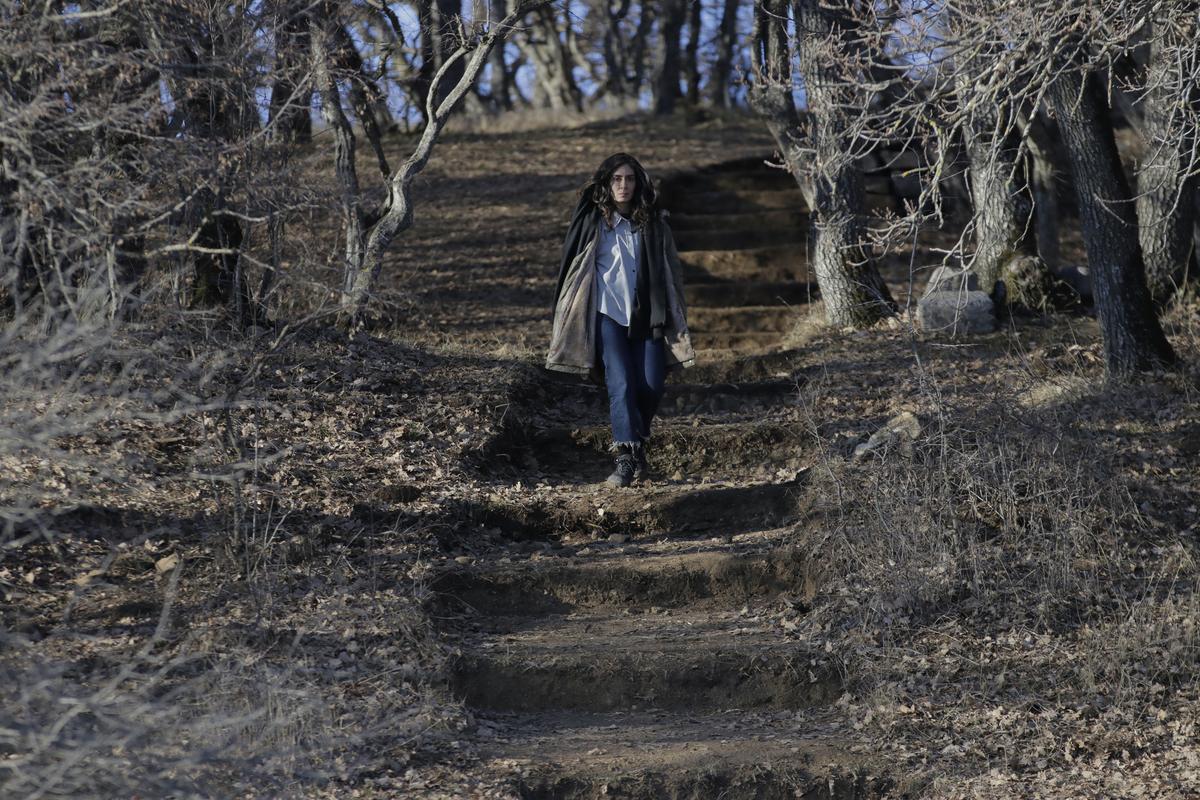
In her latest film, shot clandestinely, featuring a Turkish actress, Roya is an Iranian teacher who is imprisoned in Tehran’s Evin Prison for her political beliefs and is faced with a choice: either to make a forced televised confession or remain confined to her 3-sq.m cell. As past and present slip out of sequence and exchange places, she moves between inner landscapes and lived experience, revealing how isolation can reshape perception, identity, and the fragile possibility of resistance.

After many years of working with documentary forms, she returns to narrative cinema, albeit non-linear, her sophomore feature doesn’t try to reproduce reality but presents a dialogue between perception and memory. Dualities of dream and reality, past and present blur. For trauma, memory doesn’t move in a straight line. Resistance is not opposing a force, but refusing to disappear.
Excerpts from a roundtable interview:
 You have a Turkish actress essay the role of Roya, not an Iranian actress. Was it done to protect identities since you made the film secretly?

When I’m looking for the character so important for me, it takes so much time. I was sure I didn’t want to find an Iranian face, which has been seen in many Iranian films. Their story is in the internet everywhere, and they are losing their mystery. When you are watching, you remember their own personal story before watching the film. Even for my previous film, Son-Mother (2019), I chose not the face of an actor. But [Turkish actress] Melisa [Sözen] is an amazing international actor. After prison, for almost two years, I couldn’t go out. A few friends came home. I watched a film through one of their suggestions. It was a moment when I was watching [Nuri Bilge Ceylan’s] Winter Sleep (2014). I saw Melisa’s character under suppression. I felt I understand her, and I started crying.
For the first 20 minutes, we see the dark, claustrophobic innards of the prison world from the non-linear perspective of the titular Roya. We see blood on the floor and a restricted view of everything. How did you decide on this form and structure?
For me, it was always, ‘I don’t want to explain [the story], I don’t want to talk about what they did with me’. I have to find a way to give this chance to the audience to have a journey with Roya. Roya in Persian means dream. I’m inviting the audience to have this dream together, to experience Roya’s world, where reality and unreality merge. Not by separating Roya’s perception of past and present, because she doesn’t know what is the certainty of everything, what is the truth. The audience leave with Roya at the same time. I’m not guiding the audience on how they should feel. The storytelling is based on the unconscious structure in your dreams. Look at one of your dreams, you’ll remember some pictures and some noises without any meanings. I wished to make a film whose ending should not be like its beginning.

Looking back at the time when you were charged guilty and arrested, have you seen hope change from then to now?
I’m always hopeful. At that time, when I wrote that [open] letter (during post-election unrest), in 2009, it was just my situation. I’m a woman, I’m a filmmaker, I’m guilty, but now it’s not ‘I’, it’s ‘we’. And unfortunately, so many countries didn’t see our pain. They didn’t listen to our voices that can no longer bear to work or cope with this system, the Islamic Republic. We just became part of the system’s property. In 2009, I wrote this, but who listened? Nobody. Now ‘I’ became ‘we’. We are guilty. We don’t have a right to live in Iran. People inside Iran are fighting for survival. And, still I have hope. During the war, everybody was talking about Gaza and all the Leftists now, they are quiet. It means when the people don’t follow your ideology, you don’t care about them. Just watch Doctors Without Borders (Médecins Sans Frontières), they didn’t even give a paragraph to all who died: the doctors, nurses. What does it mean?
Can cinema change anything?
Cinema can’t change anything. Cinema can’t bring the justice. Cinema can bring awareness to the people’s decision, and when the people’s perception changes, maybe something gets changed.
A still from ‘Roya’
| Photo Credit:
@Pak Film
At this festival, international jury member Wim Wenders said cinema is the counterweight to politics. Politics has remained the subtext of Iranian cinema, albeit its expression has evolved, from speaking through children to direct realism. Can films and politics be separated?
Maybe, sometimes. Sometimes misunderstanding or misconception will happen. I can tell you, I’m not making political films. Not at all. But the situation the people are living in, I couldn’t ignore it. Even now in Iran, the briefing of going to the street after six o’clock has become part of the activism, because everywhere there are so many people being arrested, being killed really easily. How can I divide it between this and that. I don’t want to make a film about that but I want to make the film about what happened after all those politics suppress the people.
What does it mean to make films clandestinely? Jafar Panahi has done it. He’s been sentenced to a year in prison by Iran now. Do you see cinema as a form of resistance to the state ban on artists. What about courage would you tell young women filmmakers in Iran?
When you’re working in this way, your hands are cuffed. You’re putting people’s life in danger. It’s not easy at all, and all the time you have to be so flexible, so ready for any change but, still, it’s the only way to survive. When for so many years, you are under the suppression, to resist not to be part of those lies, it was my practice. They put me in the prison to not to survive, financially and mentally. I was looking for the truth but couldn’t find it, everybody has their own truth. I lived the life of Roya, the life I’m showing [in the film], I lived it. It’s so familiar for me. If I live in this situation, how can I keep the power [that be] from deleting this narration. When you begin to understand, and you also have had a good message all of your life, since your childhood, to believe in yourself, then you are willing to go to the way of hope. To actually create the hope, to live that hope. When I was kid, I would ask, and was told that ‘in the future, you can have it, make a hope and make a vision’. In childhood, I was thinking, where is hope, maybe when I’m grown-up, I will go and get it, that hope. But through life I learnt it’s not like that; it is the way of your living and practicing, with the cinema actually you’re making the hope. I don’t believe that love and hope exist, but we can create it.

You are very brave, to keep resisting and showing up. Can you tell us how your time in prison, and isolation away from your family while making this film and other projects, has psychologically changed you as a person, as an artist, and impacted your cinema?
Thank you for asking a good question. It’s taking me back to the moment… They changed the good things. You know, making the film for so many years, I was just thinking, how can I tell the truth, when I was not sure about the truth. Because I live in the time which changed my perception. I couldn’t trust. And I was a little bit shocked. Where is the truth? Can I find it between the fears, the denial, and old repetitions. For me, it was kind of a discovery, slowly, line by line, between the silences, to find out what’s happening. I never thought I’m brave, but my dad, since my childhood, he told me, ‘Don’t listen to them. Do whatever you want. You’re good. You’re great.’ When you hear this from your parents, since your childhood, they are instilling the will power, which is nobody can break it. Maybe, in all those years, I was practicing. Each time I broke down, I had to come back and gather piece by piece of myself together and make a new human again. Life still goes on, we can’t stop. After these two days of massacre, my friend just told me, Mahnaz, it may be better for a while, don’t make a film, just write a poem.
What does it say about the Iranian society and the women’s situation? Is hope dead?
Actually, after this massacre, I think the people got more motivation for change. What I heard they are saying is they don’t believe the Islamic Republic can see the Persian New Year. Just imagine how much they are hopeful, because for them, this act of the Islamic regime of killing their kids is the end. It’s over.
Which film/filmmaker do you keep returning to?
I lost my chance, because I was going to Kerala (International Film Festival of Kerala, IFFK, 2022) to get an award, the Spirit of Cinema Award. And because they were giving the Lifetime Achievement Award to [the late Hungarian legend] Béla Tarr, I forced myself to go there because I thought it’s the only chance I can meet him. And, unfortunately, they didn’t give me visa to go there. I lost the chance. [Béla Tarr passed away on January 6, 2026.]
The writer is attending the film festival at the invitation of Berlinale; her trip has been facilitated by Goethe-Institut/Max Mueller Bhavan Mumbai.
Published – February 22, 2026 01:33 pm IST