



When dhabas cater to change

One can always meet new people and discover novel perspectives in a dhaba.
| Photo Credit: SREEJITH R KUMAR
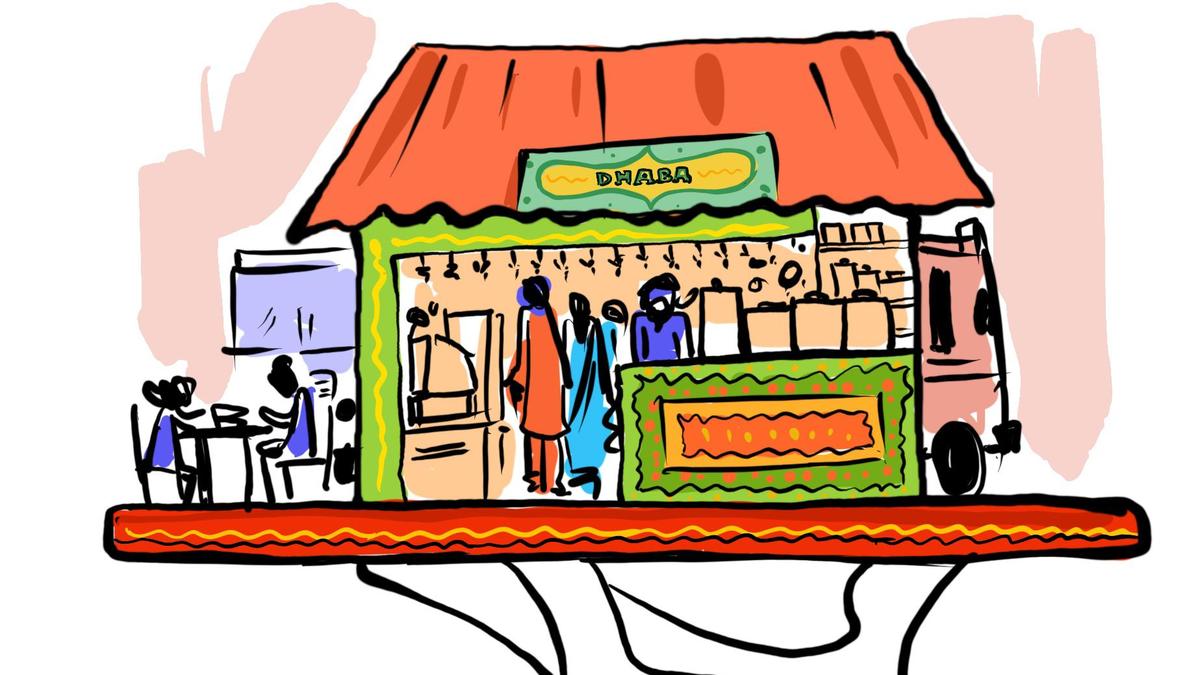
Dhabas, as I recall from my childhood, used to be roadside eateries found especially along the highways and serving multiple purposes. Apart from satiating the hunger pangs of travellers, dhabas used to serve as a crucial halt along the journey. Usually built with modest construction materials, they used to be not only affordable but were also champions of sustainability in fierce opposition to conspicuous consumption.
I used to wonder what exactly the difference between a dhaba and a restaurant was. Apart from putting the dhabas into the Indian category (or desi, to be precise) and the restaurants into western, I could not figure out any significant difference. Later, I understood the concept of “user experience”. Only then did I realise that dhabas were much more than a mere roadside halt. They used to be a point of refuelling for humans just like fuel stations were for the vehicles. In times when toilets were not easily accessible on Indian roads, dhabas used to serve an important function on long voyages.
Moreover, they used to be a hangout place for travellers interested in meeting new people and discovering novel perspectives. For those watching sports on small-screen television or those discussing major political issues over tea and a newspaper, the dhabas have serviced all sorts of gatherings. That is how they have played a critical role in entertaining folks, especially when they did not possess the luxury of being glued to their smartphones. Needless to say, they were also a hub for rumours.
Lifestyle change
However, today, the dhabas have transformed and adapted to the present lifestyles of their patrons. You may conveniently find a dhaba in the middle of the city with all the amenities and luxuries craftily designed to give you a feel of the dhaba with a sense of opulence. On a hustling highway, one might come across a dhaba with a drive-through experience. One such dhaba I saw in Bhopal is situated on the third floor in a commercial complex. It had designer furniture made with bamboo and an air-conditioned ambience. The staff there wears uniform and speaks like trained personnel in hospitality.
Themed dhabas have sprung up to give us a taste of the local cuisine as well. On the outskirts of Ranchi, one may find them providing “authentic” tribal cuisine. They offer a well-crafted ambience of a farmhouse where one sits on the cushions kept on the handwoven carpet which lies on the earthen ground. The shade is offered by a bamboo roof, and the cutlery is made of earthen, wooden, and bamboo materials. The prices are higher than the fine-dine restaurants of the city.
In Lucknow, I visited one such dhaba that offers local cuisine. The premium woven cots serve as furniture and the candlelights are replaced with the kerosene lamps of colourful designs.
The food, cutlery, furniture, and ambience are all carefully designed to match the experience of a premium restaurant. However, they call themselves dhabas and claim to serve authentic recipes.
While frequenting these renovated dhabas, I must confess I liked everything about them. However, I missed the good-old rustic vibe and the carefree attitude of the folks. I like my goods and services polished, but I also long for the attendant speaking the local dialect and the fellows ready to mingle.
Maybe, I am being essentialist in my understanding of the desi, or maybe I am pointing out the hyperreality of the post-modern era.
emailtoaakashbajpai@gmail.com
Published – February 22, 2026 06:47 am IST