




Battery Recycling Is Getting Ready To Take Off
Battery recycling isn’t exactly the sexiest part of car manufacturing. Still, it’s becoming an important part of the electric vehicle industry. A high-mileage EV’s degraded battery may not be great for traveling long distances, but the materials contained within it can be repurposed to create brand-spanking-new packs.
The reason EV battery recycling isn’t a huge industry yet is simple: Electric cars are still pretty new, and there aren’t a ton that are reaching the end of their lifecycle yet. However, a plethora of old EVs are getting ready to retire soon, making recycling more lucrative than ever. There’s a reason some are calling the mineral-rich sludge created during the recycling process the new “black gold.”
The must-read auto and tech newsletter hits your inbox every morning at 8 a.m.

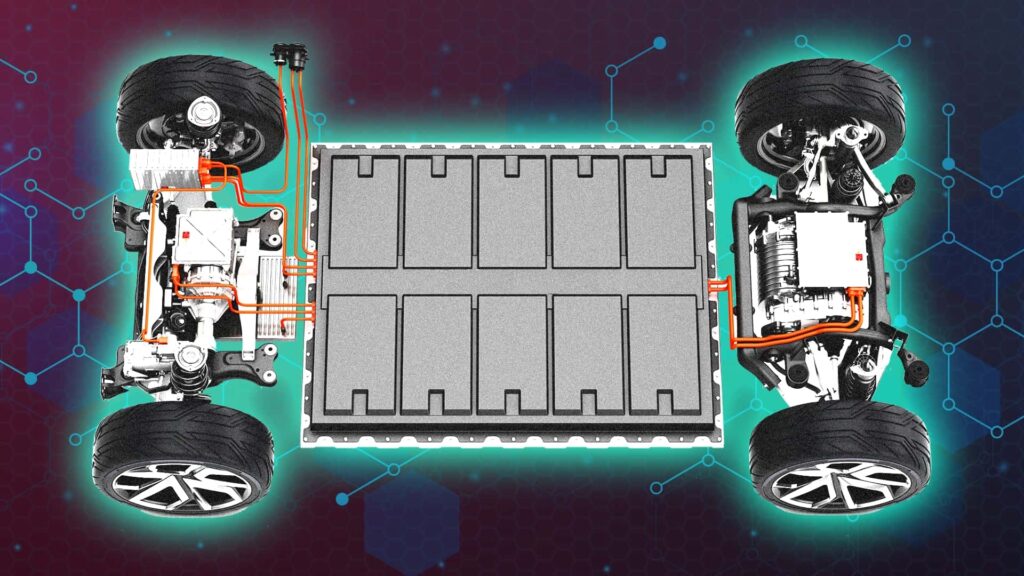
Spent EV batteries can be recycled and repurposed into fully functional new cells.
Photo by: Panasonic Energy
Automotive News gives the skinny on just how much money the battery recycling industry has in its sights:
Disassembly and recycling of battery-electric vehicles is shifting from a niche sector into a high-growth industry. Consultancy McKinsey & Co. projects that global revenues across the battery recycling chain are set to grow to roughly $70 billion a year by 2040, up from about $2.5 billion last year.
The bullish outlook is driven by an expected wave of retired batteries after 2030, as new EVs launched in recent years are ready to be scrapped. Automakers including BMW, Volkswagen and Renault are expanding recycling partnerships, while companies such as R3 Robotics are deploying robots to industrialize disassembly at competitive prices.
One big driving factor in battery recycling is, unsurprisingly, regulation. Until the day when transforming old batteries into new ones is just as economical—or more so—than mining and refining new materials, the industry will need a helping hand to scale up.
Both the EU and China have some serious requirements for recycling battery materials, including China’s mandatory take-back rules for batteries. Then there’s the EU Battery Regulation, which targets a 70% recycled lithium target for EV batteries by 2030.The European Critical Raw Materials Act aims to reduce foreign dependence on battery materials by requiring that at least 25% must not only come from within the EU, but must also be recycled.
The U.S. lacks a federal mandate for EV battery recycling, but some states are stepping up. Last month, Colorado lawmakers introduced a bill that would require automakers to ensure their EVs’ batteries are properly recycled. That law would go into effect in 2028.
Between the forces of supply security, margin protection and circular manufacturing, battery recyclers could be in for a massive uptick over the next few years. And here’s the even wilder part: A mature EV battery recycling industry could mean that the world wouldn’t need to mine any new battery minerals after 2050. That’s according to a study published last year by the environmental think tank RMI.
Additional reporting by Tim Levin