




I Drove The 2026 Toyota bZ Woodland. This EV Is Big, But Missing Some Key Features
Apparently, Toyota is getting a bit tired of everybody calling it a laggard in the electric-vehicle space. After years of sticking to its guns and doubling down on hybrids, a wider selection of Toyota EVs is finally on the way.
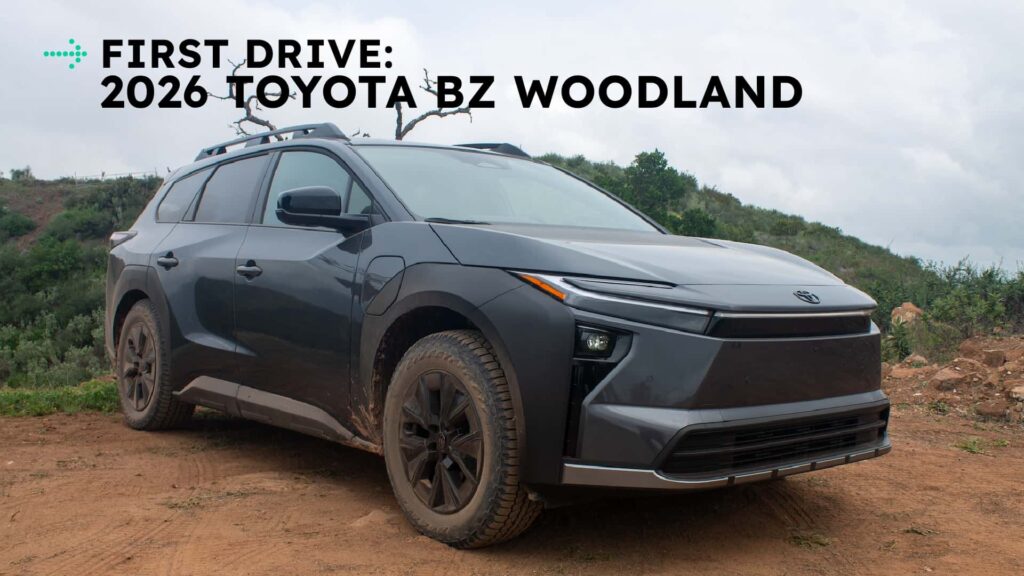
Three new electric Toyotas will hit the U.S. market this year: the compact C-HR, the three-row Highlander and today’s topic of conversation, the bZ Woodland. The quick, spacious and off-road-friendly wagon delivers what the EV world needs most right now: more choice. But it also falls short in some ways that will be familiar to followers of Toyota’s other EV efforts.
(Full Disclosure: Toyota covered my travel and lodging in Southern California so I could drive the 2026 bZ Woodland)
2026 Toyota bZ Woodland: What Is It?

Photo by: Tim Levin/InsideEVs
The bZ Woodland is a stretched-out, off-road-ified version of Toyota’s bZ electric crossover. Its unmistakably Subaru Outback-like shape is no coincidence; the Woodland is one of several EVs Toyota codeveloped with the seven-star brand, which will sell its own version called the Trailseeker, just as it’s turned the bZ into the Solterra.
It’s based on the same 400-volt e-TNGA platform that underpins the bZ and C-HR and is only available in dual-motor, all-wheel-drive guise. The bZ Woodland goes on sale in March, with a starting price of $46,750, including destination fees. For anybody who wants to go a bit farther afield, all-terrain tires are a no-cost add-on—but they do decrease the estimated range from 281 miles to 260.
2026 Toyota bZ Woodland
Base Price
$46,750 (incl fees)
Battery
74.7 kWh
Ground clearance
8.4 inches
Drive Type
Dual-motor AWD
Output
375 hp
Speed 0-60 MPH
4.4 seconds
Charge Time
10-80% in 30 min; 150 kW max
EV Range
Up to 281 miles
The Woodland joins a growing Toyota EV lineup. And it brings a bigger, more capable option to an EV market dominated by small crossovers.
What’s Good: Lots Of Cargo Space In A Wagon That Rips
I grew up in a steady parade of Subaru Outbacks, so I have a soft spot for lifted wagons. You might think that bZ extended by 6 inches would look weird or forced, but the Woodland wears the silhouette well. And you really feel the extra room on the inside. Cargo space comes in at 74.9 cubic feet with the seats folded flat, about eight cubes more than the regular bZ.
EV fans will lament the lack of a frunk, however—the first sign of several compromises that still dampen Toyota’s electric game.
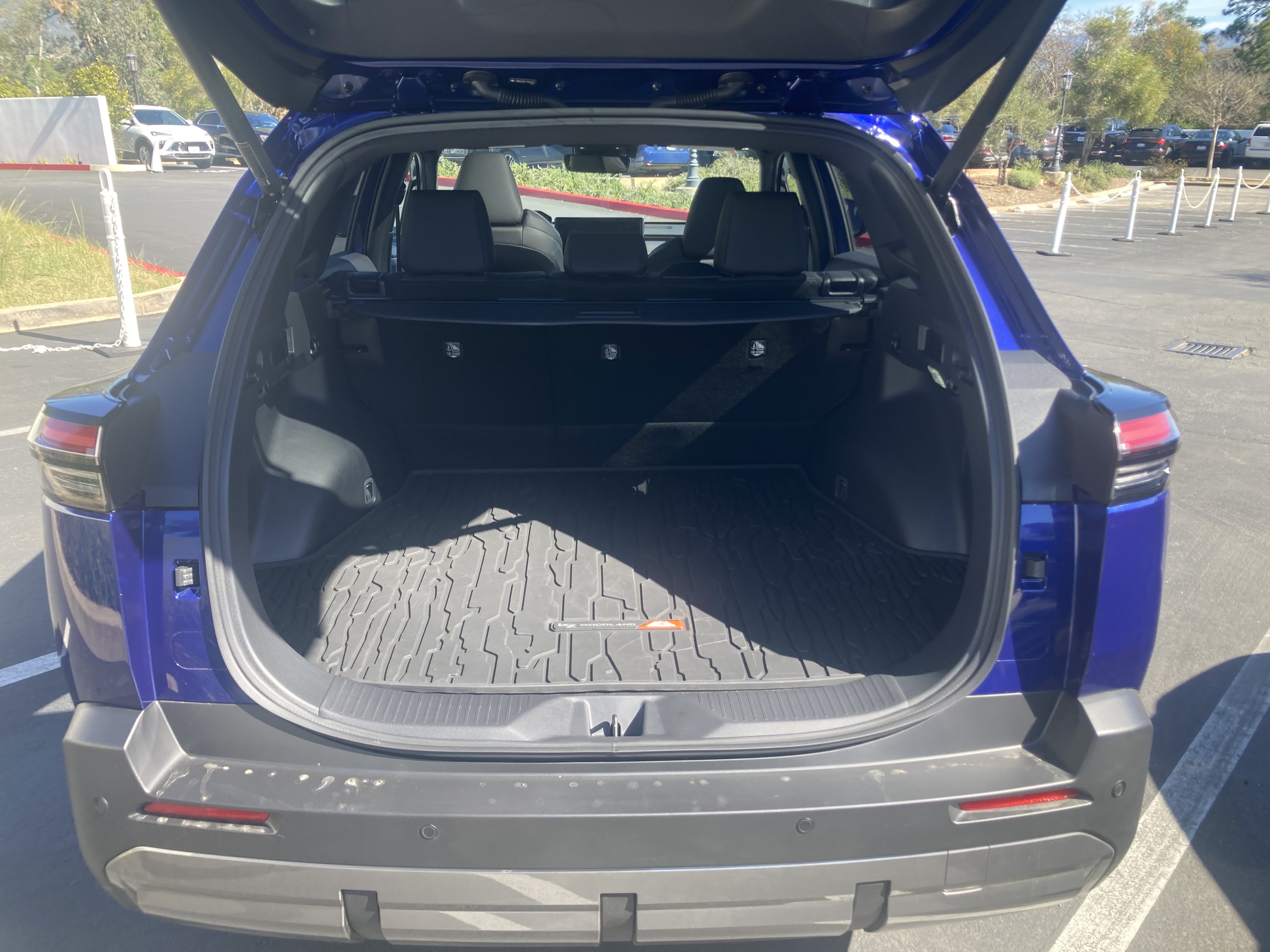
2026 Toyota bZ Woodland cargo space
Photo by: Tim Levin/InsideEVs
Pair that space with 8.4 inches of ground clearance, and you’re left with a rare combination in the EV world. Anyone in the market for a compact, sleek electric crossover has their pick of the litter. Bigger, more off-road-friendly EVs are hard to come by, as my colleague Mack Hogan learned when he went EV shopping. That is, unless you have Rivian, Hummer or Mercedes G-Wagen money.
I’m no expert off-roader. But during a five-mile out-and-back off-road adventure in Ojai, California, the Woodland took care of business. It comfortably cruised down rut-filled dirt roads, taking bumps like a champ. And it crawled up a very steep, off-camber section with the help of the X-Mode settings, which help conquer snow and dirt by modulating braking and torque delivery to maximize grip.
The Woodland’s 375-horsepower dual-motor setup kicks ass on the pavement, too. Hit the accelerator, and the Woodland blasts forward much more aggressively than you’d expect from a family crossover, which should make it great for highway passes. Toyota says 60 mph arrives in 4.4 seconds.
Photo by: Tim Levin/InsideEVs
Range is respectable, coming in at an EPA-estimated 281 miles from a 74.7-kilowatt-hour battery. Charging performance is average for the segment, but behind 800-volt rivals: 150 kilowatts and 10%-80% in a claimed 30 minutes via a native Tesla-style NACS charging port.
Notably, Toyota says it took to heart the customer complaints about the early bZ4X’s weaknesses and reacted accordingly. That had poor range and, in some trims, very slow 100 kW charging. The Woodland and new bZ’s specs aren’t groundbreaking, but they get the job done much better than earlier efforts.
What’s Not As Good: So-So Software, No Glove Box
2026 Toyota bZ Woodland
Photo by: Tim Levin/InsideEVs
Still, Toyota has some more work to do for its future EVs. Mainly, it’s still behind on software.
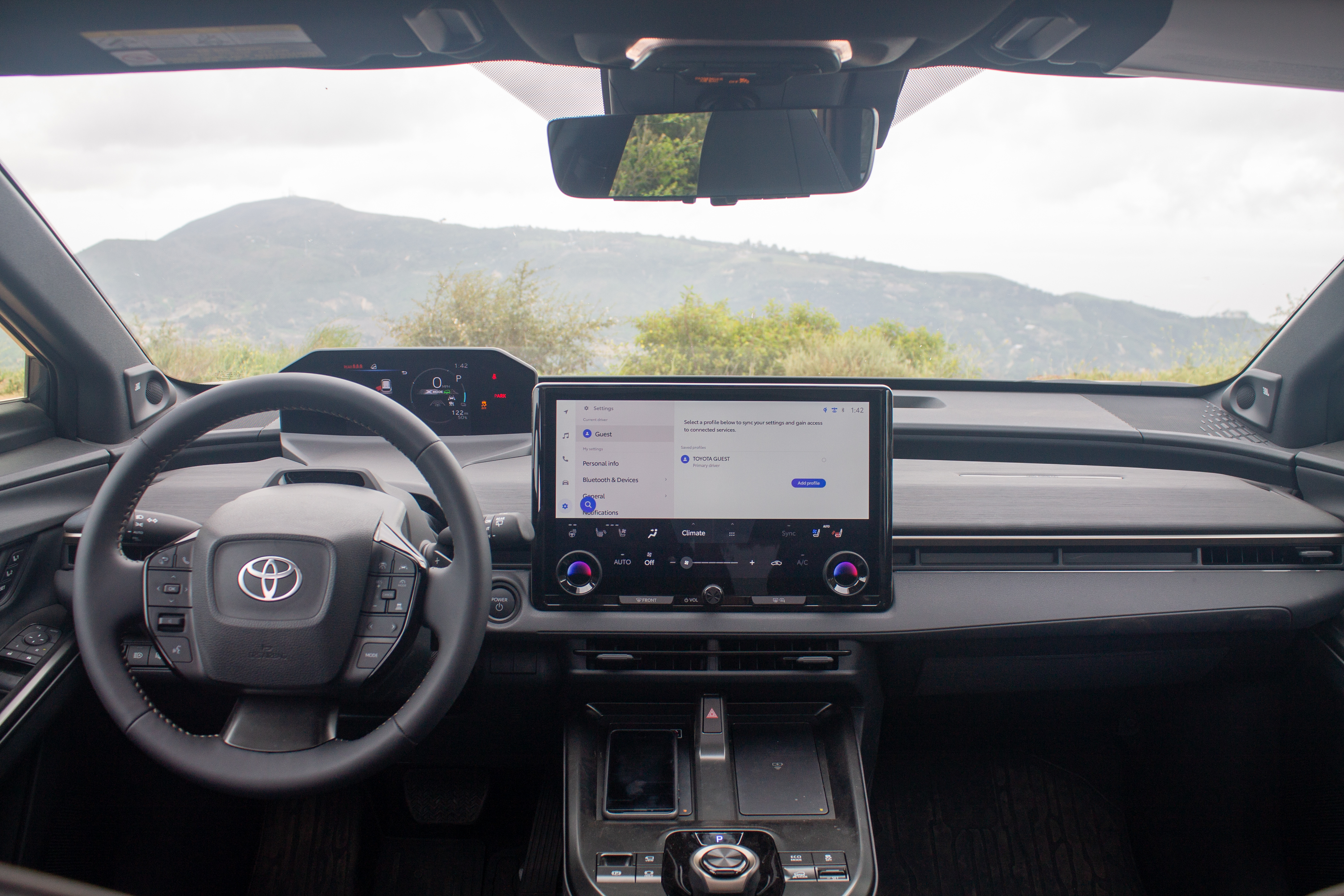
In the bZ Woodland, you get a large 14-inch touchscreen that’s fairly responsive and easy to use. It just doesn’t do all that much and feels at least a generation behind the competition.
The Toyota interface isn’t nearly as attractive or feature-rich as something you’d get in a General Motors or Hyundai product, and it’s light years behind what Tesla and Rivian offer. It also lacks basic capabilities that upgrade the EV ownership experience.
Photo by: Tim Levin/InsideEVs
There’s still no built-in route planner, meaning that the navigation system won’t plot out charging stops based on one’s destination and the vehicle’s charge level. Toyota does offer the ability to do this via Apple Maps and CarPlay, but that’s limited too, as it doesn’t automatically start battery preconditioning when you’re approaching a fast-charging stop.
On the navigation screen, there’s also no one-tap shortcut to find charging stations, which you’ll find on many EVs and which helps a lot while driving.
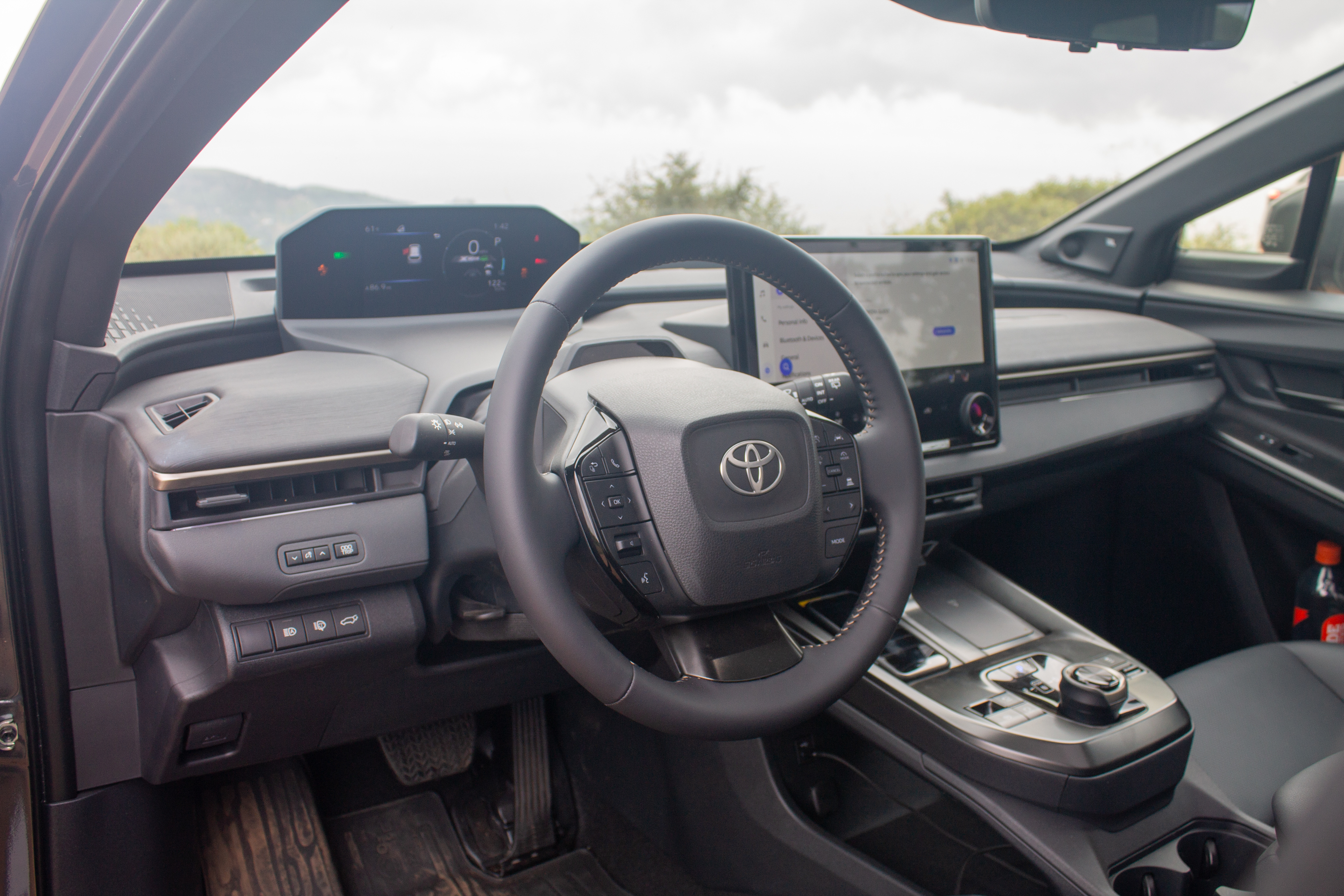
One thing I actually like about Toyota’s interface: The digital gauge cluster sits way back, close to the windshield, and acts more like a heads-up display. I like that you don’t have to peer through the steering wheel to see vital driving information.
The latest RAV4 debuts a new user interface, which will offer apps and which I hear is a big upgrade. Toyota says that this system will make its way into other new models over time.
One last gripe about the Woodland: There’s no glovebox. I mean, come on.
2026 Toyota bZ Woodland
Photo by: Tim Levin/InsideEVs
2026 Toyota bZ Woodland: Early Verdict
Toyota needs to step up its software game and deliver on basic EV features that help buyers navigate this new world. But the bZ Woodland hits the mark in other ways that I think will make it popular among a certain crowd. Its wagon shape, distinctly rugged styling and off-pavement capability set it apart from mainstay crossovers like the Tesla Model Y, Hyundai Ioniq 5 and Ford Mustang Mach-E.
Above all, it’s a Toyota. Americans have been clamoring for more electric options from the brand, which has a reputation for reliability and efficiency. With the launch of the bZ Woodland, those people have not just another solid option, but one that stands out from the pack.
Contact the author: Tim.Levin@InsideEVs.com