




Toyota Urban Cruiser Ebella: Toyota’s quiet electric thesis for urban India
Toyota has long taken a measured, pragmatic approach to electrification. While competitors rushed to dominate early EV headlines, Toyota focused on strengthening its hybrid strategy, backing real-world efficiency and infrastructure readiness over hype-driven ambition. The Urban Cruiser Ebella represents a quiet but decisive evolution in that philosophy. This is Toyota acknowledging that the Indian market is ready for a mass-market electric SUV—on its terms. In characteristic Toyota fashion the Ebella does not attempt to shout above the competition. It is instead trying to be the most sensible one.
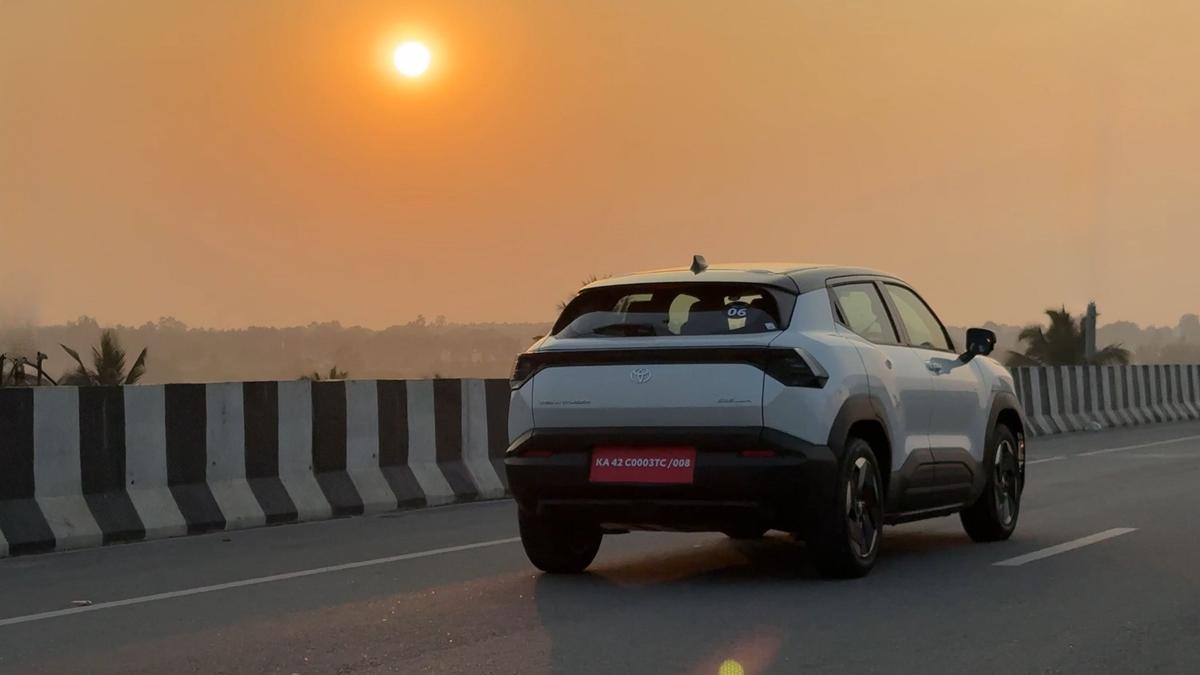
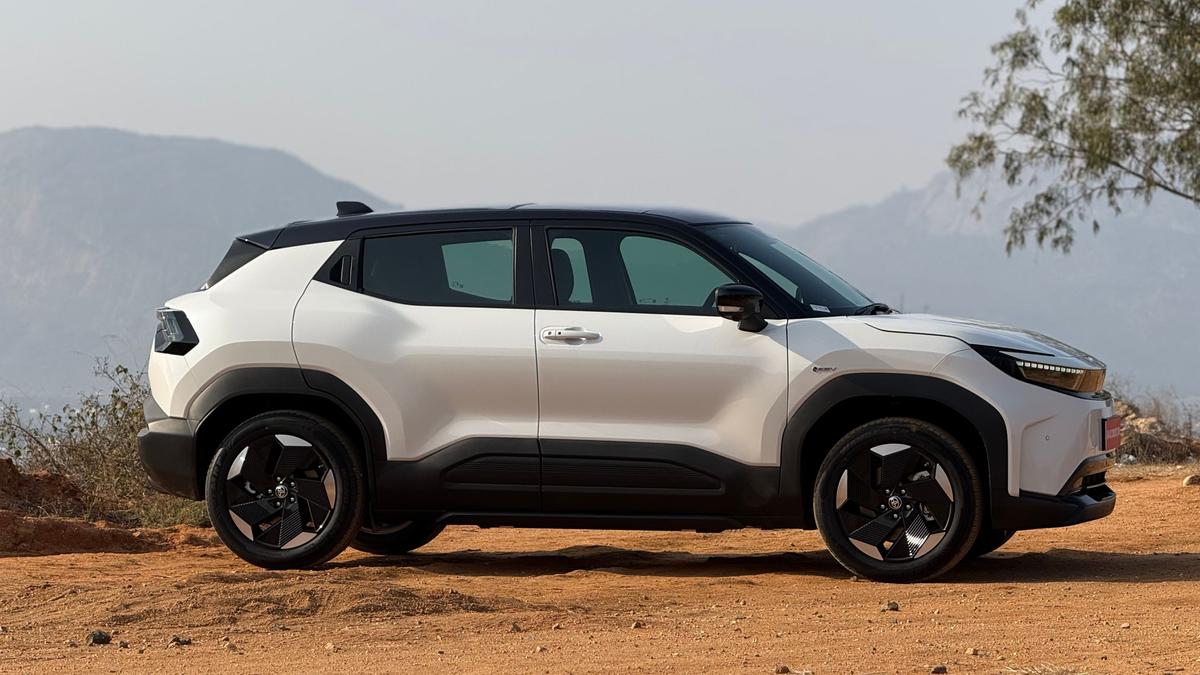
Surfacing and restrained styling lend the Ebella a mature, urban-ready road presence
| Photo Credit:
Special Arrangement
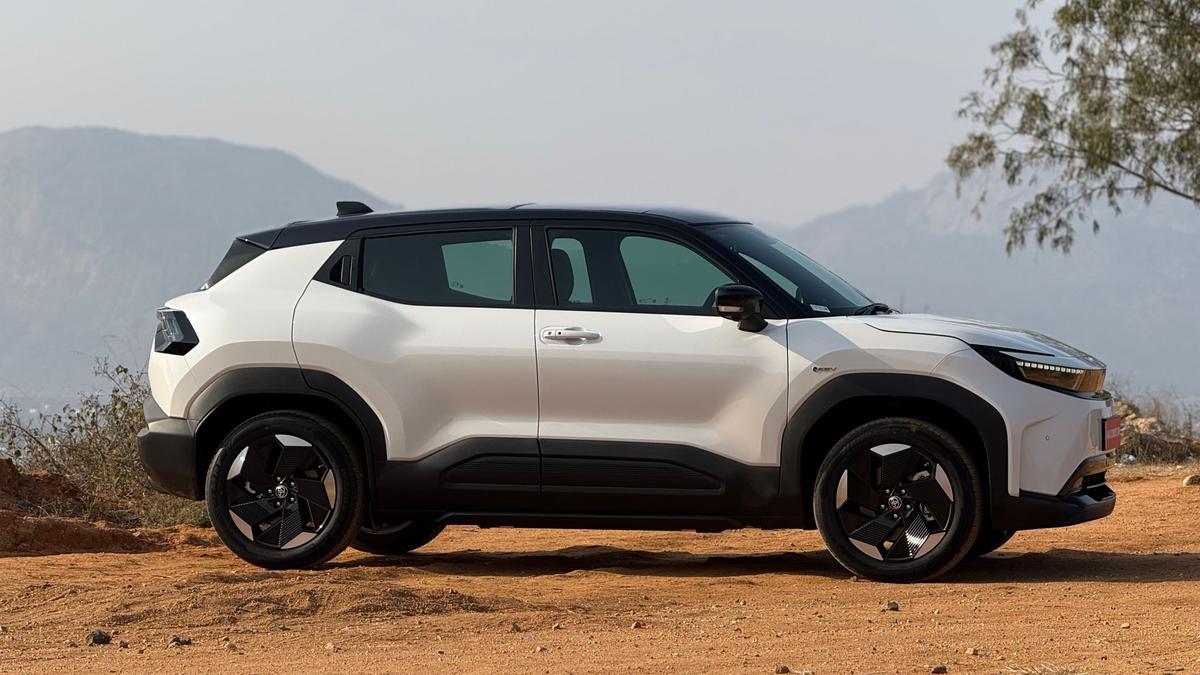
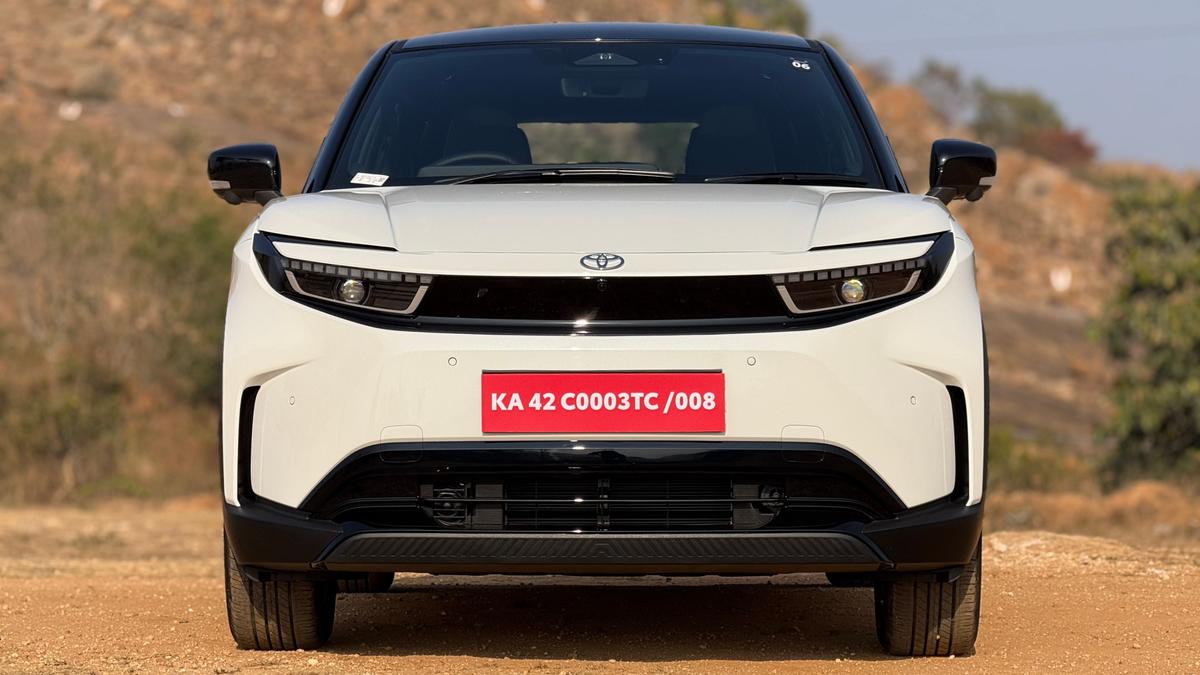
Visually, the Ebella strikes a careful balance between familiarity and modernity. Its shared underpinnings with the Maruti Suzuki e Vitara are apparent, yet Toyota asserts its distinct identity, most clearly expressed at the front. The signature hammerhead grille lends the SUV a contemporary, almost concept-inspired face, while slim LED lighting elements, clean surfacing and restrained body sculpting create an impression of quiet confidence. It doesn’t chase futuristic excess; instead, it leans into a quiet, assured presence that will age well. In a segment where visual noise often masquerades as innovation, the Ebella’s restraint feels refreshing.
On the road, that restraint continues, but with a surprising layer of engagement. The Ebella feels well planted and composed, especially at city speeds, where its light steering and smooth, predictable throttle mapping make navigating traffic effortless. What impresses more is its composure as speeds rise. As velocities climb into three-digit territory, the chassis settles, the steering gains reassuring weight, and the overall demeanour becomes more confident than one might expect from a compact urban-focused EV. There is a quiet coherence to the way the Ebella behaves—nothing feels rushed or underdeveloped—and that cohesion makes it unexpectedly engaging for an electric SUV in this class.
The panoramic glass roof adds an airy feel to the Ebella’s practical interior
| Photo Credit:
Special Arrangement
Battery options include a 49 kWh and a 61 kWh pack, both tuned for real-world usability rather than spec-sheet theatrics. The larger battery’s claimed range figure comfortably north of 500 km on the ARAI cycle positions the Ebella as one of the more credible long-range offerings in the compact electric SUV segment. In practice, even conservative estimates suggest that 400 km-plus should be easily achievable in mixed driving, which, in the Indian context, is more than sufficient for urban commuting with the occasional intercity run. Toyota’s approach here is classic brand logic: remove the psychological barrier of range anxiety first, then let the rest of the ownership experience do the convincing.
Ride quality is arguably the Ebella’s most Toyota-like trait. It filters broken surfaces with a maturity that suggests careful calibration rather than generic EV tuning. Speed bumps, potholes, and uneven tarmac are dealt with in a composed manner, while highway stability remains confidence-inspiring. The Ebella doesn’t pretend to be sporty, but it never feels soft or disconnected either. It feels engineered for people who drive daily, not for spec-sheet warriors.
Step inside, and the Ebella reinforces that same measured philosophy. The cabin feels premium without being ostentatious. Material quality is convincing, the fit and finish are impressive, and the layout is clean, intuitive, and easy on the eye. The standout here is the simplicity. In an era where EVs often feel obliged to overwhelm you with screens, colours, and gimmicks, the Ebella’s interior feels mature and thoughtfully curated. It gives you what you need, not what marketing trends dictate. For many buyers, that understated maturity will be more appealing than digital theatrics.
Sliding rear seats enhance flexibility, allowing owners to prioritise legroom or luggage space as needed
| Photo Credit:
Special Arrangement
Convenience features are comprehensive without being excessive. A large central infotainment screen with wireless Apple CarPlay and Android Auto, a digital instrument cluster, ventilated front seats, powered driver’s seat, wireless charging, rear AC vents, ambient lighting, and multiple USB ports cover the essentials. The panoramic glass roof adds a sense of space, while connected car technology allows remote monitoring, charging control, and vehicle status updates via a smartphone app. It is a well-judged feature set that aligns with real-world usage rather than checkbox maximalism.
Noise insulation is on the positive side, with the inherent quietness of an EV complemented by respectable sound deadening. Tyre noise is perceptible on coarse surfaces, but it never becomes intrusive—and if you are inclined to drown it out, the JBL audio system does a commendable job of turning the cabin into a rolling listening lounge. The overall refinement level is high, reinforcing the sense that this is a mature, considered product rather than a first-generation experiment.
Practicality is handled with quiet intelligence. The rear seats slide fore and aft, allowing owners to trade rear legroom for luggage space depending on the situation. With the seats in their standard position, the boot offers around 300 litres of space—adequate for daily urban duties. Slide the seats forward, and the cargo area expands significantly, making the Ebella surprisingly versatile for weekend trips and airport runs. It is a simple mechanical solution, but one that adds genuine usability to a compact footprint.
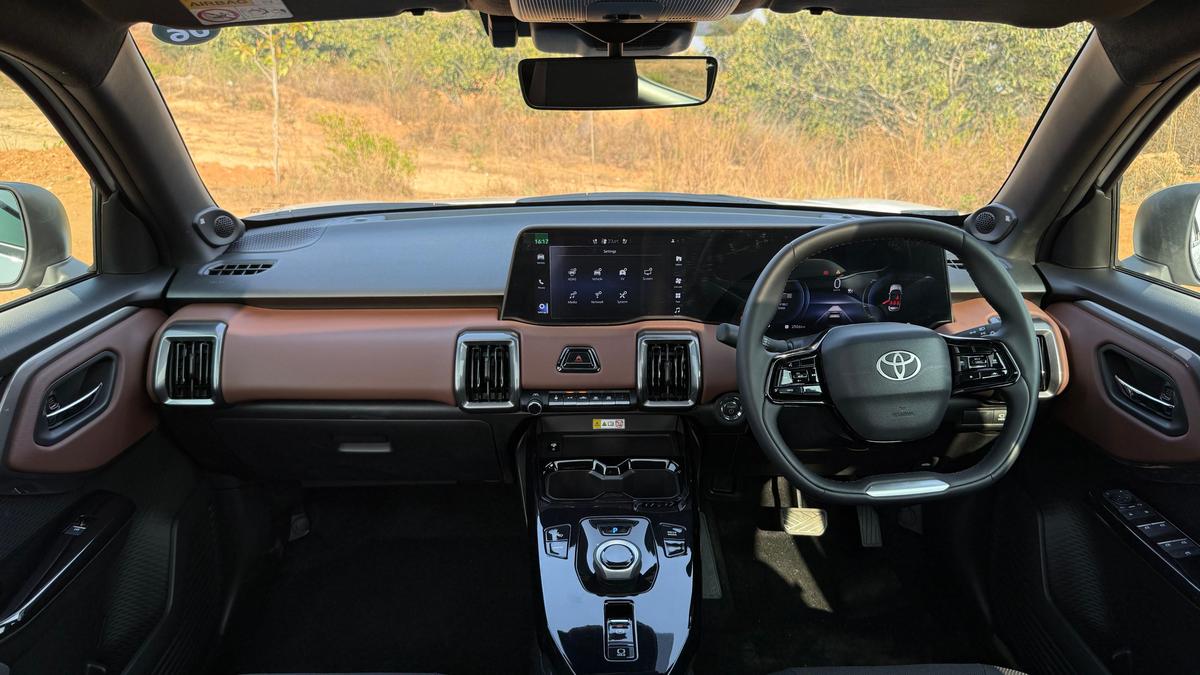
The thoughtfully designed cabin balances premium materials with intuitive, user-friendly layout
| Photo Credit:
Special Arrangement
Safety is where Toyota’s conservative engineering philosophy works firmly in the Ebella’s favour. The SUV is equipped with multiple airbags, electronic stability control, traction control, a 360-degree camera, and comprehensive parking sensors. Beyond that, it offers Level 2 ADAS features such as adaptive cruise control, lane keep assist, forward collision warning, and autonomous emergency braking. This is not just about ticking regulatory boxes; it’s about positioning the Ebella as a family-friendly, future-ready urban SUV. In a market where safety conversations are still evolving, Toyota’s decision to lead with a robust safety suite feels both responsible and strategic.
There are compromises, inevitably. Apart from the hammerhead front-end and minor detailing, the Ebella doesn’t carve out a radically distinct identity from its Maruti counterpart. Enthusiasts may wish for more performance-oriented variants or an all-wheel-drive option, and fast-charging speeds, while competitive, are not segment-leading. EV-specific flourishes like a frunk are absent. None of these omissions are deal-breakers, but they do underscore the Ebella’s positioning as a pragmatic, mainstream product rather than a technological showcase.
From a strategic perspective, the Ebella feels like Toyota’s measured opening move in India’s electric chessboard. Not a grand gambit, but a carefully positioned piece. It suggests a brand acknowledging the inevitability of EVs in India while staying true to its philosophy of reliability, usability, and long-term ownership confidence. The target buyer is clear: the urban professional who wants a frugal, stylish, effortless electric SUV for daily use, backed by Toyota’s service ecosystem and brand credibility.
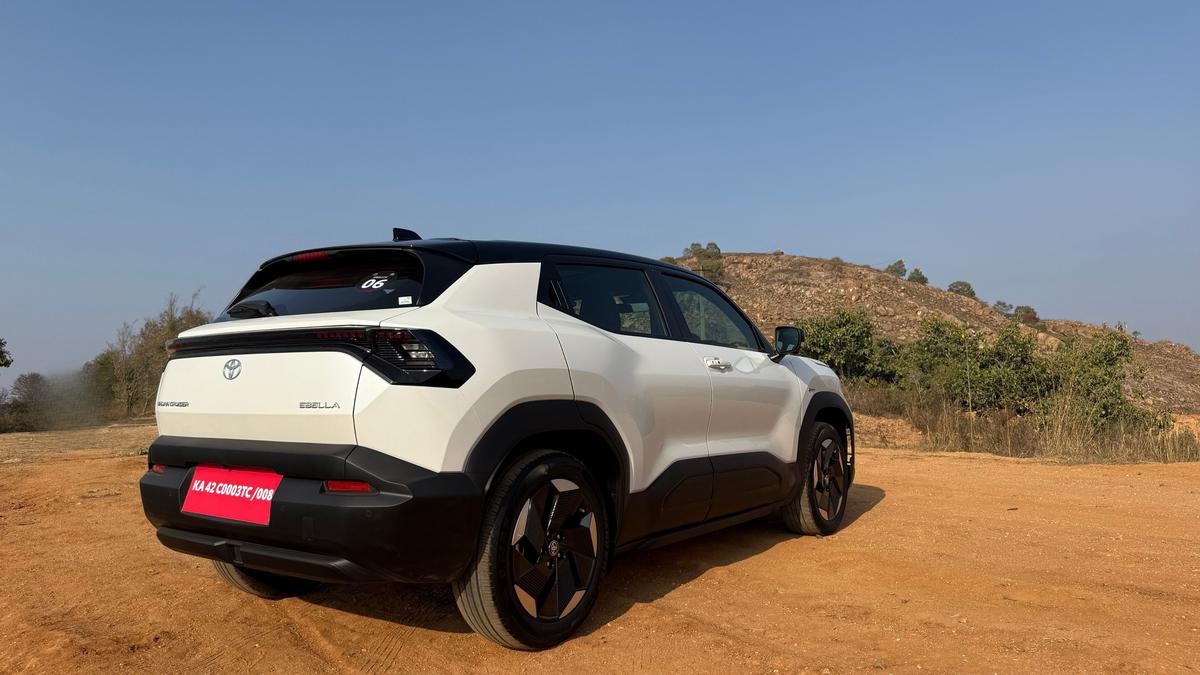
Tuned for comfort and composure, the Ebella’s ride quality stands out in everyday city driving.
| Photo Credit:
Special Arrangement
The Toyota Urban Cruiser Ebella does not clamour for attention — it earns it quietly. It looks modern, drives comfortably, offers excellent range, and brings a practical, versatile interior package that works well for urban India. The sliding rear seats and expandable boot add genuine usability, and the ride quality is a standout, making it easy to live with on a daily basis.
As a package, it works, but the defining factor will be the pricing—because an e-SUV like this feels like it is built for the masses, and the price needs to be in line to attract that kind of audience. It will have to step right in with the Tata Nexon EV—and for success, it will have to dominate that space.
Yes, it could have been more visually distinctive, and enthusiasts may wish for stronger performance or faster charging. But as a first step into India’s EV market, Toyota has played it smart. The Ebella is a great urban SUV for buyers who want a quality electric vehicle without stretching their budgets too far—and who value Toyota’s legendary reliability and service backing. In a market still finding its feet with electric mobility, that reassurance might just be the Ebella’s biggest selling point.
Expected Price Range: INR 14 – 18 lakh
Motorscribes, in association with The Hindu, brings you the latest in cars and bikes. Follow them on Instagram on @motorscribes