


How A.R. Rahman is reimagining himself for the stage
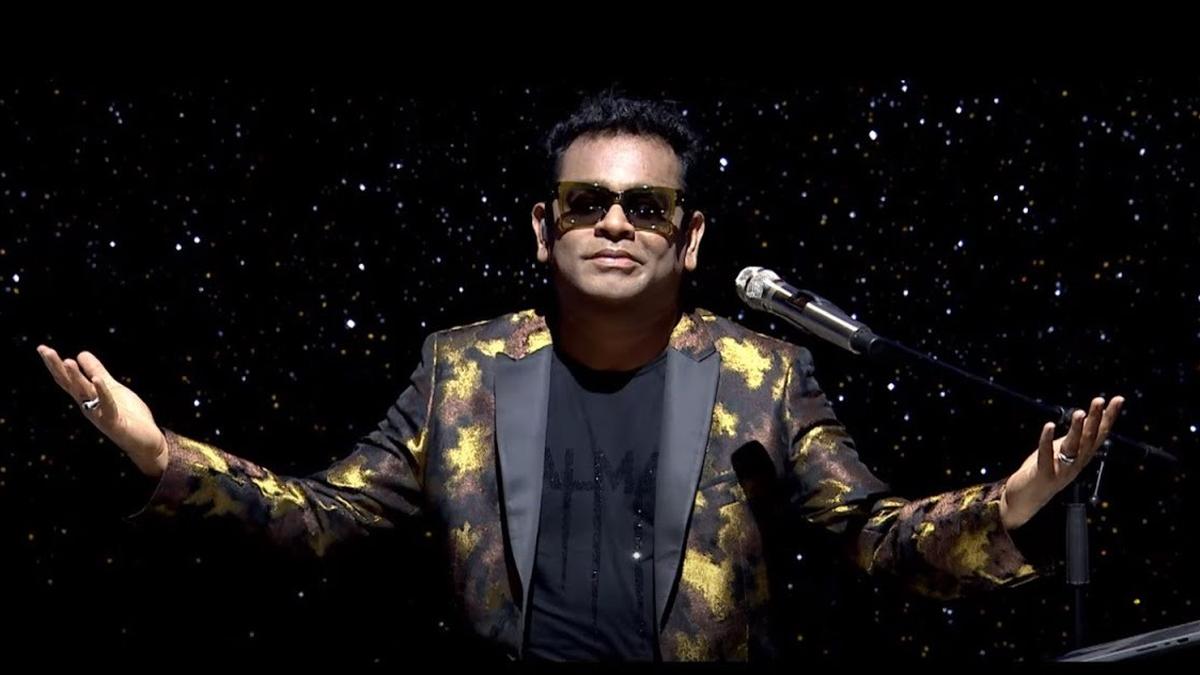
The loud cheer from the Chennai crowd at A.R. Rahman’s concert last Sunday(February 15, 2026), as part of his Wonderment Tour, echoed through the cool night sky. It was a dazzling fusion of lights, beats and hit melodies. In the past few months, Rahman has emerged as a performer, who loves to engage with different genres of music.

Audience in Mumbai and Delhi witnessed this recently as the Oscar-winning composer delved deep into Classical ragas and sufi mysticism. Aptly titled ‘JHALAA’, it wove together his musical and spiritual thoughts. In doing so, Rahman reminds us that the future of culture lies not in reinvention alone, but in thoughtful continuity—where beauty, discipline and meaning endure across generations.
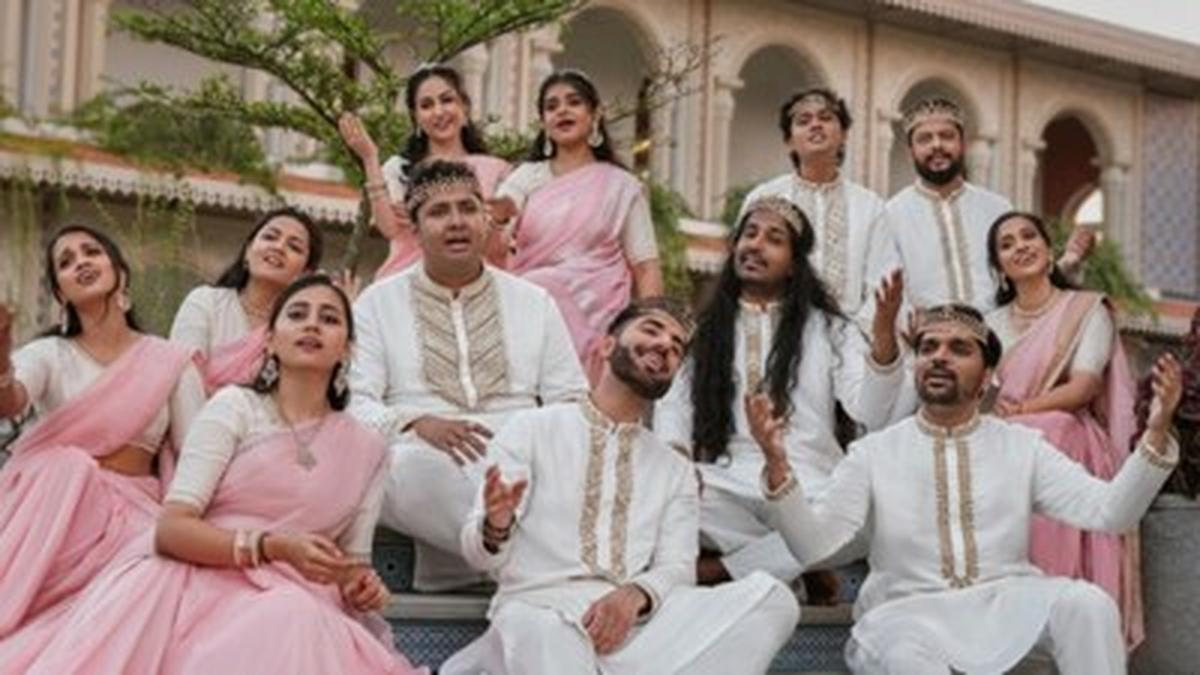
The 12-member JHAALA team, mentored by A.R. Rahman.
| Photo Credit:
Special Arrangement
Formed after a global talent search that received over 500 entries, JHALAA brought together 12 young artistes, trained in Indian classical arts, and mentored by A.R. Rahman. The ensemble is defined by its commitment to live, acoustic performance, free from pre-recorded tracks or digital enhancement. Its repertoire spans compositions by legendary masters such as Ustad Bade Ghulam Ali Khan, Ustad Munna Shoakath Ali, Oothukkadu Venkata Subbaiyer, Ustad Ghulam Mustafa Khan, Pt. Laxmanprasad Jaipurwale, Kunwar Shyam Ji and Amir Khusrau, alongside select works by Rahman.

Each performance unfolded as a carefully structured journey through sound and movement. It began with a bandish in raag Bhatiyar, a morning raag, which belongs to the Marwa Thaat. A favourite of Rahman, it was delineated beautifully enveloping the whole place with its movement in Vakr — Sa dha, pa, dha, ma, pa, ga, ma, dha, Sa; in Aroha Re; in Komal touching tivr Ni — creating a stir, as the alaps and the taans overlapped harmoniously.
The evening also featured compositions such as ‘Aao balma’ in raag Yaman Kalyan, ‘Bhor bhayi’ in raag Gurjari Todi and Carnatic compositions like ‘Alaipayude’. Classical dance forms, including Kathak, Bharatanatyam and Kuchipudi were seamlessly interwoven, most strikingly in ‘Aigiri Nandini’, where the trishul became a visual invocation to Devi.
Across its presentations, JHALAA brought alive the Navarasa—the nine essential emotions of Indian aesthetics — with clarity and restraint.
Introduced on several occasions by A. R. Rahman himself, and at other performances by Sai Shravanam, JHALAA stands as a collective rather than a display of individual virtuosity. Its growing journey across India and the world seems to reflect a deeper purpose: to reaffirm Indian classical music and dance as living traditions. This also spotlighted a different dimension of Rahman’s musical sensibilities.
The band is Rahman’s effort to preserve the musical memories of classical maestros by taking it to the next generation. In interviews after the performance he said he was extremely humbled by audience’s response, and how it showed the unifying aspect of art. Throughout this show, there were no requests from the audience for film songs.
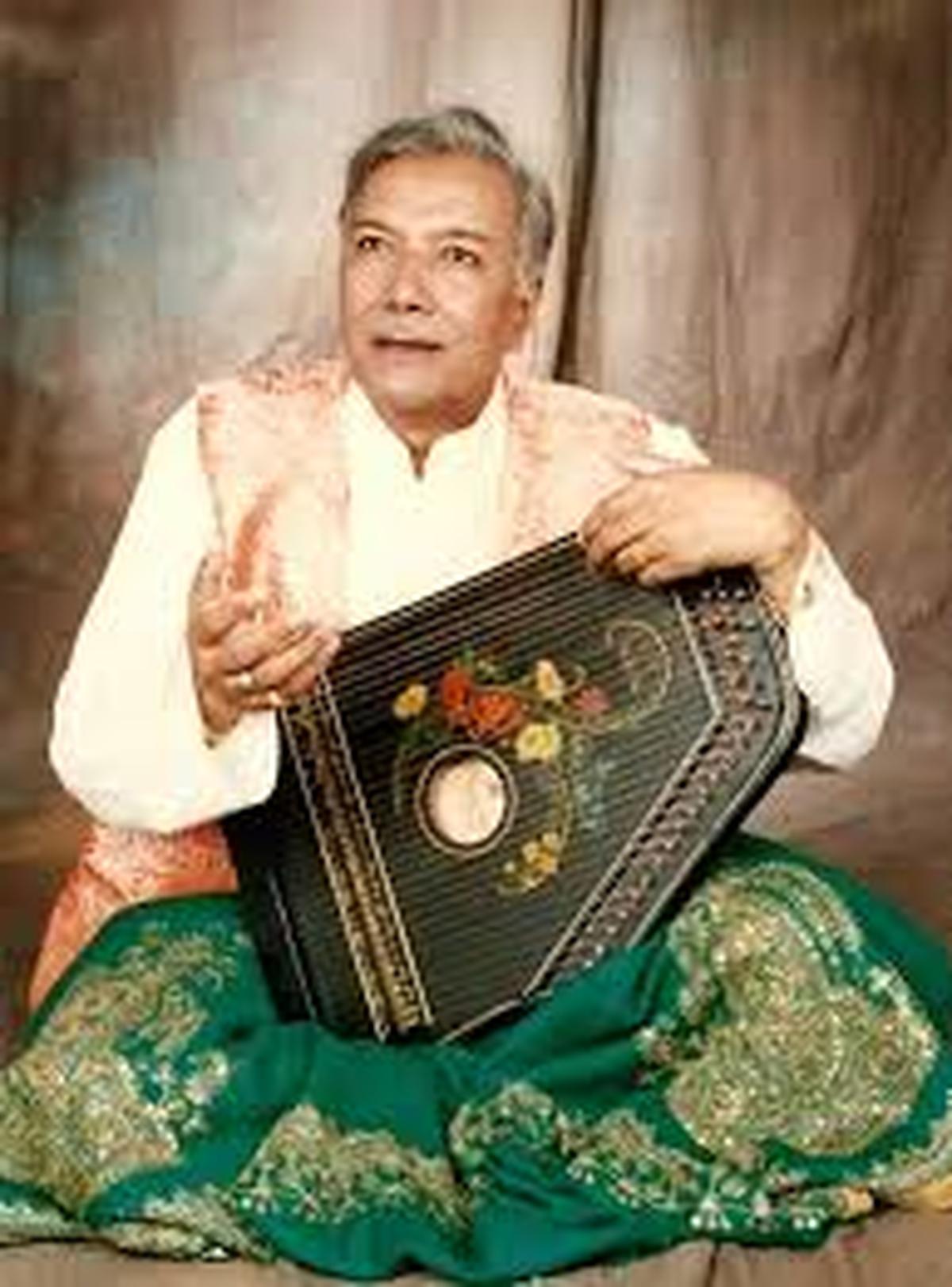
Rahman’s recent presentations in Mumbai and Delhi was a tribute to his guru Ustad Ghulam Mustafa Khan.
| Photo Credit:
Special Arrangement
Complementing Rahman’s classical work is another profound cultural offering — his Sufiyana vision. It his global articulation of Sufi philosophy as a universal human path, he draws inspiration from Sufi saints and mystic poets across regions and centuries. Though this was apparent in this concert, the essence of this philosophy has always defined his works.
What also stood out at his recent presentations in Mumbai and Delhi was Haazri, conceived as a tribute to Rahman’s guru Ustad Ghulam Mustafa Khan. The performance brought together some of India’s most respected voices including Sonu Nigam, Hariharan and Shaan, who joined in honouring a lineage that has shaped generations of music-making.
The Ustad along with his sons had collaborated with Rahman for ‘Aao balma’ for a Coke-Studio MTV season song. An exponent of Rampur-Sahaswan gharana, Ustad Ghulam Mustafa Khan has mentored many musicians including Asha Bhosle, Hariharan, Shaan and Sonu Nigam. Apart from performing classical concerts, the Ustad had also sung for films. He had given voice to more than 50 documentaries made by Films Division.
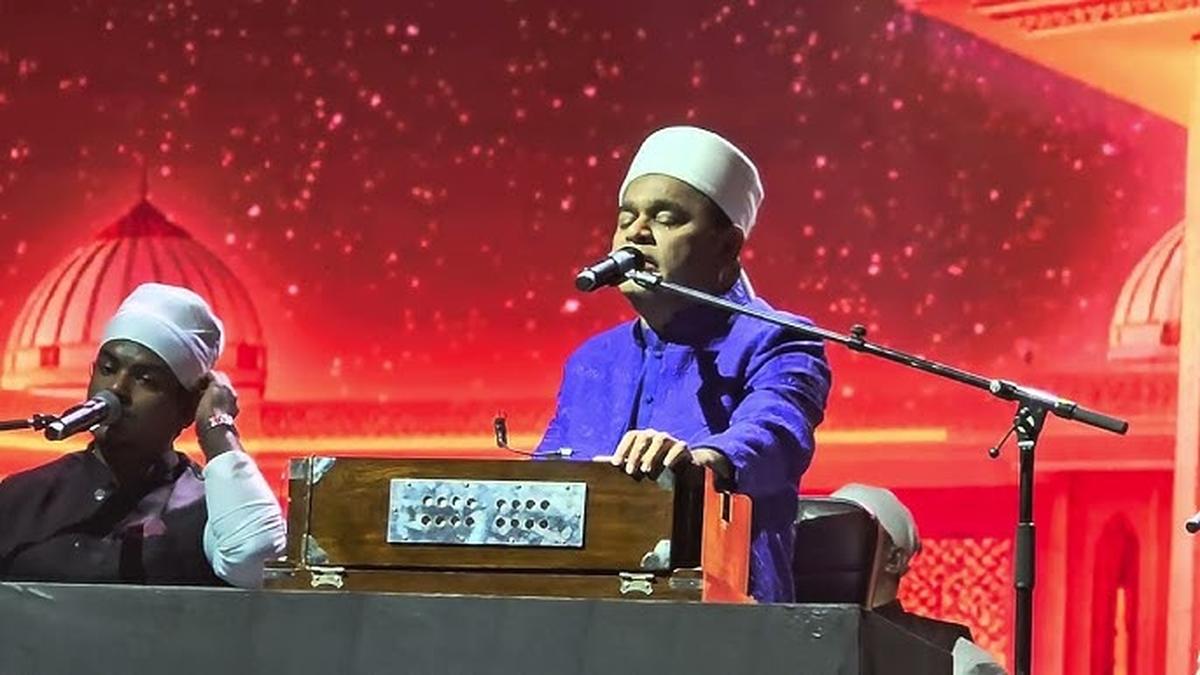
Rahman during his recent Delhi performance.
| Photo Credit:
Courtesy: NDTV Goodtimes
The repertoire opened with ‘Ik Onkar’ from the Guru Granth Sahib, a contemplative invocation, reflecting the elusive yet all-pervading presence of the divine. It then journeyed effortlessly through some of Rahman’s most transcendent compositions, including ‘Khwaja mere khwaja’, ‘Kun faya kun’, ‘Piya haji ali’, and ‘Deewana deewana’, (one of his recent works), before moving into traditional Sufi offerings that have echoed across centuries.
Pieces such as ‘Tu kuja mann kuja’, ‘Dum mast qalandar,” and ‘Phool khile bagiyan mein’ unfolded with meditative grace, culminating in Rahman’s new composition ‘Ladle farid ke, peere Nizamuddin’, set in raag Basant Bahar.
From studio to the stage, from film music to sufiana Kalaams, Rahman shows how music is an every-widening horizon, one that he constantly chases.
Published – February 16, 2026 02:47 pm IST