

Jaishankar denies India has lost ‘strategic autonomy’
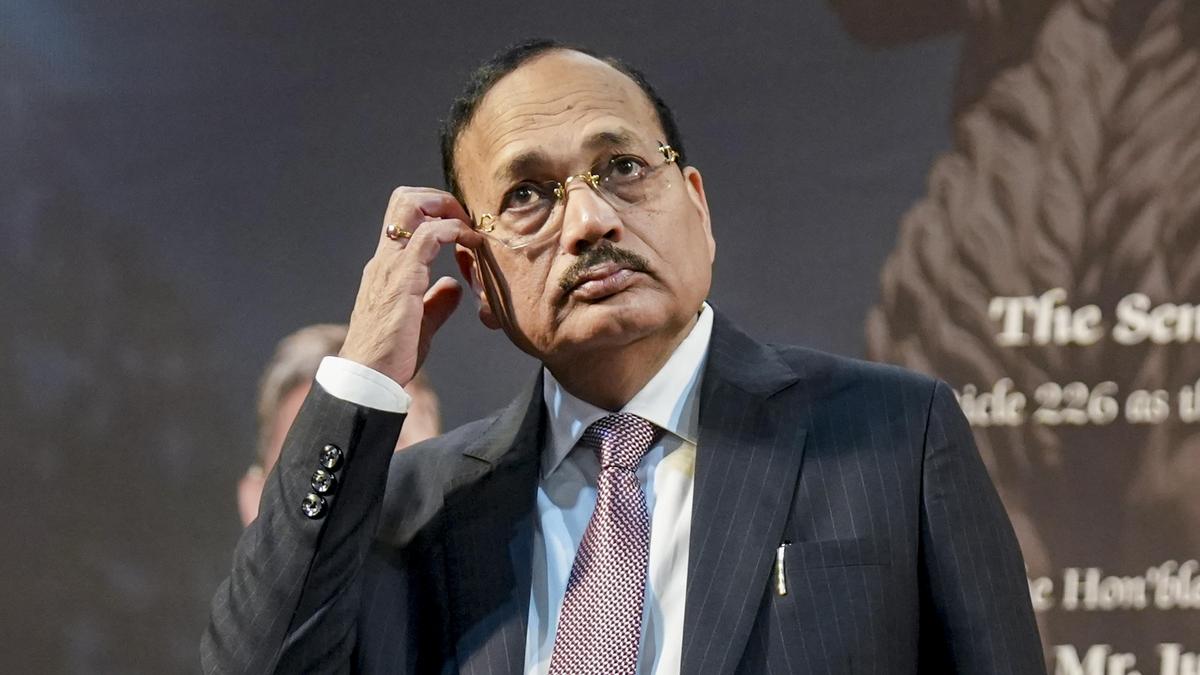
External Affairs Minister S. Jaishankar on Saturday (February 14, 2026) denied that India’s strategic autonomy had been impacted because of claims that it was reducing the amount of Russian oil in its energy import mix due to the recent trade agreement with the United States.
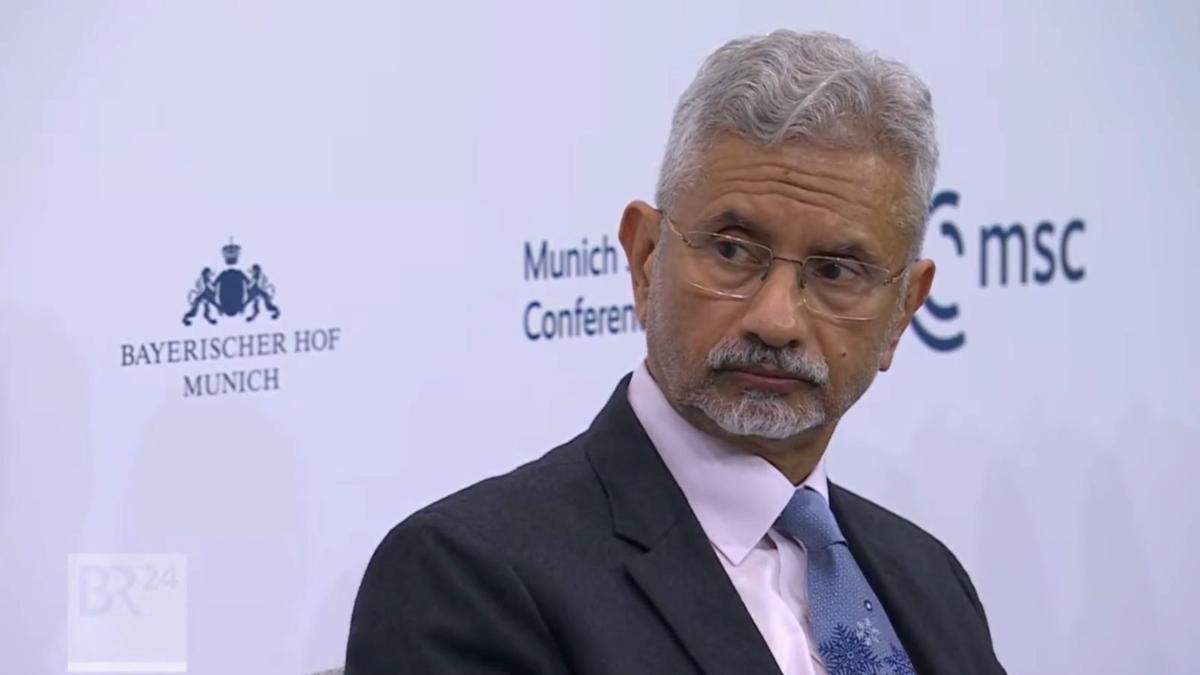
“We are very much wedded to strategic autonomy,” said Mr. Jaishankar at an event on India and Germany navigating global uncertainty with German Foreign Minister Johann Wadephul at the Munich Security Conference.
He was responding to a question from the moderator, Financial Times Editor Roula Khalaf, on whether the recently announced trade framework with the administration of U.S. President Donald Trump had impacted India’s autonomy, forcing it to reduce purchases of Russian oil, which had skyrocketed following Russia’s invasion of Ukraine in 2022.

Mr Jaishankar insisted that the government could continue to exert strategic autonomy as it wished.
“We do and we’ve always done,” he said, adding that the notion cut across the political spectrum in India.
The Narendra Modi-led government has come under fire, including from Opposition parties, for acquiescing to Mr. Trump’s demands that New Delhi stop purchasing Russian oil.
Mr. Trump had insisted earlier in February that India had agreed to stop buying oil from Russia as part of a larger trade agreement, and this had meant he would cut tariffs on Indian exports to the U.S. (including eliminating a 25% ‘penalty’ for trading with Moscow).
Mr. Jaishankar suggested that oil companies in India, Europe and other places looked at market factors to determine what is in their best interest.

“So I would say…, we have a position on that. I don’t want to rehash the polemics of that,” he said, presumably referring to differences between India and the European Union (E.U.) on the India’s relationship with Russia, including refined petroleum products coming out of India, based on Russian crude.
“I think that phase has passed today when, you know, coming to Munich, very honestly, I’m kind of coming here in the afterglow of an India EU FTA and a very successful visit of [ German ] Chancellor [Friedrich] Merz [ to India],” the minister said.
India could still make decisions independently and they could sometimes be in disagreement with the views of others , he said.
Comment |India tested, from U.S. sanctions to one-sided trade deal
Agenda-based groupings not new for India: Jaishankar on Carney speech
On the speech of Canadian Prime Minister Mark Carney at Davos in January, where Mr. Carney called for like-minded middle powers to come together to counter Great Power, Mr. Jaishankar suggested that was “new ground” for Canada because it is a treaty ally. India was in any case working in many groups with different countries, he said, citing the Quad and BRICS groupings among others, as examples.
An “ agenda-based coming together of countries on a regular basis” was “very much the hallmark of Indian diplomacy” for about two decades, Mr. Jaishankar added.
On the India Europe Middle East Corridor (IMEC) , Mr Jaishankar said the project was progressing but not at the pace that was initially expected due to the conflict in West Asia.
Responding to a question on how India sees IMEC contributing to Palestinian interests and regional stability, Mr Jaishankar said that the purpose of the project was to address connectivity and not the issue of Palestine, although India had a “longstanding” position on the latter .
“I do think each of those issues [ i.e., connectivity and Palestine] is important, but I would not take one as the solution for the other,” he said.

‘Stay tuned’ on Quad Summit: Jaishankar
On the Quad, Mr. Jaishankar said, the summit, which was meant to be held in 2025 in India was not cancelled, because it had not been specifically scheduled.
“The fact that the Quad did not take place at the summit level itself, I wouldn’t over read it. So do stay tuned,” he said.
There had been speculation that a declining level of interest in the Quad from the current Trump administration plus diplomatic difficulties between India and the U.S., centred around the 50% U.S. tariff on India and their inability to close a trade deal, had resulted in the Quad Summit not taking place.
Mr. Jaishankar pointed to the fact that U.S. Secretary of State Marco Rubio’s first [foreign-level] engagement after being appointed was with his Quad counterparts and that there was a second meeting in July 2025.
“I want to assure you that the other parts of the Quad, various mechanisms, all of those are going on,” he added.
Published – February 14, 2026 08:35 pm IST