


T20 World Cup, IND vs PAK: Finch says ill Abhishek Sharma shouldn’t be hurried back into team
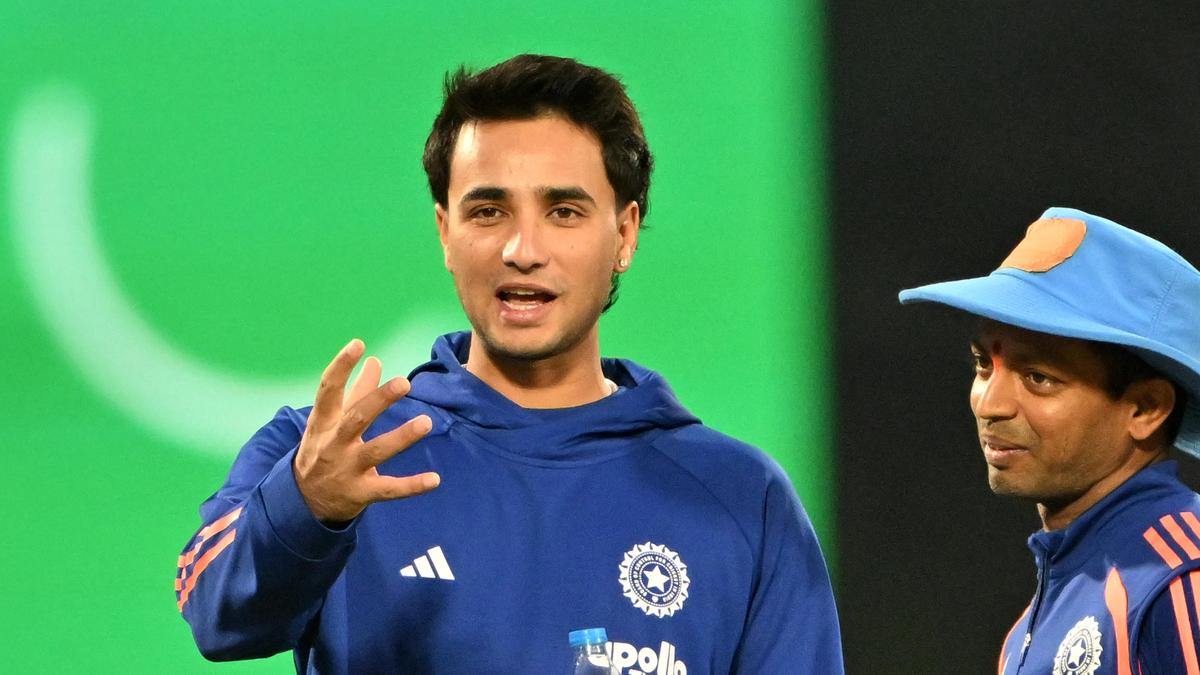
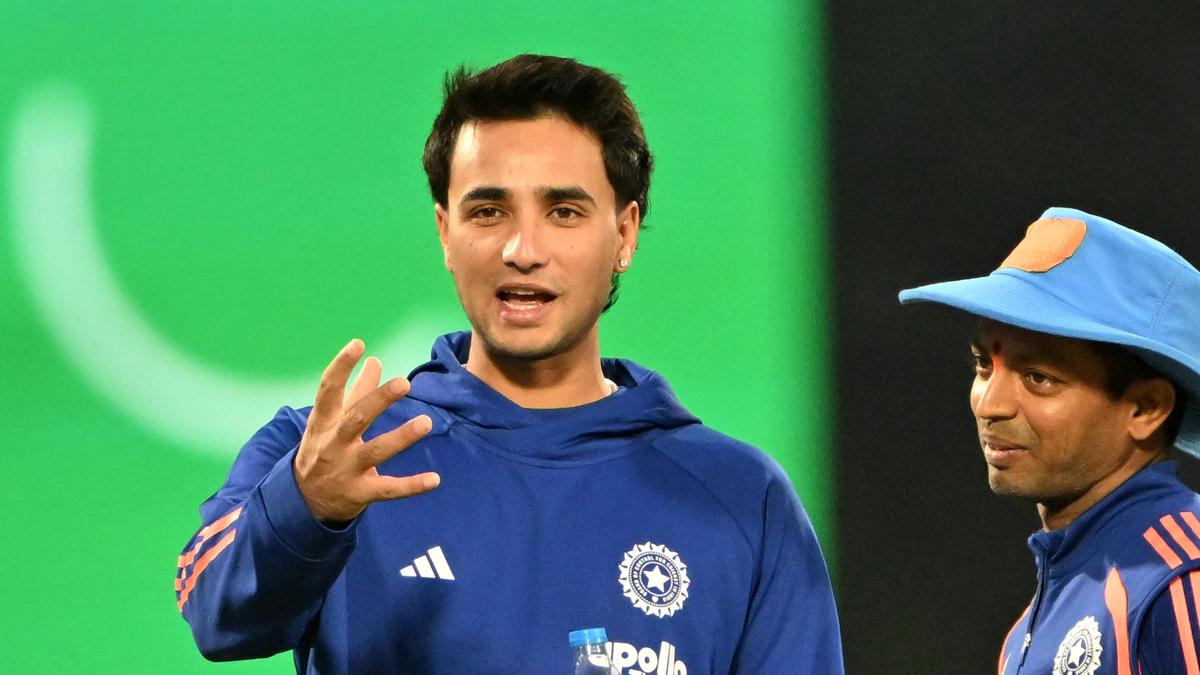
Abhishek Sharma, left, at a practice session during the T20 World Cup
| Photo Credit: R.V. Moorthy
Former Australia skipper Aaron Finch has suggested that charismatic opener Abhishek Sharma be given adequate time to fully recover from the illness that sidelined him from India’s match in the T20 World Cup, even if it means missing the key clash against arch-rivals Pakistan.
Finch emphasised that India should prioritise ensuring Abhishek is completely fit and healthy for the business end of the tournament rather than rushing him back for a marquee fixture.
Abhishek missed the Group A match against Namibia on Thursday (February 12, 2026) due to a stomach infection that had required two days’ hospitalisation.
“If Abhishek is still under the weather and you don’t want to take a risk, that’s totally fine. You can’t win the tournament in the first phase, but you can certainly lose it. He’s (Abhishek) the most damaging player in world cricket, so you want him fit and firing,” Finch opined on ‘JioStar Media Day’.

“If that means taking a couple of extra days of rest, that’s something you’d absolutely be prepared to do, regardless of how big the India versus Pakistan match looks on paper. You want your best players fit and healthy when the business end of the tournament comes around,” he added.
Rare ability
Underlining the charismatic left-hander’s importance to the side, Finch said that Abhishek’s ability to dismantle any bowling attack is rare, adding that not many batters in world cricket possess that kind of game-changing firepower.
“Any team that has Abhishek Sharma in it is going to be better in T20 cricket. He’s a superstar. His ability to destroy an attack from ball one and keep going in a way that not many other players in the world, if any, can match makes him a special player.
“So, I really hope he is well enough soon because I love watching him play. It was unfortunate to see that he spent some time in the hospital unwell, and I wish him a speedy recovery,” said Finch.

He said that India would be keen to quickly secure a place in the Super Eights with a win against Pakistan and the likes of Sanju Samson and Ishan Kishan have the ability to do that.
“India are stacked, no doubt about that. Sanju Samson at the top got off to a flyer against Namibia, along with Ishan Kishan. As big as the game is, India would have one eye on the Super Eights, the semifinal and the final.” Shedding light on Australia’s shocking loss to Zimbabwe in Colombo, Finch said the winners fully deserved to win with the way they played the match.
“Zimbabwe played beautifully and deserved the win. I can understand Australia winning the toss and choosing to bowl first in a day-game to a point, because the wicket did feel a little tacky in the lead-up.

“But that moisture disappeared as soon as the sun came out, and it was always going to get harder for batting. Zimbabwe were clinical. The way they structured their total, to be only two (wickets) down, was outstanding.
“Brian Bennett played a brilliant innings. On paper, you might look at it and think he was only striking at 115, but that allowed the other guys to do damage around him. Then, with the ball, to rip the heart out of Australia in the powerplay and have them four down was extraordinary,” he said.
On Associate nations
He also felt that Associate nations needing more exposure against full-member nations was a complicated issue as the cricket calendar is always “jam packed”.
“It’s not as simple as saying Associate teams just need to play more against the top Test-playing nations. I understand the logistical and economic challenges. But they sometimes lack the experience of closing out tight games against the best sides because they haven’t done it regularly at this level.
“But I also don’t have the answer to how difficult that is from an ICC or a Board’s perspective. The cricket calendar is already very jam packed. I’d love to see more bilateral series, maybe even tri-series in T20 cricket.
“I always enjoyed tri-series because they bring different challenges; rather than just playing the same opposition, you’re chopping and changing. It gives you a helping hand when you get to a World Cup as well because it’s a similar structure. You’re changing teams every game to play a new opposition,” he opined.
Published – February 14, 2026 02:27 pm IST