



Biennale highlights and must-see parallel shows at the event
Samarpan by Bhabatosh Sutar, Mass Art
| Photo Credit: Mass Art
You cannot do this Biennale in a day. Not if you want to absorb its full impact. With Nikhil Chopra at the helm, the Kochi-Muziris Biennale 2026 offers art, photography, installations and immersive works that flow into each other. Along with numerous parallel projects.
All of them are set in dramatic venues with sweeping views, from heritage sites like Aspinwall House to brooding warehouses like the Armaan Collective in Mattanchery, bustling with Instagrammers, espresso and thumping Balearic beats.
For anyone who thinks that art is intimidating, here is a list of some our favourite immersive shows currently on in Kochi.
Read more |Marina Abramović at the Kochi Biennale: On endurance, controversy and performance art
Mild Tooth of Milk at Dutch Warehouse
| Photo Credit:
Shonali Muthalaly
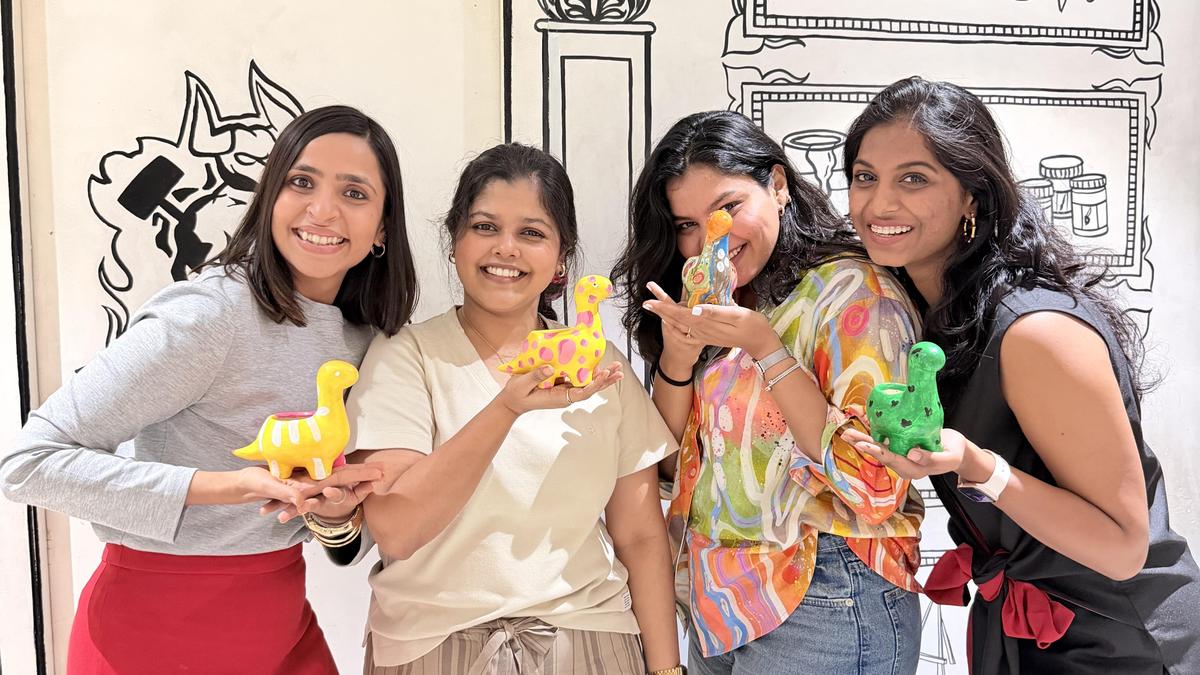
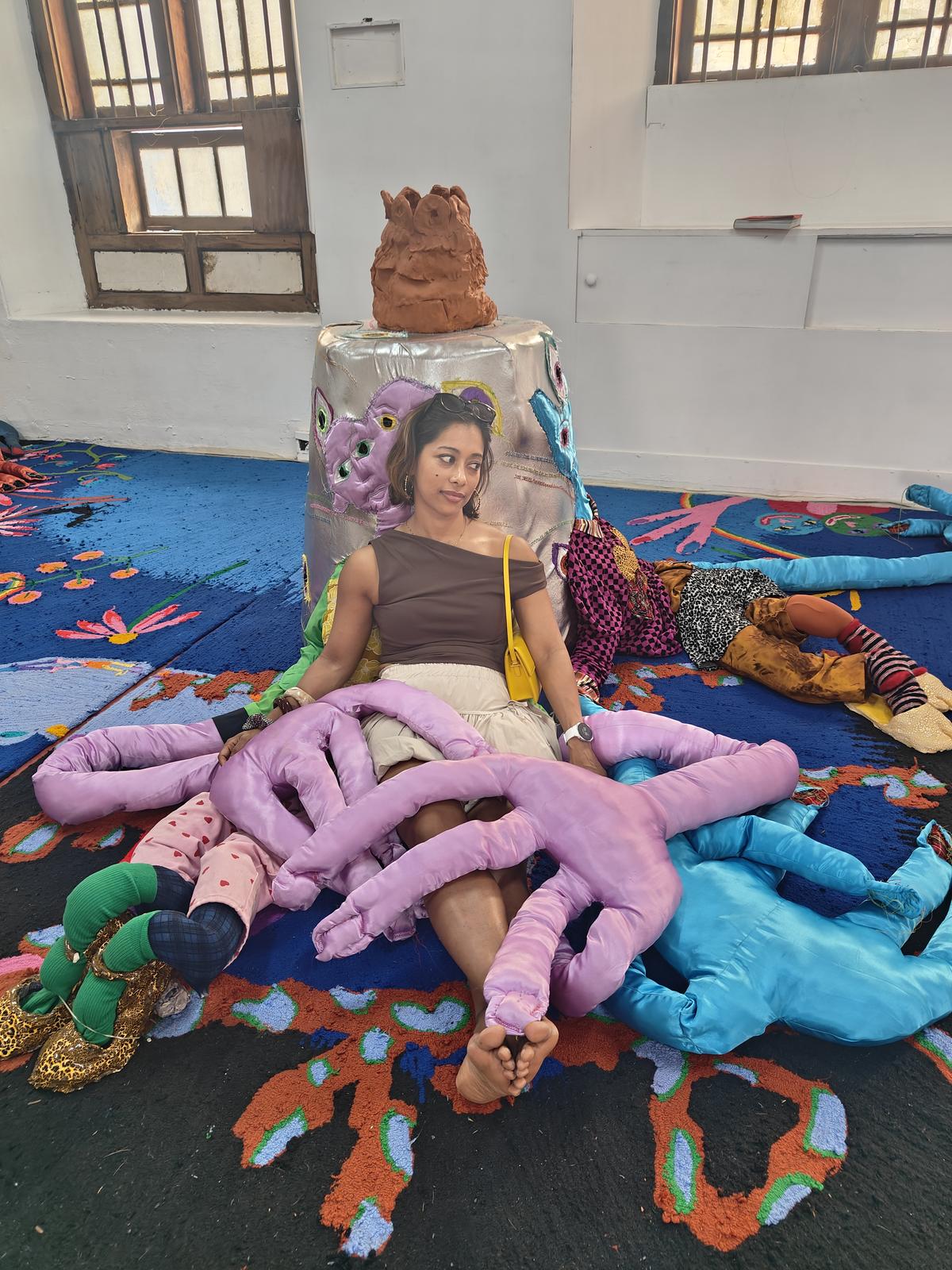
Mild Tooth of Milk at Dutch Warehouse: Do not touch the artworks. After seeing and obeying the sign at multiple venues, we are delighted to stumble upon Dutch Artist Afra Eisma’s endearing aliens with their cuddly chubby arms and flamboyant shoes, encouraging viewers to touch everything. The exhibit is a patchwork of textiles and ceramic shoes, and it is irresistible We lounge on bright carpets, playing with the long limbed puppets and it feels unexpectedly healing after a long day of rather intense art. Hosted by the Museum of Art & Photography (MAP) Afra invites viewers to reconsider how “vulnerability, resistance, and healing can coexist.” Mild tooth of milk is reminiscent of a fantastical Salman Rushdie novel, and feels like a long hug.
Shilpa Gupta’s Listening Air
| Photo Credit:
Shonali Muthalaly
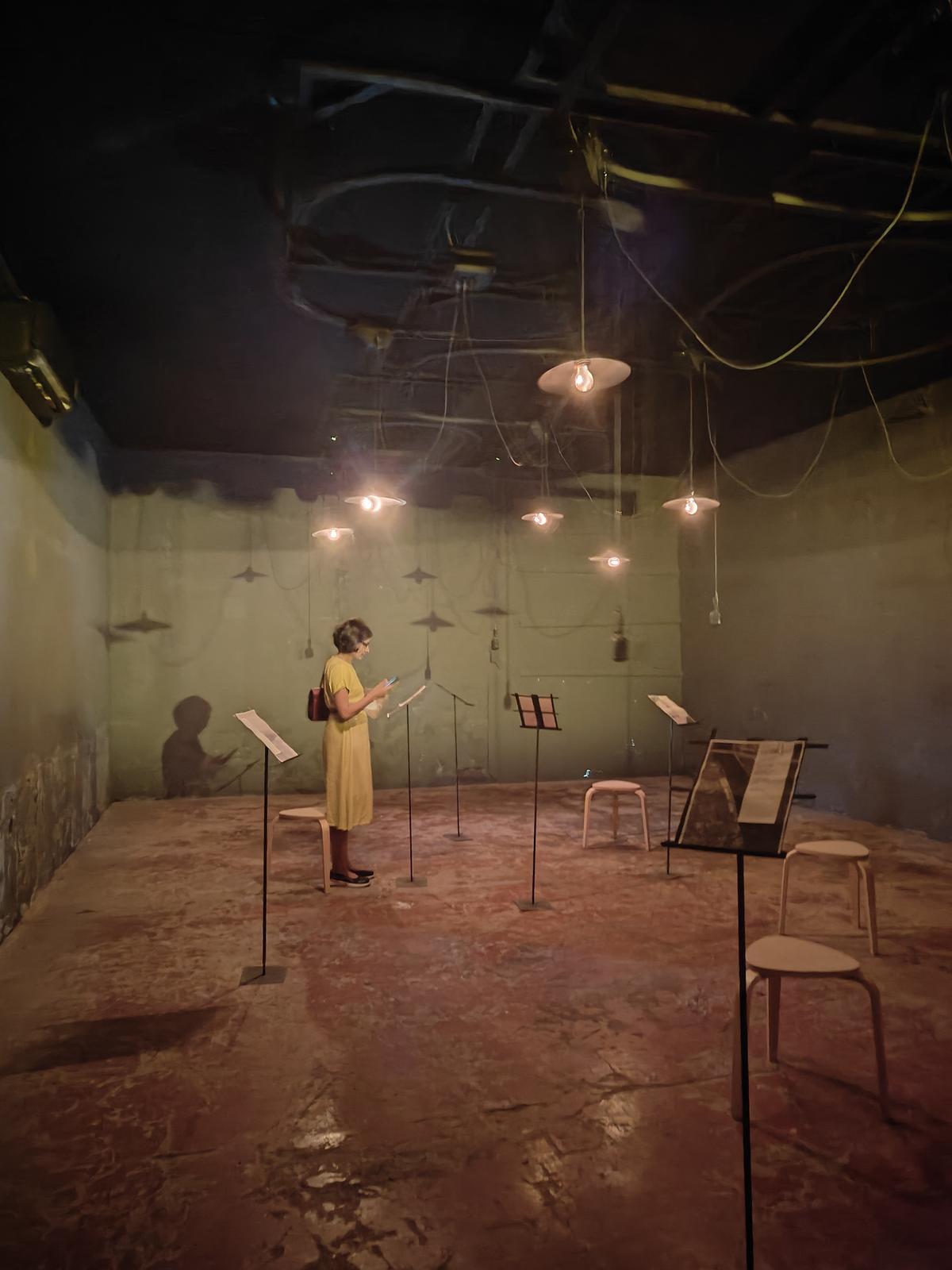
Shilpa Gupta’s Listening Air at Ginger House Museum Hotel: It is difficult to walk away. We are sitting in a darkened room, listening to voices sing ‘Hum Dekhenge’, the popular Urdu poem written by Faiz Ahmed Faiz. The cool room feels like balm after the blazing sun, and as our eyes adjust we notice buttery yellow lights above us moving along with the microphones. I stay here much longer than I intended to, losing track of time. The kinetic sound installation is presented with lead support from RMZ Foundation and the joint support of Vadehra Art Gallery, Chemould Prescott Road, and crowdfunding. It carries voices of solidarity from across landscapes and generations, and each time a microphone passes by, I hear a voice stand out making me feel like I am part of a moving, singing crowd.
Durga Puja at GRC Marine Yard
| Photo Credit:
Shonali Muthalaly
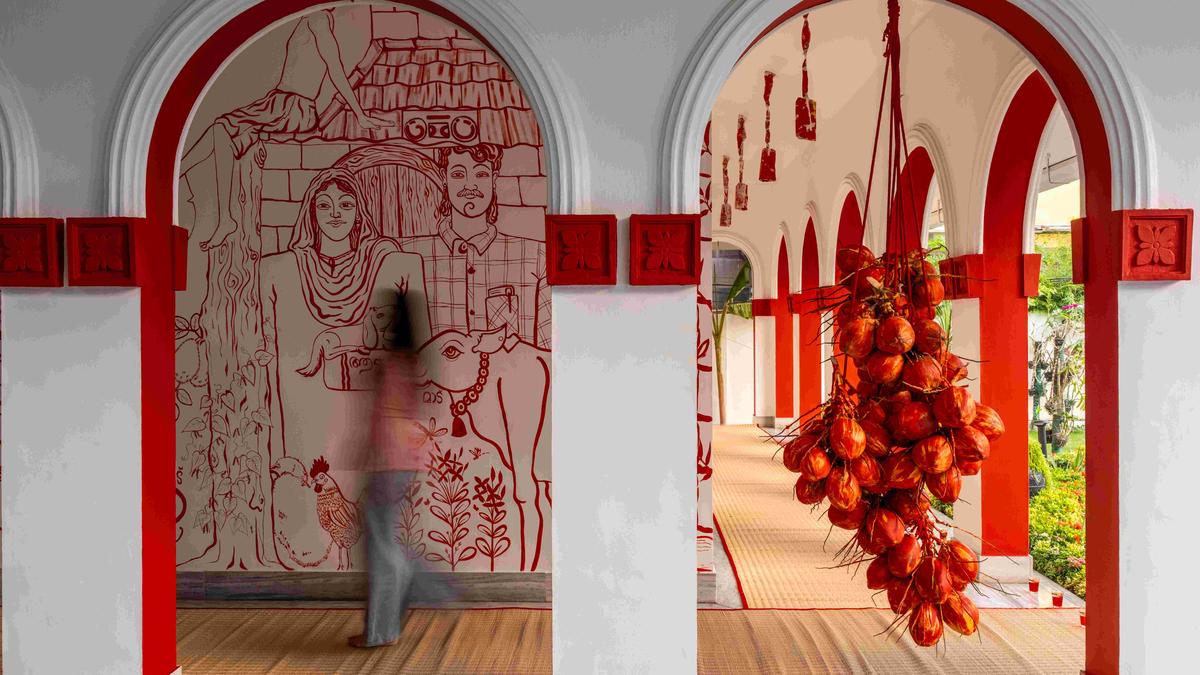
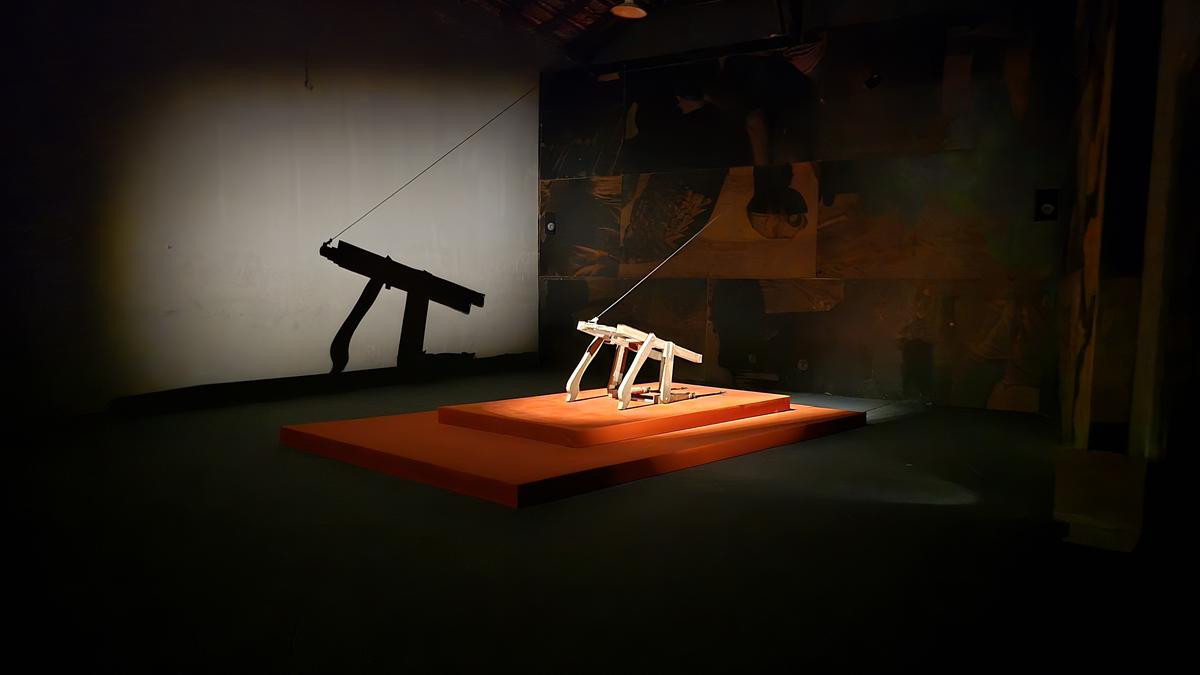
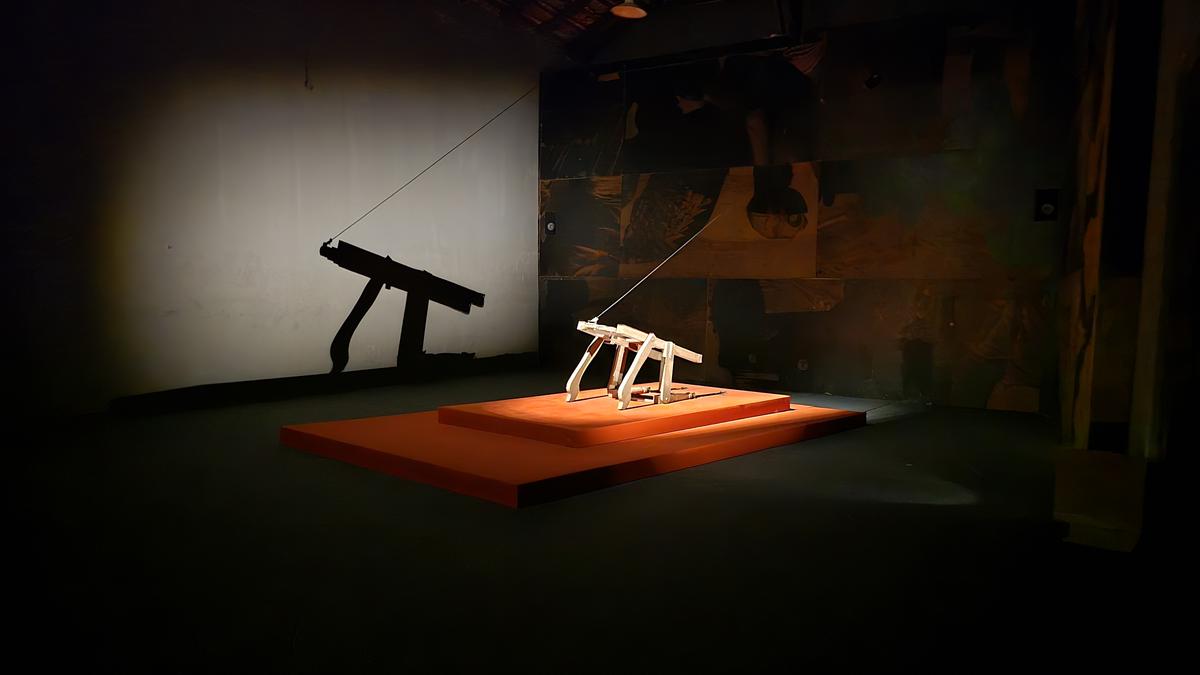
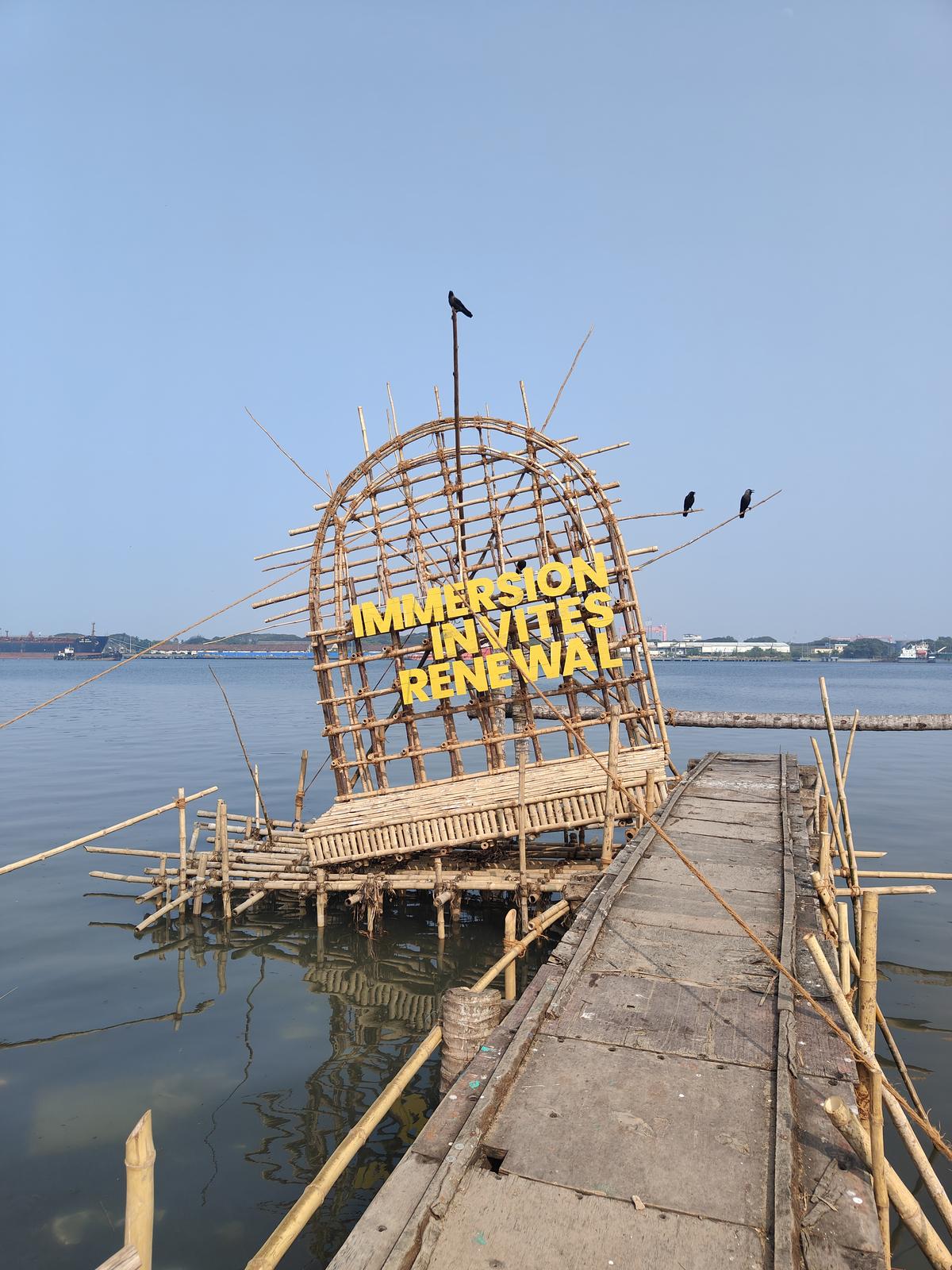
Durga Puja at GRC Marine Yard: While exploring Mattanchery, follow a narrow Kolkata-inspired gully painted deep red, and you will stumble upon Mass Art’s flamboyant Durga Puja pandal-inspired installation. Created by a collective of pandal artists, it features an 80 foot bamboo structure, shaped like an upturned boat with oars by the side. Then, tilting into the water, a sign declares ‘Immersion invites renewal’ in sunshine yellow echoing the ritual of bisarjan. Inside, wander past sharp political caricatures set on wooden cut outs as dhak drums play. Sayantan Maitra Boka, the curator, and vice president of Mass Art says they partner with UNESCO to support Kolkata’s Durga Puja, which he describes as the worlds largest public art festival. “There are 4000 plus puja pandals, all neighbourhood commissioned. These artists in turn get help from artisans from across Bengal, who are otherwise farmers and labourers,” he explains. In a dim room, a single chair bends and folds under the spotlight in a an impressive display of smooth mechanics. By Bhabatosh Sutar, it is unexpectedly moving.
Tino Sehgal’s The Kiss at Pepper House: I never thought of myself as a prude, but I don’t know where to look. In front of me two men roll slowly on the wooden floor of Pepper House, locked in a passionate embrace. Then, they kiss. Again. And again. In between, one of them looks up and locks eyes with each person in the audience. We shift uncomfortably in our seats. The tightly choreographed piece is daring, making audiences feel like both voyeurs and participants. It is also beautiful. Tino titled it after Auguste Rodin’s sculpture, and modelled the choreography on well-known kisses through art history, from Constantin Brancusi to Jeff Koons. There is deliberately no information posted outside. Though, as with all the Kochi Biennale venues, there are helpful young volunteers on site to answer question. Also, no photographs allowed. Which is probably a good thing. Everything has less impact when seen through your camera lens. Especially raw emotion.
Published – February 13, 2026 05:21 pm IST