






Celebrating many hearts in one: How author Arundhati Ghosh navigated polyamory

Getty Images/iStockphoto
| Photo Credit: Getty Images/iStockphoto
“When most of us don’t find even one person decent enough to love, where do you find multiple?” This is one of the common questions I get from audiences when I am sharing stories of people who lead polyamorous lives. And my answer always is, “If you stop looking for ‘the one’, you will find ‘the many’.” Riposted in jest the response does carry truth. We put too much pressure on the search for ‘the one and only true love’ that we have been conditioned into thinking as our sole road to happily ever after. The checklist is an impossible register of demands that includes not just our needs and desires, but also insurance against all our fears, guarantees against all possible misfortunes, and retribution for every past betrayal suffered.
Since monoamorous people believe there is only a single seat in the heart where only one person can sit at a time, we have to get it absolutely right, and mistakes come at terrible costs. The brutal judgment by which we disqualify others is reciprocated in their evaluation of us too. Since each person carries their list, dating becomes an inquisition. The harsh gaze of scrutiny leaves us with humiliation for our inadequacies and cynicism about love.
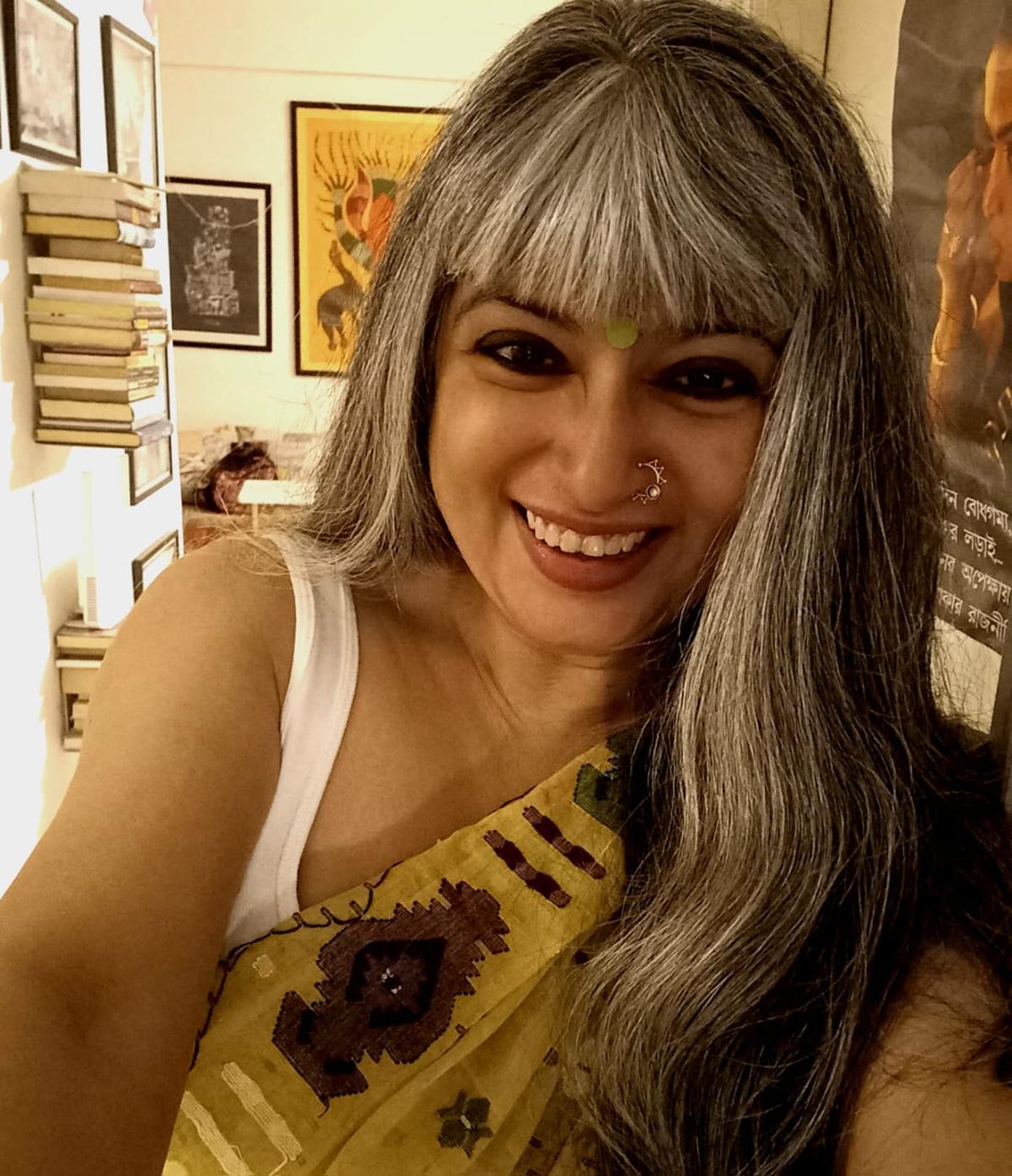
Arundhati Ghosh
| Photo Credit:
SPECIAL ARRANGEMENT
The freedom from this unkindness is one of the first delights I felt when I accepted I was polyamorous. I was just me and people could desire me, love me, and build a nurturing relationship with me, without having to speculate if this was a sturdy enough singular investment in the joy of togetherness for a lifetime. Because I would never put an embargo on them loving other people, living other happinesses concurrently. And I could do the same for myself. Polyamory taught me generosity — an ingredient in love I often found scarce in monoamory.
I discovered I was polyamorous when I was quite young. I would fall in love with a person while already being in a wonderful relationship with another. Popular films and songs all around me warned this was wrong, immoral even — it was only possible to fall in love again when the earlier relationship had ended. Anything else was cheating, a betrayal of trust. Some lovers felt that too. But what came naturally to me was the desire to love more than one person simultaneously — being honest with all. Yet for years I struggled with labels of promiscuity as well as coping with feelings of loneliness and guilt wondering if I was just a shallow person not strong enough to live up to the demands of ‘true love’.
Illustration by Aleph publications
I am glad young people today have more courage than I did at their age. In my interviews with them, I have discovered how exhausted they are of the deceit and denial that desperately attempts to glue together worn-out, fractured relationships of our generation — consolation masquerading as happiness. They may not have the answers yet, but they are asking the right questions, experimenting with sexual identities and attempting alternative configurations of relationships of love and friendships. Many of them have lost faith not just in the way we practise relationships but also how we conduct life — our failed kinship with Nature, our submission to greed, our inability to foster a kinder world. Polyamory is just one of the ways in which they are engaging in assembling connections, with care at the centre of the circle of love and integrity as its spirit.
But it is not just young people who are contemplating polyamory today. In monoamorous relationships where the demands of exclusivity, anxieties about shortcomings, and the recurrent fear of losing love in a terrifyingly lonely world creates a fragile existence, older people with decades in their marriages are starting to question their ways of loving too. It has been a surprise for me to listen to their concerns as they break their silences of compromise. Even when they are not ready to leave the domain of monoamory, they are opening up to conversations about insecurities, the secret toxicities suffered over the years, and what manifesting their desires could look like in these later years of togetherness. While some are reimagining their relationships, others are considering renegotiating spaces for personal journeys outside of the stronghold of enshrined couplehoods.
There are many joys of living as a polyamorous woman, but most of all, it has made me less afraid — of love and life. It has erased my apprehensions about being insufficient for my partners. In all my imperfections, different partners love me for distinct aspects that they hold dear. One person’s peeve is another’s delight. I no longer fear being abandoned by someone else. The end of relationships is determined by their own dynamics, and do not succumb to a competition for affection.
While I continue to feel jealous sometimes, I am not afraid of its sting anymore. I let it breathe in me, settle its fumes and sit down to listen to its woes. With time and the occasional assistance of partners, I manage to prevail. And finally, there is no fear of guilt if I develop feelings for people I meet. While I share this with partners with care and patience, I treasure greatly the freedom that allows me to do so. Polyamory at its heart remains for me an exploration – journeys together into the lives and worlds of kindred spirits.
Arundhati Ghosh is the author of the book All Our Loves: Journeys with Polyamory in India, published by Aleph Book Company.
Published – February 13, 2026 05:05 pm IST