


Fighter push — integrating HAL’s experience with private enterprise
An air force requires three verticals to operate in synchrony for its operational punch — a weapons inventory more potent than its adversary’s, professional personnel to operate those weapon systems, and a dependable supply chain to provide the systems in time and of requisite quality.
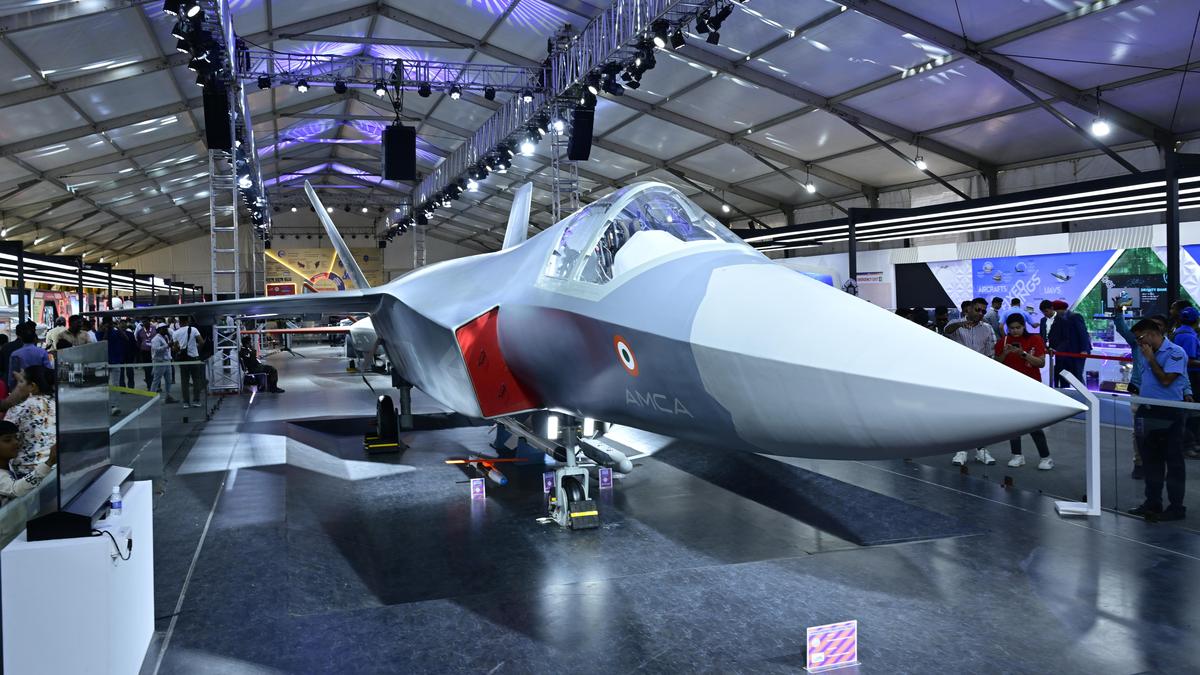
The fighter aircraft portfolio of the Indian Air Force is a mix of Russian and western machines, with the indigenous Tejas built by Hindustan Aeronautics Limited (HAL) a new entrant. The repair and overhaul of every fighter jet, irrespective of its origin, is also done by HAL, making the task of India’s sole aircraft manufacturer immense. Its order book is overflowing and, with a typical ‘government’ work culture, its output in terms of timely delivery and quality has been adversely commented on, including by the Comptroller and Auditor General. So, media reports that the development contract for five prototypes of India’s Advanced Medium Combat Aircraft (AMCA) would be awarded to one of three private players (HAL has been left out) — thereby creating a second aircraft manufacturer — should be welcome news except that there are some serious professional issues that need to be thought through while the decision-making is ongoing.
The complexities
Here are six macro points that deserve consideration. First, the three private entities (despite being top industrial players) can be considered start-ups as they have no previous experience in developing a fighter aircraft. The complexities of building a small ship, a helicopter airframe or aerospace parts cannot be compared to the expertise required to make and test a fifth Gen fighter prototype.
Second, taking history as a guide, the HF-24 Marut was designed by HAL’s Aircraft Design Bureau and produced on its shop floor. Thus, design, prototype construction, flight testing, upgrades, weapon integration and modifications were all under one roof. HAL did the series production and provided lifetime spares support; projects such as the trainer aircraft HT-2 and HJT-16 were similar. The Tejas is hybrid as a large part of its design is by the Defence Research and Development Organisation (DRDO)’s Aeronautical Development Agency (ADA) while the series production and lifetime support rests with HAL.
Singular control
Since HAL and ADA are government agencies, there is an element of singular control by the Ministry of Defence. In the AMCA case, however, with the design agency (ADA) under the government but the executor a private entity, who would have ownership over the project during prototype testing and during production?
Third, HAL has developed the requisite infrastructure, tools, rigs and production facilities over eight decades centred around Bangalore. The IAF has contributed extensively to flight testing, with its test aircrew sharing the workload and personnel moving on deputation. With the IAF’s Aircraft and Systems Testing Establishment co-located with it, the development phase of all aircraft had concurrent infusion of user inputs.
For Tejas, a full-fledged National Flight Test Centre was established at ADA, with expensive and sophisticated equipment for prototype testing. Many DRDO labs specialising in avionics and electronic warfare are also situated in a 10-kilometre radius of HAL’s airfield in Bengaluru. Would the private entity for AMCA put in the huge sums of money required for similar infrastructure at a new place for research and development and the manufacturing centre? The time required can well be imagined.

Fourth, in any aircraft development plan, there are professional differences which get resolved easily when the design and manufacturing agency are the same. In fact, there is close fusion between designers and production engineers, from the design board phase to flight testing, and during production later as upgrades and modifications take place. Even as prototypes begin to fly, the manufacturing ecosystem begins to get established — with tools, jigs and machinery operationalised to start production as soon as the testing phase is completed. This is a norm the world over. It would be a near impossible task for the AMCA private entity to source land, construct hangars and install manufacturing equipment concurrently for a fifth Gen fighter. In fact, would a private player sink in monies when the contract would be for just five prototypes, and there is no assured production deal that is visible?
Fifth, it takes a year to train test aircrew and a few more to make them experienced enough to start testing a futuristic prototype. India has a single test pilots school that can cater to a limited number of trainees. The private entity would require many from the word go.
Finally, the ADA, its National Flight Test Centre and the IAF’s testing establishment are all located at HAL airport, Bengaluru. It makes eminent sense that the private entity also sets up office in these campuses and uses the existing airfield infrastructure. AMCA is a national project. Here is a suggestion, no matter how bureaucratically outlandish it sounds. Can some part of HAL’s enormous real estate, hangarage and select facilities (including for flight testing) at Bengaluru be co-opted for the private entity? HAL has been built with public money and, with its restructuring study underway, it is only right that an out-of-the-box approach be adopted in this national endeavour.
The issue of location
Which brings us to the location of the production factory. The idea of locating strategic infrastructure close to the border should not be repeated as in the C-295 aircraft factory at Vadodara, Gujarat. Production of the AMCA must be in the hinterland, well connected to, and not far from, India’s mecca of aviation — HAL’s Bengaluru airfield.
Manmohan Bahadur is a retired Air Vice Marshal and a former Additional Director General of the Centre for Air Power Studies
Published – February 11, 2026 12:08 am IST