


Waymo’s World Domination Plans Just Got A $16 Billion Boost
In the age of AI, self-driving is one of the fastest-moving vehicle technologies. But to move fast—and to do it safely—companies need to throw gobs of cash at the problem. That’s why it’s so important for companies like Waymo to stuff their pockets.
To be clear, Waymo doesn’t need cash because it’s failing. But a huge cash infusion will help it do one of the hardest things that any growing company, regardless of industry, needs to do: scale.
The must-read auto and tech briefing, every weekday.
Welcome back to Critical Materials, your daily roundup for all things electric and tech in the automotive space. Also on deck: Elon Musk’s company consolidation has begun and California proposes a new tax incentive for EVs. Let’s jump in.
25%: Waymo Just Got Way Mo’ Money

Photo by: Patrick George
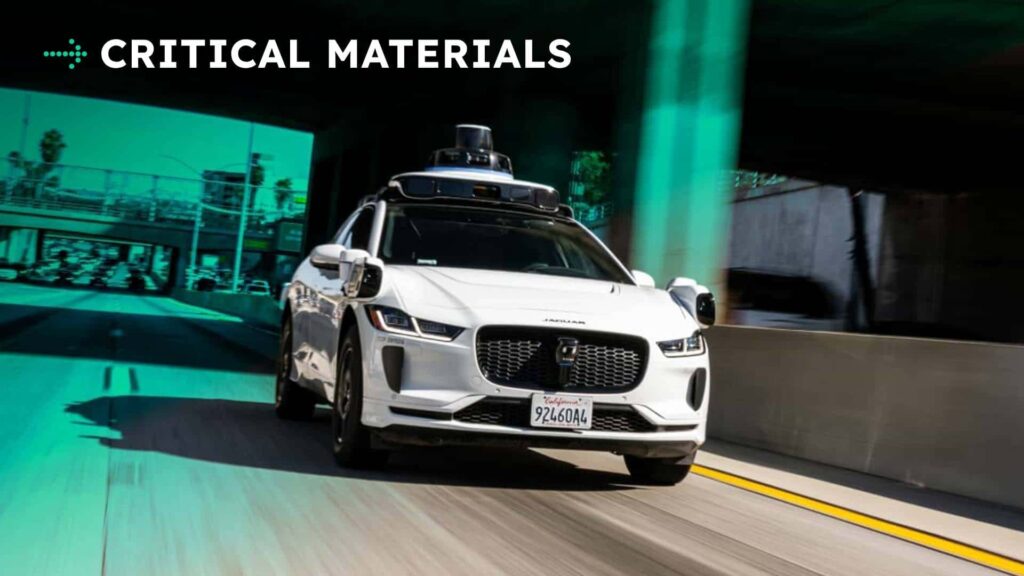
Waymo just got a cool $16 billion added to its bank account as part of a new round of funding, which is about triple the amount it raised the last time it hit up outside investors in 2024. The round, announced on Monday, values the Alphabet-owned autonomous vehicle company at $126 billion.
The pitch this time is that Waymo needs to grow, and it needs to do it quickly. In a blog post, Waymo’s co-CEOs said the next steps are growing the company’s fleet of vehicles, hiring more staff and expanding driverless taxi service into far more markets.
“We are no longer proving a concept; we are scaling a commercial reality, laying the groundwork for ride-hailing operations in over 20 additional cities in 2026, including Tokyo and London,” they said. “This infusion of capital will ensure we are positioned to move forward with unprecedented velocity, while maintaining our industry-leading safety standards.”
Investors in the funding round include Alphabet, Andreesen Horowitz, T. Rowe Price, Sequoia Capital, Silver Lake and Dragoneer. Waymo last raised $5.6 billion in a Series C funding round in 2024 that valued it at $45 billion.
Since then, Waymo has ramped up public rides significantly—and the autonomous hype train has officially left the station. Waymo says it served over 15 million driverless rides last year, making for a total of 20 million to date. It now handles over 400,000 rides each week across the six metro areas it’s deployed in.
Now comes scaling those operations across the world, staying ahead of rivals like Tesla and—someday—turning a profit. It’ll be expensive, but Waymo now has a bunch more funding to make that happen.
50%: SpaceX Buys xAI
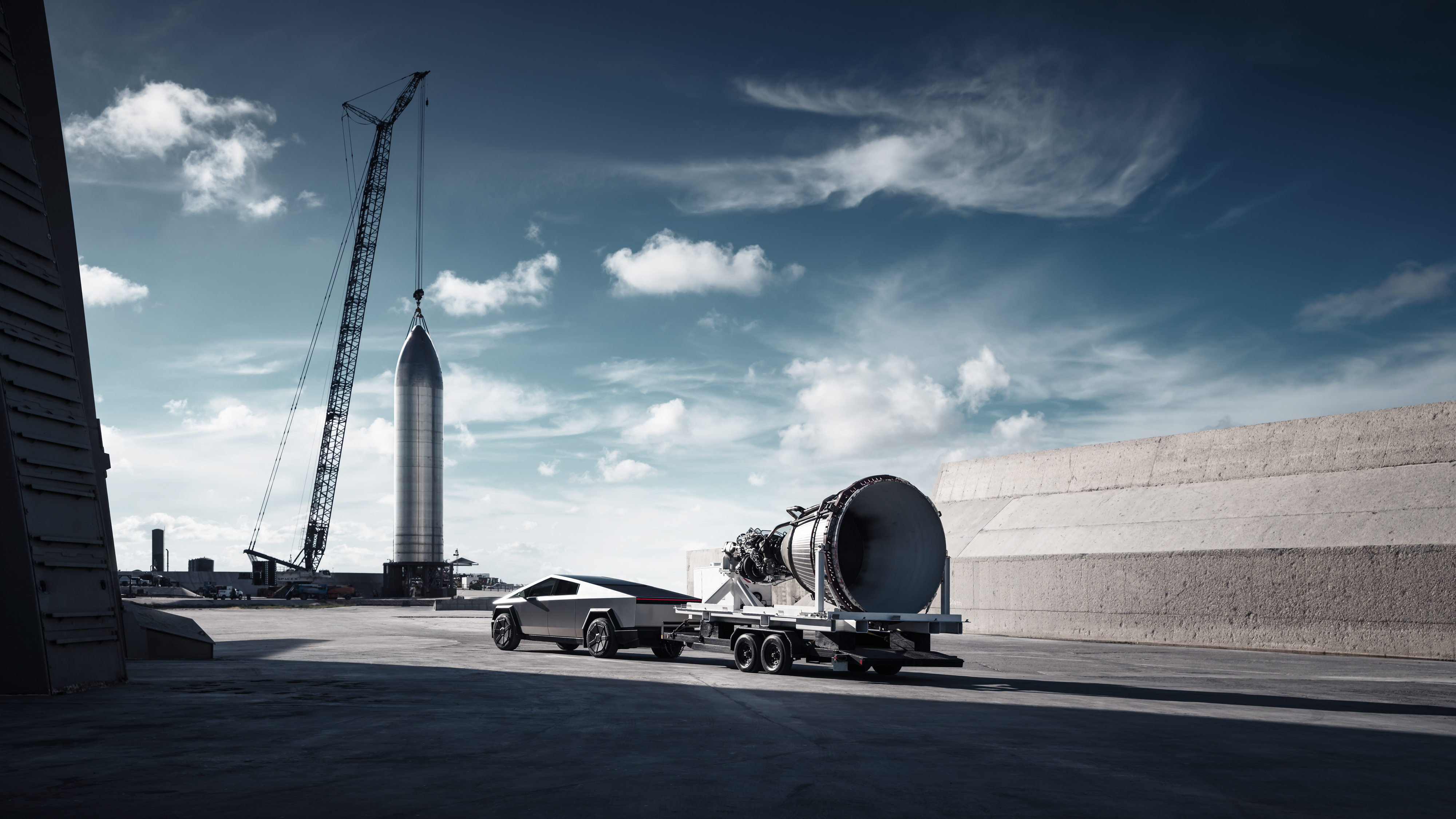
Photo by: Tesla
In today’s episode of the Elon Musk cinematic universe, SpaceX announced that it is acquiring xAI, Musk’s AI startup that also owns the social media platform X.
The update from SpaceX hints that the duo will be able to build on each other’s strengths in order to build AI-powered data centers in space. The reason? Earth simply can’t meet the electricity needs required by AI, apparently. And the solution is to jettison a bunch of GPUs into orbit.
Reuters spills the tea on the deal and what comes next:
Under the merger agreement, xAI would become a wholly owned subsidiary of SpaceX, said a source familiar with the matter, who requested anonymity.
The merger comes as the space company plans a blockbuster public offering this year that could value it at over $1.5 trillion, two people familiar with the matter said.
The deal further consolidates Musk’s far-flung business empire and fortunes into a tighter, mutually reinforcing ecosystem – what some investors and analysts informally call the “Muskonomy” – which already includes Tesla, brain-chip maker Neuralink and tunnel firm the Boring Company.
Let’s talk about how this move could impact Tesla (because we are an EV news source, after all).
Musk has historically had no issue rolling companies and resources into one another. There was SolarCity, for example, or the redirection of 12,000 Nvidia GPUs from Tesla to X. Reuters points this out, too:
The world’s richest man has a history of merging his ventures together. Musk folded social media platform X into xAI through a share swap last year, giving the AI startup access to the platform’s data and distribution. In 2016, he used Tesla’s stock to buy his solar-energy company SolarCity.
It’s not out of the realm of possibility for Musk to one day roll SpaceX and xAI into Tesla. Musk’s automaker was also in the running for the SpaceX merger, Bloomberg reported on Friday.
75%: California’s New EV Credit Program Is How The Feds Should Have Done It
Photo by: InsideEVs
California has decided that if the U.S. government is going to slash EV incentives, it needs to keep the momentum going itself with $200 million of state funds. California Governor Gavin Newsom’s latest proposal reveals a bit more about how exactly it plans to plug the gap.
The policy would require manufacturers match the state’s contribution dollar-for-dollar, effectively doubling the incentive. And it would apply to both new and used vehicles that meet certain criteria.
Here’s what the California Air Resources Board tells us about the program:
Incentives will be offered immediately at the point of sale—reducing upfront costs for consumers and avoiding implementation delays—for the sale or lease of new, or the purchase of used, light-duty passenger zero-emission vehicles (ZEVs) to first-time ZEV buyers in California. By reducing upfront costs and maintaining affordability, the program will help ensure that ZEV adoption remains strong, fostering innovation, improving public health, and reinforcing California’s leadership in the transition to zero-emission transportation.
One other caveat is that this program is for first-time EV buyers. So early adopters need not apply. THe idea is that directing the funds to new EV buyers may push electrification farther along than giving a helping hand to someone on their seventh Tesla.
Is this all enough? That’s still a big question mark. If California decided to replace the $7,500 federal tax credit that Congress got rid of last year, $200 million isn’t going to go far. That would support just under 27,000 sales, or under a month’s worth of zero-emission vehicle sales in the country’s biggest market for clean cars. Having manufacturers foot half the bill will help, of course.
California also says it will require caps on vehicle prices aligned with the original Inflation Reduction Act caps ($55,000 for passenger cars and $80,000 for trucks and SUVs). That, plus the first-time-buyer stipulation should help stretch the funding. Both measures, plus availability at the point of sale, fix issues with various iterations of the federal EV tax credit.
Now, this is just a proposal. California still has a lot of solidifying to do before this becomes an active program. But the guardrails are here, and they honestly seem pretty solid.
100%: Is California’s EV Proposal Sound?
Photo by: InsideEVs
California’s latest proposal covers a lot of failure points of the original EV tax credit. It limits who is eligible (first-time EV buyers), prevents scalping (nothing above MSRP) and also puts some of the burden on automakers to have some more skin in the race.
Do you think it’s enough to bring back a working EV incentive program? And if so, could this be something scalable on a federal-level?