

California’s New EV Rebate Is Only For First-Time Electric Car Buyers

- California is planning a new $200 million EV incentive program, and it revealed new details on Monday.
- The proposed policy would apply to new and used EVs and feature manufacturer matching.
- Only first-time EV buyers could take advantage of the funding.
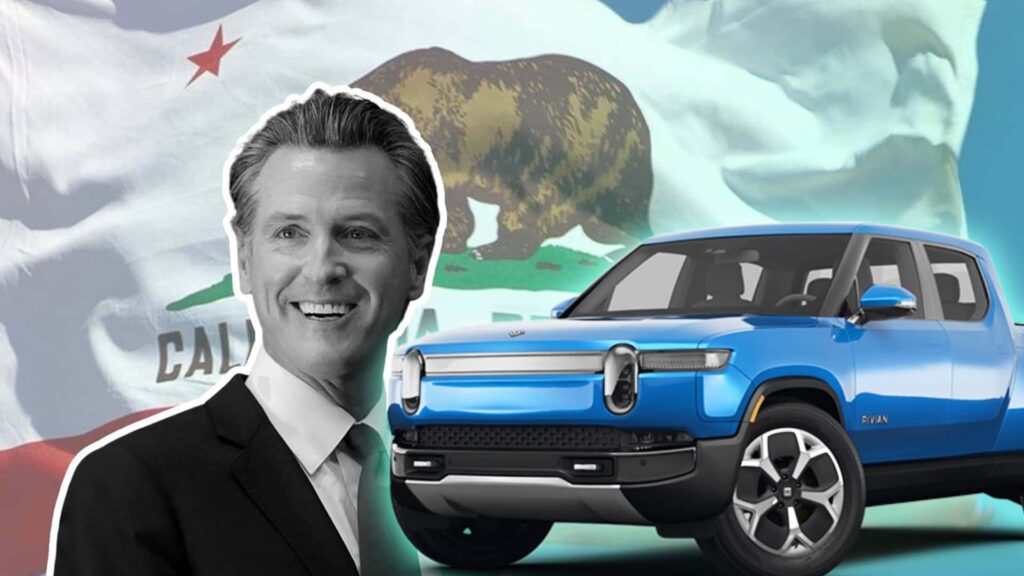
California has decided that if the U.S. government is going to slash electric-vehicle incentives, it needs to keep the momentum going itself with $200 million in state funds to promote cleaner cars. California Gov. Gavin Newsom’s latest proposal reveals a bit more about how exactly it plans to plug the gap.
The program’s finer details are still hazy. But we know this: The policy would require manufacturers to match the state’s contribution dollar-for-dollar, effectively doubling the incentive. And it would apply to both new and used vehicles that meet certain criteria. Here’s what the California Air Resources Board tells us about the program:
Incentives will be offered immediately at the point of sale—reducing upfront costs for consumers and avoiding implementation delays—for the sale or lease of new, or the purchase of used, light-duty passenger zero-emission vehicles (ZEVs) to first-time ZEV buyers in California. By reducing upfront costs and maintaining affordability, the program will help ensure that ZEV adoption remains strong, fostering innovation, improving public health, and reinforcing California’s leadership in the transition to zero-emission transportation.
One other caveat is that this program is for first-time EV buyers. So early adopters need not apply. The state makes a compelling case for this that tracks with other research we’ve seen.
“Limiting eligibility to first-time ZEV buyers helps expand the market by introducing new consumers to ZEV technology,” a CARB spokesperson told InsideEVs in an email. “Research shows that once consumers make the switch to ZEVs, they typically don’t go back to dirty gasoline or diesel vehicles.”
In other words, directing the funds to new EV buyers may push electrification farther along than giving a helping hand to someone on their seventh Tesla.
Is this all enough? That’s still a big question mark, and California hasn’t shared a final per-vehicle incentive figure.
If California decided to replace the $7,500 federal tax credit that Congress got rid of last year, $200 million isn’t going to go far. That would support just under 27,000 sales, or under a month’s worth of zero-emission vehicle sales in the state. More than 408,000 EVs, plug-in hybrids and hydrogen-powered cars were sold in California in 2025. Having manufacturers foot half the bill will help, of course.
California also says it will require caps on vehicle prices aligned with the original Inflation Reduction Act limits ($55,000 for cars and crossovers and $80,000 for larger trucks and SUVs). That, plus the first-time-buyer stipulation, should help stretch the funding further. Both measures, plus availability at the point of sale, fix issues with various iterations of the federal EV tax credit.
Now, this is just a proposal. California still has a lot of solidifying to do before this becomes an active program, and the state’s legislature needs to give a final stamp of approval. But the guardrails are here, and they honestly seem pretty solid.
Contact the author: Rob.Stumpf@InsideEVs.com
Additional reporting by Tim Levin