



For Punjab, taking a leaf out of Haryana
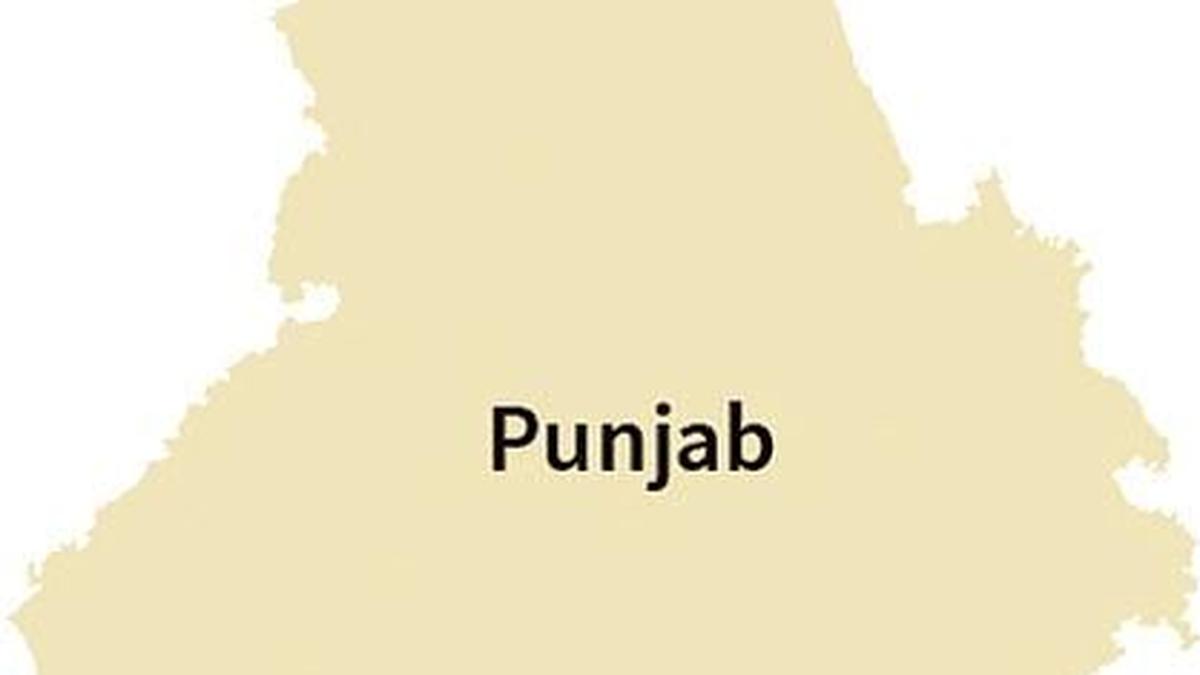
As political momentum builds across Punjab in the run-up to the 2027 Assembly elections, the Bharatiya Janata Party (BJP) appears to be crafting a new strategy of social engineering to get a foothold in the border State, where it has historically struggled to make inroads.
The party is attempting to strengthen its electoral hold on two crucial voting blocs — the Scheduled Castes (Dalits), who comprise 31.91% of the population in Punjab (2011 Census); and the Other Backward Classes (OBC), who account for about 25-30% (academic estimates).
On February 1, Prime Minister Narendra Modi visited Dera Sachkhand Ballan in Jalandhar, on the occasion of the 649th birth anniversary of Guru Ravidas. His visit signals the party’s effort to appeal to Dalit voters, as the revered saint and social reformer belonged to the Dalit community.
As the Prime Minister met the Dera head, Sant Niranjan Dass, who was recently conferred the Padma Shri, he struck a chord with the gathering by highlighting his connection to the birthplace of Guru Ravidas in Uttar Pradesh’s Kashi. Mr. Modi was elected to the Lok Sabha from Varanasi, which is also known as Kashi.
The SCs of Punjab are not a homogeneous category. They are divided into some three dozen castes and are further fragmented into various blended faiths, many of which have evolved into Deras (sects). In Punjab, there are around half a dozen key Deras, including Radha Soami, Namdhari, Dera Sacha Sauda, Nurmahal, Nirankari and Dera Sach Khand Balan. These have an influence in at least 56 Assembly constituencies of the 117 in the State. Traditionally, in Punjab, SCs have not consolidated behind just one party; instead, their support has been spread across different parties, reflecting cultural and regional differences within the community. This is why consolidating SC votes has remained a formidable challenge for all the political parties in the State.
In neighbouring Haryana, the BJP appeared to focus its electoral strategy in the 2024 Assembly polls on consolidating support among OBCs and SCs. This proved to be effective: the BJP improved its tally in the 17 SC-reserved seats from five in 2019 to eight in 2024, and won the election. While Punjab is a distinct political landscape, caste-based coalitions remain central to its electoral arithmetic.
Of late, Haryana Chief Minister Nayab Singh Saini, an OBC leader, has been frequently visiting Punjab. This is a clear sign of the BJP’s outreach towards the community. In a well-thought-out strategy, Mr. Saini, invariably donning a turban, visits social and religious functions, besides party events. The party is also showcasing Haryana’s development and governance model in Punjab. Mr. Saini has criticised the ruling Aam Aadmi Party for failing to deliver on its pre-poll promises, including the provision of a monthly assistance of ₹1,100 to women. He has pointed out that in contrast, Haryana has already implemented its promised ₹2,100 monthly assistance scheme for women.
After parting ways with the Shiromani Akali Dal (SAD) in 2020, the BJP has been focusing on expanding its footprint in Punjab. It has inducted several Sikh leaders into the party, including Amarinder Singh, former Congress leader and Chief Minister; and Ravneet Singh Bittu, who is now a minister in the Union Cabinet. It has also inducted many Hindu leaders, such as Sunil Jakhar, who was earlier with the Congress. The BJP has also tried to project a pro-Sikh image by highlighting steps taken by the Union government in the interest of Sikhs since 2014. These include the formation of a Special Investigation Team to probe the 1984 anti-Sikh riots cases; the initiative to start the Kartarpur Corridor, which connects the Dera Baba Nanak in India to the Darbar Sahib Gurdwara in Pakistan; and the waiving of GST from ‘langar’ (community kitchens). Despite all this, however, the BJP only won two seats in the 2022 Assembly polls. In the 2024 Lok Sabha polls, the party contested all the 13 constituencies but failed to win a single seat. However, its vote share went up from 9.63% in the 2019 Lok Sabha polls to 18.56% in 2024.
Whether the party’s multi-pronged social engineering strategy, backed by visible gestures such as Mr. Modi’s visit to Dera Sachkhand Ballan and the deployment of Haryana’s OBC Chief Minister as a bridge to backward classes, can finally help it crack Punjab’s complex electoral code remains to be seen.
Published – February 03, 2026 01:31 am IST