



India’s biggest climate gap could be language
If there is one serious gap in science communication, it is the language and jargon. In the absence of effective communication based on clearly understandable language that people can relate to and contextualise, science will always be either poorly understood or misunderstood.
The meaning of loss and damage
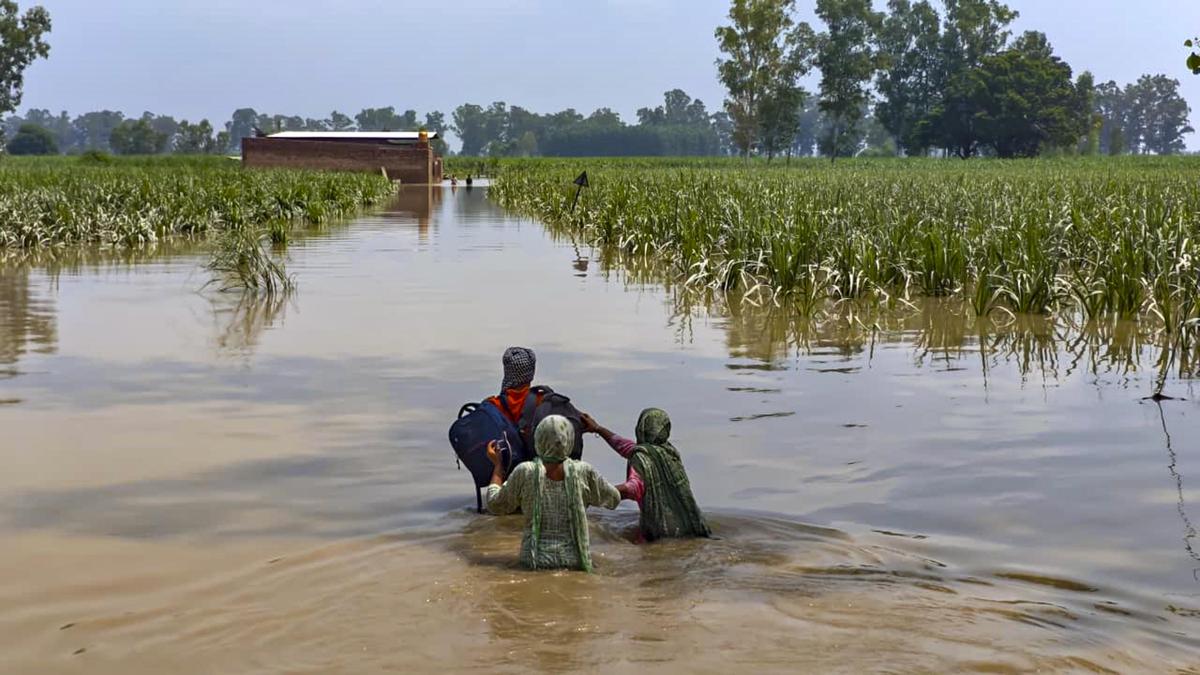
At recent United Nations climate conferences, few phrases have been repeated as often as ‘Loss and Damage’. It has been invoked at negotiations, stitched into drafts, and debated in press briefings as if its meaning were universally understood. But Loss and Damage is not simply a diplomatic vocabulary; it refers to climate impacts that communities cannot adapt to: the destruction of crops and homes, but also the loss of identity, land, traditions, ecosystems, and the quiet erosion of cultural memory. It is meant to capture not just what is broken, but what can never be restored. And yet, somewhere between the global negotiation table and the governance realities on the ground, the meaning collapses.

In India, the language shifts sharply as it moves downstream. Loss becomes nuksaan aaklan — an assessment to be filled after a disaster. Damage becomes haani purti — compensation calculated through established norms. The broader crisis becomes aapda, aapda rahat, or aapda prabandhan — administrative categories shaped by decades of disaster response, not by the complex realities of climate change.
So, when global actors speak of ‘Loss and Damage finance’, it is often understood locally as a little more than post-disaster relief — a far narrower understanding than the international framing, which also encompasses slow-onset impacts, biodiversity loss, the disappearance of ancestral lands, and the erosion of social fabric.
The fuller spectrum of irreversible climate loss collapses into what can be counted, compensated, and closed. This is not a minor semantic problem; it is a governance gap. When climate language narrows, so do the policy responses it enables — even the most ambitious global commitments risk becoming abstractions.
Over the past decade, India’s climate science has advanced rapidly. We now have district-level heat projections, urban flood models, crop yield simulations, and attribution studies capable of tracing the fingerprints of climate change on specific extreme events. Yet, this capacity has not been matched by investment to make the science usable for decision-makers and communities. The result is a paradox: we have more data than ever, but less clarity on where it matters most.
A district magistrate may receive a vulnerability assessment packed with indices and statistical language, but struggle to translate it into tomorrow’s decisions. Communities, meanwhile, also encounter climate messaging through fragmented channels, each using different vocabulary and urgency. Too often, climate communication assumes that more information leads to better decisions. But this approach rarely holds. People don’t act simply because they know more; they act when information feels relevant, doable, and aligned with their lived reality.

This is why communication is not a “soft” add-on to climate policy but a core enabler of delivery. Heat advisories that tell people to “stay indoors between 12 and 3 p.m.” assume the privilege of being able to stop work. Flood warnings delivered by SMS assume literacy and smartphone access. Meanwhile, risk dashboards proliferate across States and cities, often technically impressive yet underused because they are too complex and not designed around how real decisions are made under pressure.
When climate information is clear, trusted, and grounded in everyday realities, the entire climate ecosystem shifts: policy becomes sharper, communities respond faster, and investments flow towards solutions that work. For instance, Odisha’s cyclone preparedness model shows that evacuation success does not come from technology alone. It comes from years of building public confidence in the credibility of alerts issued by the state. Trust becomes a form of infrastructure as critical as shelters or sensors.
Clear communication can similarly strengthen heat preparedness, guide flood response, and help governments justify climate investments by translating risk into everyday consequences: school closures, water shortages, hospital admissions, labour productivity, and crop loss.

What climate communication must deliver
Effective communication begins with use. It turns projections into decisions: not just ‘heat index rise’, but what it means for school timings, outdoor work, and public health preparedness; not just ‘flood return intervals’, but how flooding will affect commute routes, household safety, and service delivery in specific neighbourhoods. And it works best when co-created with frontline workers, panchayat leaders, farmers, fisherfolk, teachers, and local journalists.
If we are serious about turning climate science into climate action, it needs a communication framework as intentional as its forecasting systems and policy mechanisms. That means simplifying climate information, localising it for real contexts and languages, humanising science through lived realities, institutionalising communication capacity within government systems, and strengthening media partnerships so risk narratives are understood, trusted, and acted upon.
When communication fails, science stays locked in reports, policies don’t translate into practice, and preparedness remains uneven; and when it succeeds, resilience becomes a shared social and political possibility.
Published – January 27, 2026 01:15 am IST