




The 27th amendment, Pakistan’s democratic dilemma
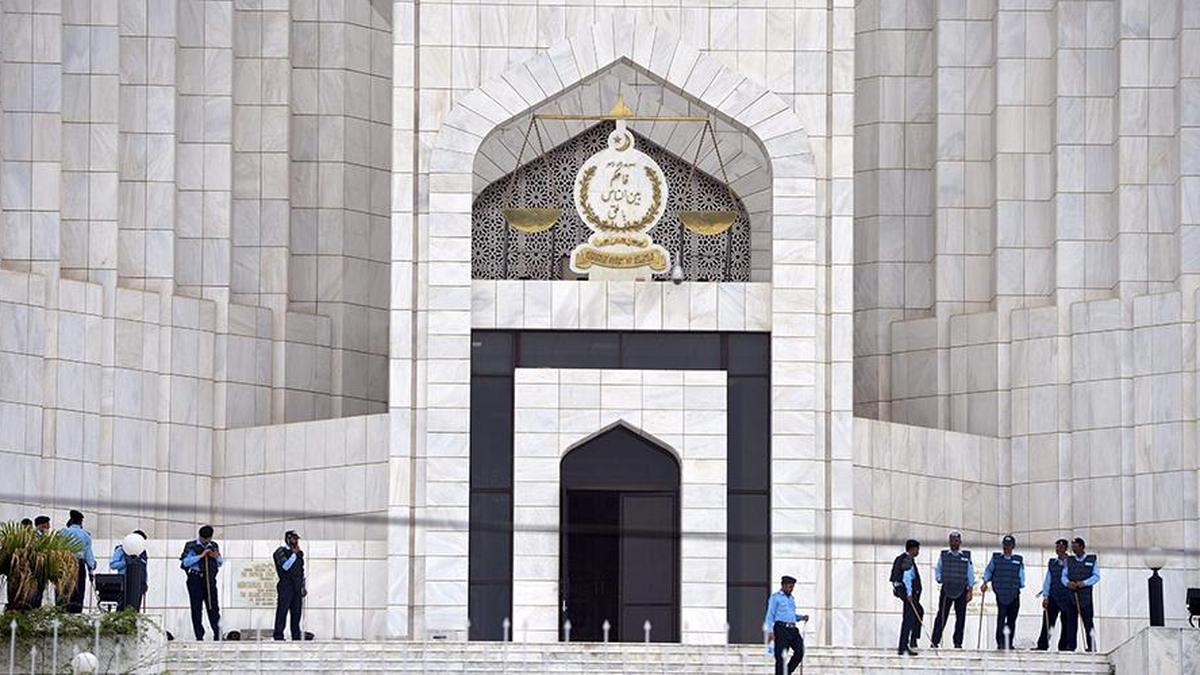
Last year, between November 12 and 13, Pakistan’s legislature passed the 27th Amendment, or PCA, which subsequently received presidential assent. Presented as a measure to reorganise aspects of the military command structure, the amendment has consequences that reach far deeper into the constitutional order. The PCA significantly diminishes the central role of the Supreme Court in Pakistan’s constitutional order. By transferring original jurisdiction over constitutional interpretation, fundamental rights and federal-provincial disputes to a newly created Federal Constitutional Court, or FCC, the amendment sidelines the Supreme Court from the most consequential questions of governance.
In recent years, it was precisely this jurisdiction that enabled the top court to adjudicate landmark political cases, including the Panama Papers case and the Memogate controversy. Stripping the top court of this authority not only fragments constitutional adjudication but also weakens its position as the final guardian of the Constitution, leaving it vulnerable to institutional marginalisation under executive influence.
Strains in the region
The passage of the PCA must be viewed against a broader regional backdrop. South Asia is navigating a period marked by political instability, security concerns and institutional strain. These pressures are not confined to national borders. For countries in the Global South, where institutions are often tested by competing imperatives of security and governance, constitutional choices carry long-term consequences.
For India, examining such developments in its neighbourhood is neither voyeuristic nor adversarial. As the region’s largest constitutional democracy, India has a direct interest in how constitutional norms evolve — or erode — around it. The weakening of judicial independence or the normalisation of executive dominance elsewhere in South Asia carries cautionary lessons.
At the core of constitutional governance lies what English jurist A.V. Dicey famously described as the rule of law, a doctrine premised on the absence of arbitrary power, equality before the law, and the central role of independent courts as sentinels of rights. In Dicey’s conception, the law exists to restrain authority, with courts serving as the institutional bridge between power and liberty. It is precisely this equilibrium that the PCA unsettles.
By diluting the Supreme Court’s position as the final arbiter of constitutional questions and vesting that authority in a newly-constituted FCC, the PCA risks weakening institutional independence. Courts, in Dicey’s framework, are not mere forums for adjudication but constitutional guardians tasked with keeping executive power within bounds.
The federal constitutional court question
It is in this constitutional light that Pakistan’s creation of the FCC warrants scrutiny. While specialised courts are not inherently problematic, removing constitutional adjudication from the Supreme Court unsettles a balance that was carefully restored by the 18th Constitutional Amendment. It sought to depoliticise judicial appointments by strengthening the Judicial Commission of Pakistan and also insulated the judiciary from executive dominance.
What is more troubling is the scope that it creates for executive influence over the FCC’s composition and functioning. Constitutional courts derive legitimacy from independence, not mere existence. When constitutional interpretation is shifted to a newly constituted forum that is vulnerable to executive preferences, judicial review risks becoming an extension of power.
In early 17th century England, King James I asserted that, as sovereign, he could personally adjudicate disputes. This claim was firmly resisted by Sir Edward Coke, then Chief Justice, who declared that the king was subject to the law and could not sit in judgment. Coke’s refusal to allow royal intrusion into judicial proceedings marked a defining moment in constitutional history.
This episode established a principle that continues to animate modern constitutional democracies, that is judicial authority must remain independent of executive will. Courts cannot function as neutral arbiters if they operate under the shadow of political power. The struggle between Coke and James I was not merely personal. It was foundational, affirming that the rule of law requires courts to be insulated, even from well-intentioned rulers.
Why it matters for India
The latter half of the 20th century marked the birth of new nations, as societies emerging from colonial and monarchical pasts embraced written constitutions and republican governance. Constitutional texts became instruments of restraint, designed to bind power. The 21st century, however, presents a more unsettling picture. Across regions, republics are increasingly reshaping their constitutions not to deepen democratic guarantees but to legitimise concentration of power.
The PCA reflects this troubling shift. By reconfiguring judicial authority under the shadow of executive influence, it risks transforming the Constitution from a shield into a tool of governance. In inter-war Europe of the 1930s, democratic breakdown did not occur through abrupt coups but through formally valid legal changes that steadily hollowed out institutions. Power was acquired electorally, and then consolidated by rewriting constitutional checks in the name of stability and necessity.
For India, the lesson is not one of comparison, but of caution. Constitutional democracy does not survive on text alone but on the continued independence of courts, respect for institutional boundaries, and a shared commitment to restraint. How republics treat their Constitutions today will determine whether this century is remembered for democratic renewal, or for the quiet dismantling of the spirit of constitution from within.
Vanshaj Azad is an advocate, currently working as Law Clerk-cum-Research Associate in the Supreme Court of India
Published – January 31, 2026 12:08 am IST