





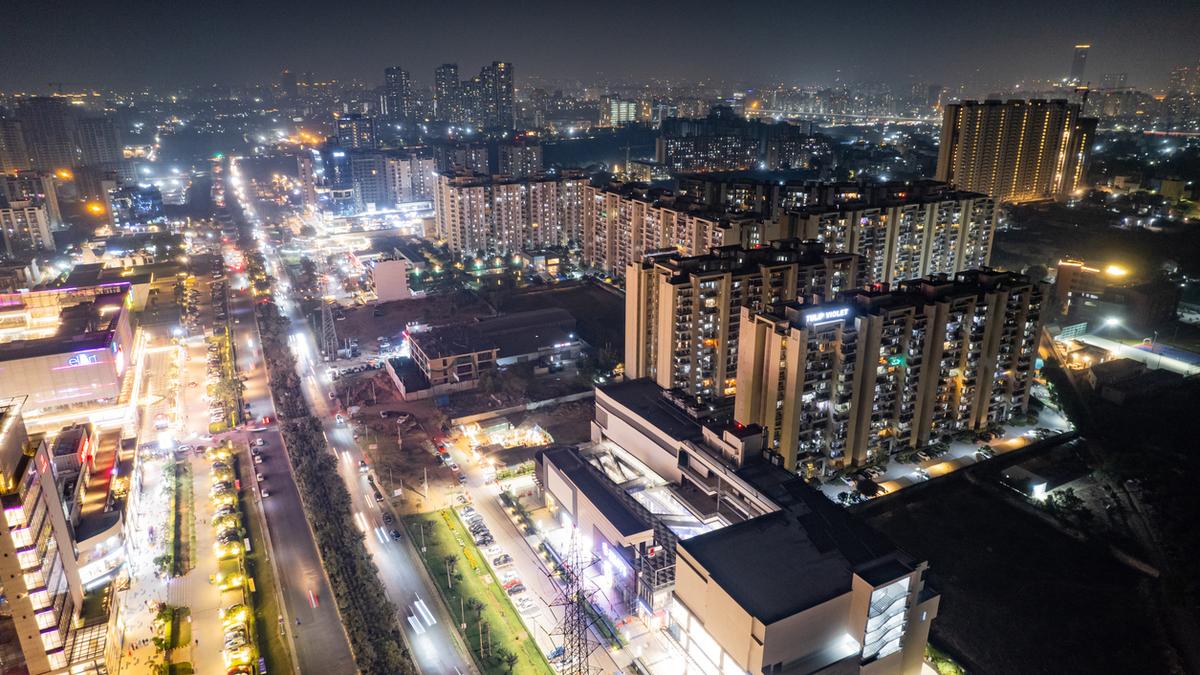
Pre-budget 2026: How infrastructure is shaping India’s housing market
In 2026, India’s residential real estate market will change in a big way. This change will be less about short-term trends and more about long-term public investment in infrastructure. It is still a guess that central capital spending will exceed ₹12 lakh crore in Budget 2026, but the orientation of policy is apparent. The government’s capital expenditure rose from ₹11.11 lakh crore in FY25 to ₹11.21lakh crore in FY26. That shows that infrastructure remains the chief engine of economic growth.
The best and brightest among the economists of the country, from Bank of Baroda to ICRA, currently believe that the FY27 budget could be as high as ₹12 lakh–₹12.5 lakh crore, growing at 7%–10% a year. It’s not just that infrastructure is making cities more functional at this moment, though it certainly is doing that. This is important for housing. Improved access is reducing the commute at both ends of the projects, freeing up parcels of land on the edges and changing buyers’ behaviour. Increasingly, homebuyers select locations by their proximity to transit corridors, job clusters and social infrastructure rather than old addresses. This is an indication that there are shifting dynamics in residential demand across India’s cities.
This change is important because it changes how buyers see risk. People who buy things are no longer paying for promises; they are paying for infrastructure that is already working or almost working. Time spent commuting is now a form of money. When travel time goes below a certain point, places that used to feel peripheral stop feeling that way. They become real options for housing.
Travel time compression
The Mumbai Metropolitan Region has the most obvious signs of infrastructure-led demand reshaping. The Mumbai Trans Harbour Link (MTHL), the Coastal Road, the Goregaon–Mulund Link Road (GMLR), and the Panvel–Karjat suburban rail corridor are all making the city smaller.
According to ANAROCK Research and Magicbricks transaction data, micro-markets along these corridors have seen prices go up by 15% to 30% between 2022 and 2025. The MTHL has cut the time it takes to get from South Mumbai to Navi Mumbai to less than 25 minutes. This has caused demand to shift to Panvel, Ulwe, and Kharghar.
The Brihanmumbai Municipal Corporation plans to open the Goregaon–Mulund Link Road in phases starting in 2026. It will cut travel time between east and west from 90 minutes to less than 30 minutes. Early transaction data shows that Mulund and Goregaon are selling homes in the ₹80 lakh to ₹1.5 crore range faster. This is typical behaviour for end users: families with jobs willing to give up centrality for connectivity.
The Panvel–Karjat rail corridor, which is part of MUTP-III and is being built by the Mumbai Railway Vikas Corporation, is also making Navi Mumbai’s outer edge livable instead of just speculative.
Developers say there are more end-users than investors. Historically, rental demand has come first, followed by ownership demand. This “rent-to-own pipeline” is a second-order effect that doesn’t show up in headline data very often.
Airports and expressways
According to updates from YEIDA and the Airports Authority of India, the Noida International Airport at Jewar will start operating in stages in early 2026. This is changing the Yamuna Expressway belt. According to YEIDA data, land prices in the area have gone up almost six times in the last five years. The buyer profile is what changes now.
This is no longer a pure land-banking play. Logistics parks, hospitality zones, IT campuses, and cargo hubs are under development. ANAROCK Research says the demand for mid-range housing in the ₹50 lakh–₹90 lakh range is growing in the Greater Noida and Yamuna Expressway sectors. This demand is based on jobs, not speculation.
The Ganga Expressway is a 594-km road that will connect Meerut and Prayagraj. It is expected to start running in phases in 2026. According to data from the Uttar Pradesh Expressways Industrial Development Authority, there are plans for several industrial nodes along the corridor. This will link manufacturing clusters in Eastern Uttar Pradesh directly to NCR, which will increase demand for housing near interchanges and logistics hubs.
The Delhi–Ghaziabad–Meerut RRTS corridor is another big change in the way things are built. ANAROCK’s data on affordability shows that EMI-to-income ratios in Ghaziabad have already dropped below 30%. This means that young professionals who can’t afford to live in Delhi can now buy homes there.
Peripheral corridors
The story of Bengaluru’s growth is moving outward. Core IT corridors like ORR and Whitefield are full. Phase 2A, 2B, and the Airport line are all part of the next wave of metro expansions. BMRCL and JLL data show that homes within a kilometre of new metro stations cost 15% to 25% more than homes that are farther away.
Whitefield is a perfect example. Prices for homes went up almost 20% over the course of two years after the Purple Line extension, and rental yields went up a lot. As airport connections get better, North Bengaluru around Hebbal and Devanahalli is showing similar behaviour. The buyer here is an end-user, not an investor. These families with two incomes are choosing bigger homes in exchange for a predictable commute.
This change is making developers rethink how much they can offer. Compact premium housing in the ₹80 lakh to ₹1.2 crore range is the fastest-moving inventory right now, not ultra-luxury. According to Knight Frank data, this group saw the biggest increase in absorption in Bengaluru in 2025.
Growth corridors and ring roads
The 340-km-long Regional Ring Road in Hyderabad is opening up completely new paths. According to the Telangana government and Knight Frank’s Hyderabad Residential Update, land prices in Shadnagar, Bhuvanagiri, and Adibatla have gone up by 20%–35% in the last two years.
But the real effect is still to come. There are plans for data centres, logistics parks, and industrial clusters along these corridors. This will create jobs in places other than the usual IT centres like Gachibowli and Kokapet. There will be a demand for housing. What we see today is just positioning.
Hyderabad is also an interesting example of how regulations can affect things. In 2025, new rules for how to value stamp duty caused a rush of registrations. In the fourth quarter of 2025, transactions went up by 37%. This shows that the timing of policies is just as important as the infrastructure itself.
Knight Frank’s PE Trends Report says that private equity investments in Indian real estate reached $6.7 billion in 2025, a 59% increase from the previous year. About 76% of this money came from investors from other countries. Office is still the biggest beneficiary, but residential has become the second biggest, with a share of 17% to 21%.
This money is not looking for a quick buck. It is giving money to projects that are easy to see in terms of infrastructure. Investors like structured debt, credit-linked instruments, and projects from developers who are already listed. This lowers the risk to the whole system and makes supply more disciplined.
Another change in structure is REITs. According to SEBI and industry filings, India now has more than 370 million sq.ft. of Grade-A office space that can be listed on the REIT. Over time, this model will grow to include retail, warehousing, and eventually rental housing, just like it does in other countries where residential property is a major institutional asset class.
Even though there is a lot of demand for premium products, the market’s blind spot is affordability. According to ANAROCK, homes that cost less than ₹50 lakh made up 54% of sales in 2018. That share had dropped to 21% by 2025. There is still demand, but supply has become unviable.
CBRE Construction Cost Trends says land costs, compliance costs, and construction inflation of 6%–10% per year have made affordable housing financially unattractive in cities. Policy incentives just don’t work if the ₹45 lakh limit isn’t changed. Raising it to ₹75 lakh–₹90 lakh would make the policy more realistic and open up real demand.
You can see what happens when you don’t do anything. People in the middle class are being pushed to the edges of cities. This means that public transportation infrastructure is very important. Metro, RRTS, and suburban rail are no longer just nice things to have; they are now necessary for social stability.
Sustainability is now a part of how capital is allocated. According to JLL, more than 80% of new commercial space is green-certified. Residential is going in the same direction. More and more, buyers care about how energy efficient a home is, how ready it is for electric vehicles, and how well it manages water.
Developers who add ESG features to their projects get lower financing costs and more demand. This isn’t about ideology; it’s about money. Green-certified projects cost 5%–10% more and rent out faster.
Five-year plan
Three structural forces will affect the demand for housing over the next five years. First, infrastructure will keep moving demand away from the centre. Micro-markets that are near transit hubs will do better than the average for the city. Second, institutional capital will make development more professional. Third, buyers will continue to act based on what the end user wants, not on what they think will happen.
Knight Frank’s forecast says prices will probably only rise by 4% to 8% a year. It helps with long-term absorption. It won’t be luxury buyers who drive volume growth; it will be mid-range buyers.
The message for people buying homes is clear. Stop buying pin codes. Start buying connectivity. A home near a future metro station or working expressway will be better than a premium address with poor transportation.
For developers, the opportunity lies in compact premium housing. The ₹80 lakh to ₹1.2 crore range is not getting enough attention and will drive the next cycle. Micro-markets that are linked to infrastructure offer the best risk-adjusted returns for investors.
Budget 2026 is a chance for policymakers to fix structural problems. Changes to the definitions of affordable housing, the GST system, and the process for getting approvals will have a much bigger effect than short-term sops.
The writer is director of Eros Group.