




Mattel launches its first autistic Barbie doll in India
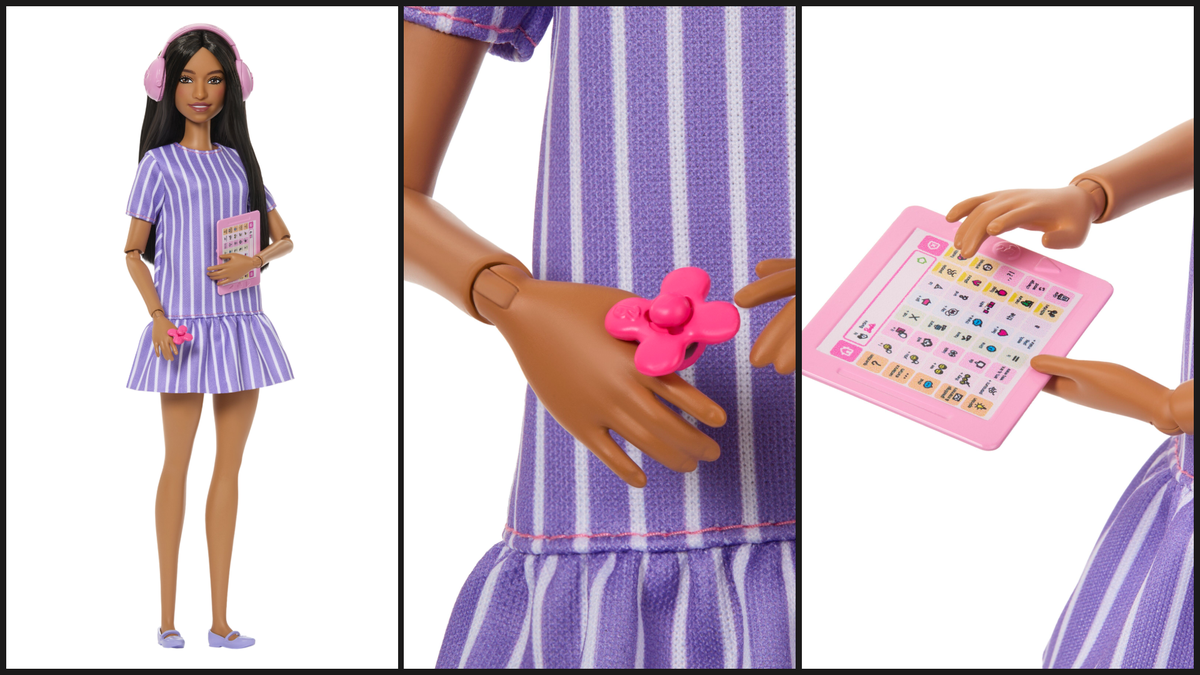
The doll took over 18 months to create in partnership with US-based non-profit Autistic Self Advocacy Network (ASAN)
| Photo Credit: Special Arrangement
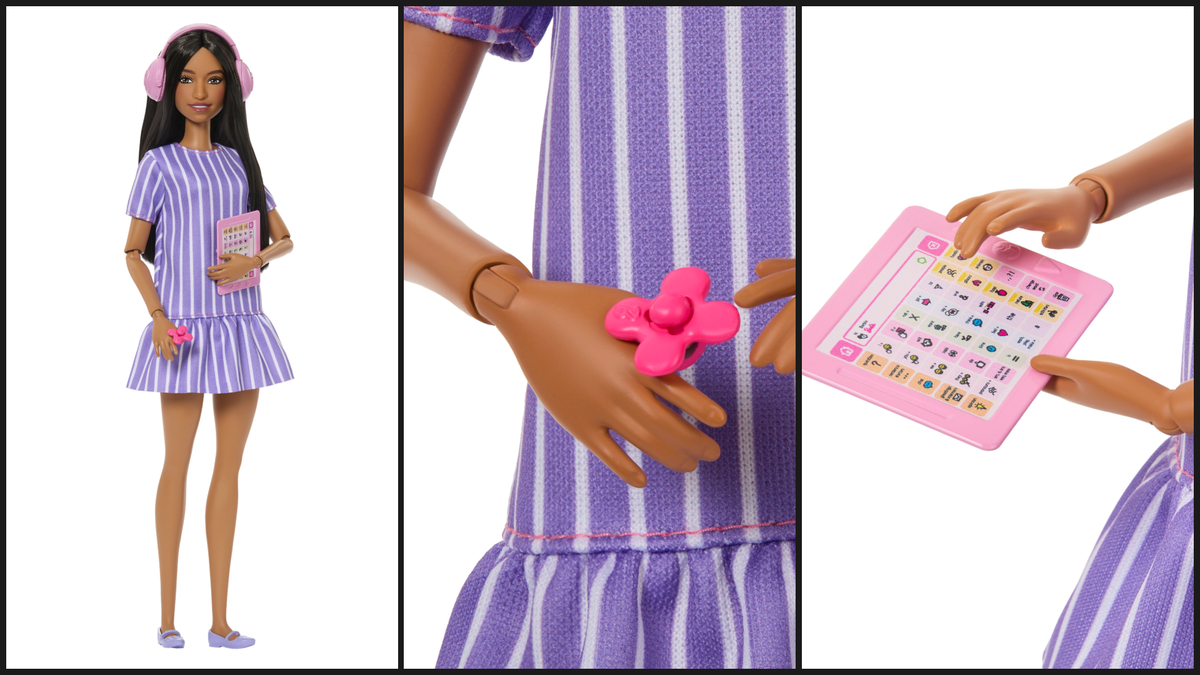
Aimed at turning our toy aisles inclusive, toy company Mattel — the creator of iconic brands such as Hot Wheels, UNO and Fisher Price — has now launched its first autistic Barbie doll in India. This doll — clad in a pastel striped dress and sensory-considerate accessories — is the latest edition to the brand’s Fashionistas range, an inclusive collection that features Barbie with Down syndrome, Type 1 diabetes, visual impairment, and varied skin tones and body types.
The doll’s design includes details such as articulation to allow natural hand movements, sensory-considerate clothing
| Photo Credit:
Special Arrangement
The doll took over 18 months to create in partnership with US-based non-profit Autistic Self Advocacy Network (ASAN), an organisation run by and for autistic people. Jamie Cygielman, global head, dolls, Mattel, says, “The intent was to ensure that autistic children, as well as their peers, see autism represented with thoughtfulness, respect and authenticity, helping normalise difference and encourage empathy from an early age.”
Jamie adds that incorporating local voices were key to the project. “While the doll was developed globally in close partnership with ASAN, the India launch has been shaped with local context in mind.” Designed by autistic Indian-American fashion designer and visual artist Aarushi Pratap, the doll’s design includes details such as articulation to allow natural hand movements, sensory-considerate clothing, and accessories like noise-cancelling headphones, a fidget spinner and an Augmentative and Alternative Communication (AAC) tablet, “all developed through expert and community guidance,” says Jamie.
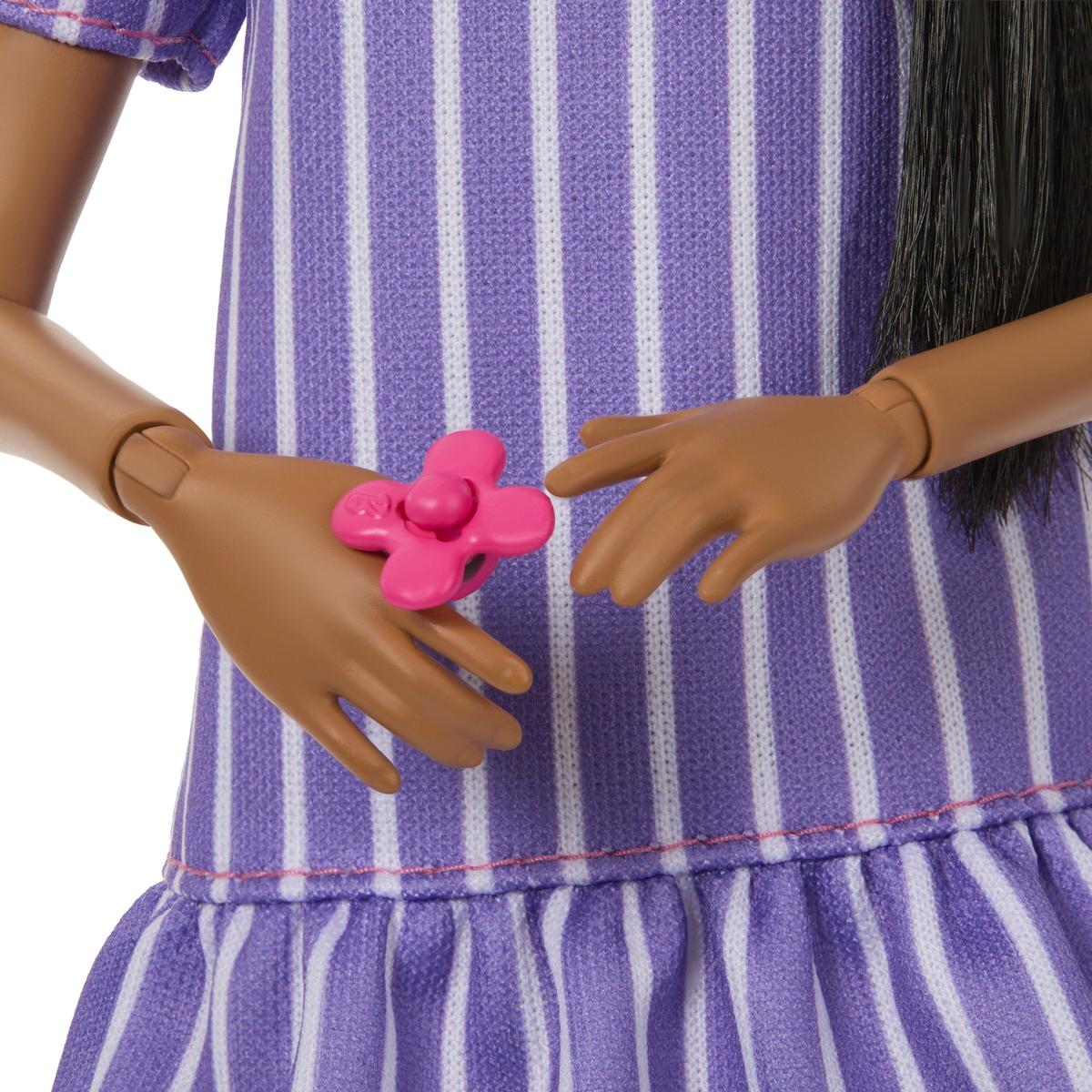
The doll sports a fidget spinner
| Photo Credit:
Special Arrangement
In India, Mattel has joined hands with India Autism Centre for advocacy, awareness and long-term support for the autistic community. A portion of proceeds from the sale of the doll will go to the organisation. The creation process was “collaborative and iterative”, says Colin Killick, executive director, ASAN. “We offered feedback and guidance at multiple stages of development based on community-informed perspectives. This included discussions around visual representation, articulation, accessories and overall presentation,” he adds. Having said that, Colin explains that the autistic community “is incredibly diverse, and one doll could never represent the experience of every single autistic person. Rather, the focus was on ensuring the doll reflected experiences many autistic individuals may relate to, while avoiding stereotypes.”
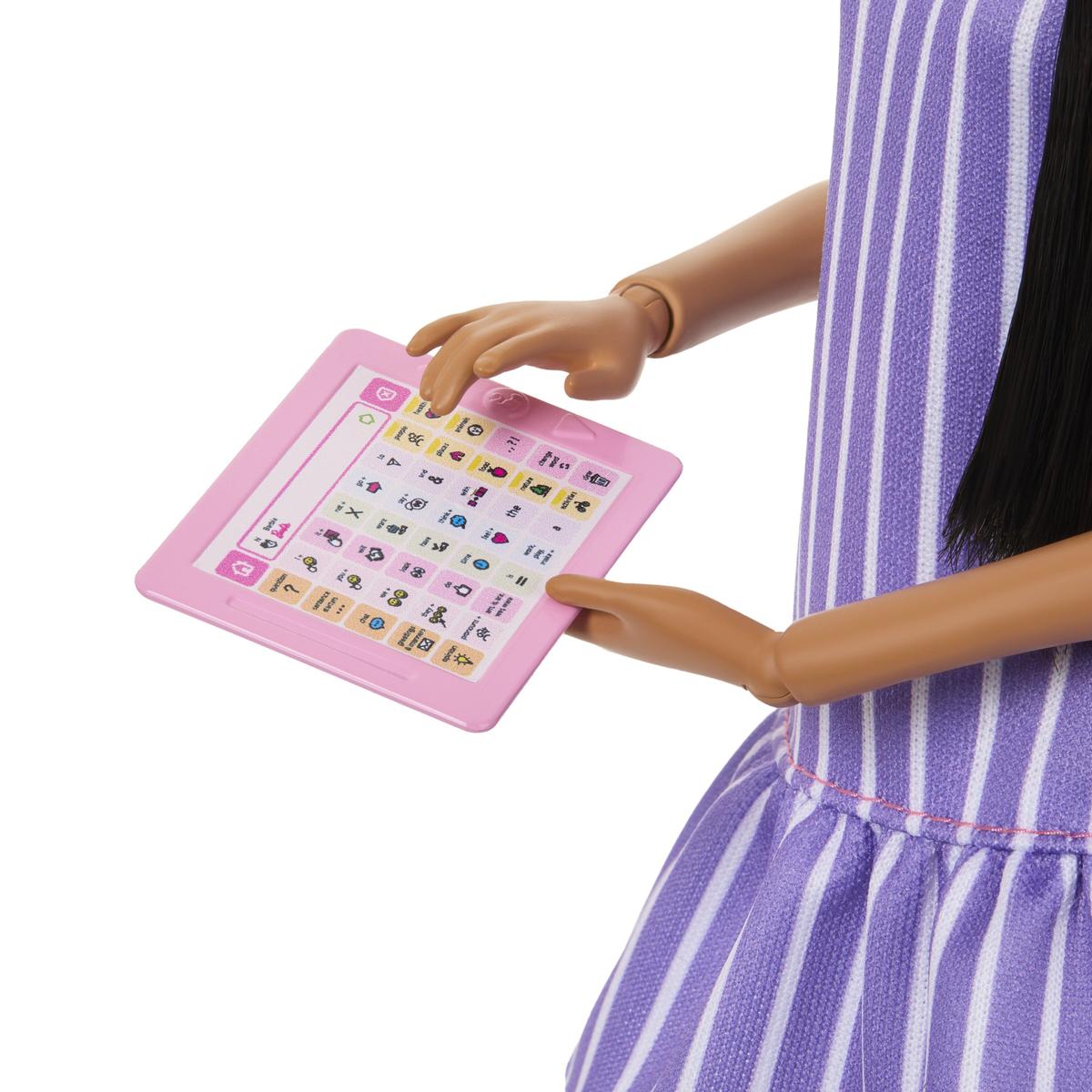
An Augmentative and Alternative Communication tablet
| Photo Credit:
Special Arrangement
Addressing the key design features of the doll that ASAN was particularly keen to have included, Colin says a focus on design elements that acknowledge sensory and communication differences without framing them negatively was important. “Having an Augmented and Alternative Communication (AAC) device was especially important, because nonspeaking autistic people are highly underrepresented in media and popular culture. Subtle details like eye gaze and articulated elbows and wrists to allow for stimming movements also celebrate the way we move our bodies in unique ways. We also thought it was critical that this doll represented an autistic woman of colour, as autistic women and people of colour have historically been underdiagnosed.”
For Aarushi, the emphasis on lived experience resonated with her. “Being part of this launch was immensely personal to me because it aligns closely with my own journey as an autistic individual and as a designer who uses art and fashion as a form of expression and communication,” she says. Research involved conversations with the teams around sensory preferences, communication, creativity and how design can support comfort and self-expression. The biggest challenge, Aarushi says, “was ensuring that the narrative stayed honest and respectful, without simplifying or romanticising autism while also showing possibilities.”
Priced at ₹799, the doll is available online
Published – January 26, 2026 03:18 pm IST