



India-Arab League: bridging cultures, creating opportunities
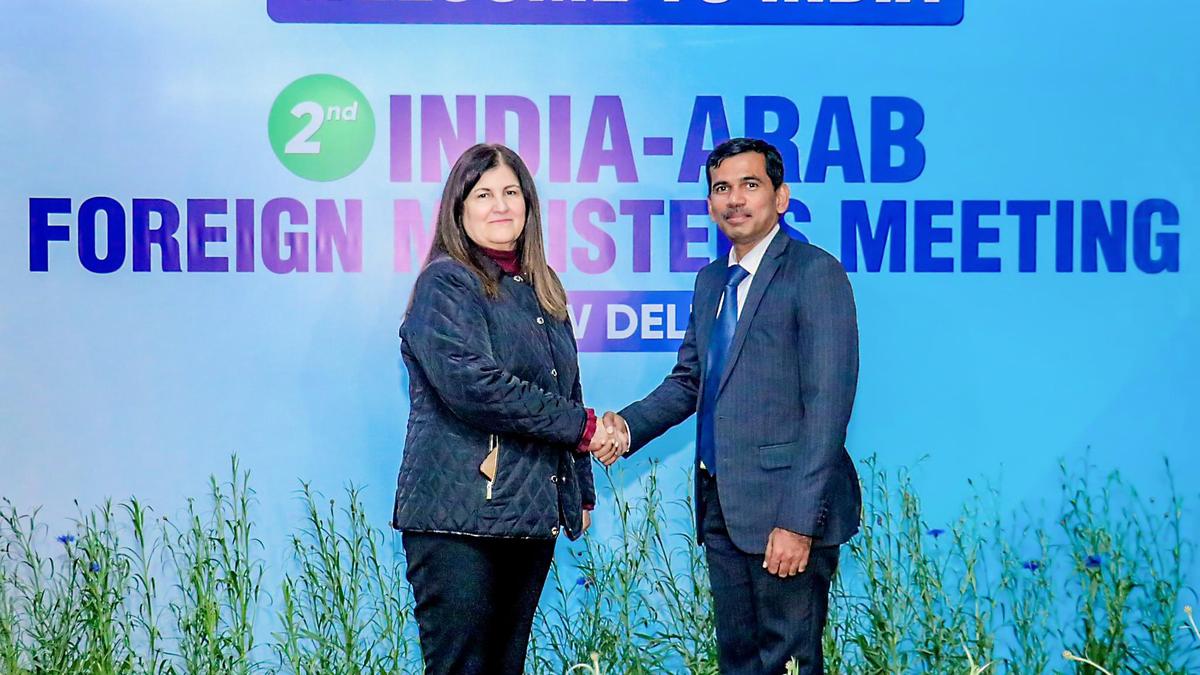
Ministers and delegates of the 22-member Arab League are gathering in Delhi for the 2nd India-Arab Foreign Ministers’ Meeting on January 30-31, 2026. This is a major diplomatic outreach by India at a time when there are multiple conflicts brewing on the horizon in the region and the world is grappling with the rapidly changing global order, set in motion largely due to U.S. President Donald Trump’s total disregard for the sovereignty of nations and the rules-based international order.
As the ministers gather in Delhi, war clouds are still hovering over Iran and the massive military build-up by the U.S. continues. In Syria, despite a ceasefire, uncertainty continues and long-term peace is still some distance away. Gaza finally looks towards transitioning to peace even as details of phase two of the ceasefire are still in the works. The recovery of the body of the last Israeli hostage from Gaza on January 26 is a major victory for Israel and may well motivate it to move towards relaxing the restrictions in Gaza.
However, the most surprising development is the emergence of fault lines among two close allies — Saudi Arabia and the UAE — mostly over conflicting interests in Yemen but also over power and influence in the region. We need to watch out for the possibility of rival military alliances. India, too, is closely monitoring the situation, while formulating its own strategy for the region.
India and the Arab League
The Arab League, officially known as the League of Arab States (LAS), was formed in Cairo on March 22, 1945, initially with seven members. Today, it has 22 member states from North Africa and West Asia. Although India’s relations with countries in the Arab League go back centuries, the engagement with the LAS was formalised in March 2002 when a Memorandum of Understanding (MoU) was signed, institutionalising the process of dialogue. The MoU is aimed to “promote and develop the traditional relationship of friendship and cooperation between India and the Arab States” and provides for annual meetings between the External Affairs Minister of India and the Secretary General of the Arab League.
During the visit of Arab League Secretary General, Amr Moussa, to India in December 2008, the Arab-India Cooperation Forum (AICF) was established. And in December 2010, the Indian Ambassador to Egypt was designated as India’s Permanent Representative to the Arab League. The first meeting of the AICF was held in January 2016 at Manama, Bahrain. In addition, there is the India-LAS Partnership and Investment Summit, a biennial flagship economic event. During the current visit of foreign ministers, a new initiative called the India and Arab Countries Chambers of Commerce, Industry and Agriculture is scheduled to be inaugurated.
Key pillars of engagement
The India-LAS partnership goes beyond trade and investment. Over the past decade, strategic partnerships and security have emerged as crucial areas of engagement. Oman was the first country with which India signed a strategic partnership in 2008. With the signing of similar agreements with the UAE in 2015, Saudi Arabia in 2019, Egypt in 2023, and Qatar in 2025, the depth and scope of strategic convergence with the region has grown rapidly.
India has also strongly rallied for the region in various multilateral forums such as BRICS and SCO. Even among the strategic vision of countries, there are significant convergences, whether it is the Saudi Vision 2030, the UAE Centennial 2071, the Kuwait Vision 2035, the Oman Vision 2040, or India’s Viksit Bharat in 2047. In fact, in the Saudi Vision 2030, India is one of the eight strategic partners.
Trade and investments continue to be the bedrock of the relationship and have stood the test of time, including the COVID-19 pandemic. Most of India’s external trade passes through the Suez Canal, the Red Sea, and the Gulf of Aden. Bilateral trade between India and the Arab League currently stands at over $240 billion. India has signed the Comprehensive Economic Partnership Agreement with the UAE and Oman. As a result, bilateral trade with the UAE has already crossed $115 billion and has now been reset at $200 billion by 2030. Major investment commitments in India have been made by the UAE ($75 billion), Saudi Arabia ($100 billion) and Qatar ($10 billion), mostly in the fast-growing infrastructure sector. The cumulative FDI in India from the region has crossed $2.5 billion. As trade ties grow, connectivity becomes an impsortant factor to ensure speed, efficiency and collective prosperity. The India-Middle East-Europe Economic Corridor, launched at the G20 Leaders’ Summit in New Delhi in September 2023, therefore, gains significance and is likely to be discussed at the meeting.
With Prime Minister Narendra Modi pushing for development of digital public infrastructure for speed and transparency of transactions, Fintech is emerging as yet another area of mutual convergence. The RuPay card was launched in the UAE in August 2019. From July 2023, the Indian rupee is being accepted as legal currency at Dubai airports. Also, India and the UAE have operationalised the rupee-dirham settlement system. India’s Unified Payments Interface is already accepted for financial transactions in Bahrain, Saudi Arabia, Qatar, and the UAE and is likely to grow further in the LAS countries soon.
Energy is a critical pillar of the partnership. The region caters to about 60% of India’s crude oil imports, 70% of natural gas, and more than 50% of fertilizers and related products. Iraq, Saudi Arabia, and the UAE are the top three exporters of crude oil. The UAE has also signed an agreement with India to store strategic oil reserves in the country, operationalised with an initial investment of $400 million. With Qatar, the $78 billion Liquified Natural Gas (LNG) deal signed in February 2024, with assured import of 7.5 million tonnes of LNG a year for another 20 years, adds a critical link to India’s energy security. In addition, in July 2023, ADNOC (Abu Dhabi National Oil Company) and Indian Oil signed a LNG contract for 1.2 million metric tonnes per annum over a period of 14 years.
Living under the threat of conflicts and terror, security and defence are growing as important pillars in the partnership. Defence partnership agreements have been signed with multiple countries in the LAS including Oman, the UAE, Saudi Arabia, Egypt, and Qatar and are growing. India’s maritime security initiatives such as Security and Growth for All in the Region (SAGAR) aim to promote joint collaboration in the Indian Ocean Region, particularly against sea piracy and maritime security threats. India’s agreement with Oman over the Duqm port is a strategic deal that offers a critical advantage to the Indian Navy in its operations in the region while also allowing it to keep a discreet watch on the activity of China’s People’s Liberation Army Navy. The threat of war in Iran and the future of the Gaza peace process are common areas of security concerns in the region and are likely to figure as a key agenda during the meetings.
Most of the LAS countries are in total sync in India’s fight against cross-border terror and have condemned the Uri, Pathankot, Pulwama, and Pahalgam terror attacks in India. Joint production of defence equipment and export of key weapon platforms such as the Tejas fighter aircraft, BrahMos and Aakash missiles, and artillery guns are also emerging as important attractions for LAS countries. Cyber, space and drone are future areas of cooperation.
Looking ahead
As India grows into a major economic, political, and military power, the Arab League region forms a critical part of its global matrix. For LAS countries too, India is a strong and reliable partner. The countries of the two regions may be separated by the Arabian Sea but are joined by history, destiny, trust, and growing brotherhood. The meeting of the foreign ministers of LAS in Delhi offers the perfect opportunity to forge closer ties and seek new avenues of engagement.
Col. Rajeev Agarwal (Retired), Senior Research Consultant, Chintan Research Foundation
Published – January 30, 2026 07:39 am IST